

KOCE-TV’s plans for expansion into the Los Angeles market is set to roll out with a bid to pick up viewers left behind by KCET-TV since it parted ways with the Public Broadcasting Service.
Costa Mesa-based KOCE will begin airing original content with an expanded focus that includes Los Angeles starting early next year. It’s looking to lease local offices there to oversee the initiative.
“We need to convince people in L.A. and surrounding regions that we’re not just concerned about Orange County,” said Mel Rogers, chief executive at KOCE-TV, which has taken the PBS SoCal moniker to reflect its regional flagship status and broader programming.
The station will start its push into Los Angeles on Jan. 4 with SoCal Insider With Rick Reiff, the new name of a long-running half-hour weekly program that features news reports and panel discussions on public affairs.
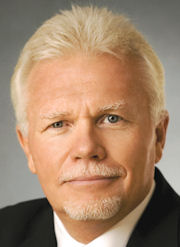
Reiff serves as executive editor of the Orange County Business Journal and writes the OC Insider column (left). His TV show has been called “Inside OC” for eight years, and focused mainly on Orange County until now.
The program will begin covering all of Southern California. Its production budget is expected to increase to anywhere from $300,000 to $450,000, Rogers said.

The move to broaden the focus of Reiff’s show is seen as a way for KOCE to grow its audience without incurring the production costs of an entirely new program.
The station is seizing the opportunity presented by KCET’s decision last year to end its relationship with the Arlington, Va.-based Public Broadcasting Service after a dispute over dues it owed the network.
The decision to cut times meant KCET lost its most popular syndicated programming, including Jim Lehrer’s “NewsHour,” Charlie Rose’s interview show and “Masterpiece Theater”—all of which can be seen in Los Angeles and Orange County on KOCE. KCET now airs a programming from independent producers as well as Arab news network Al Jazeera, the BBC and NHK, a Japanese broadcaster. It is pursuing plans to create more of its own local programming through a co-production agreement with Encino distribution and production company Eyetronics.
The plans appear to set up a direct competition with KOCE.
“In moving away from PBS, we’re going to be about our local community and about Southern California,” said KCET Chief Executive Al Jerome. “We have the shelf space to do it.”
New Programming
Rogers said KOCE’s station’s expansion into the L.A. market will be slow. One reason is the PBS dues structure, which is based on a formula that includes how much money a station raises.
Currently, the station pays $3 million a year for its entire PBS lineup, but a host of new programming would require more fundraising that could sharply raise fees. One way around that would be to produce content that can be broadcast by other PBS affiliates, since the network reduces dues for stations that produce syndicated content.
Rogers said that’s one reason why the new arts program in production also focuses on the New York arts scene. The show is being co-produced by WNET-TV, the New York City PBS affiliate, and is being eyed for syndication.
Still, the long-term plan is to make the station a major West Coast producer of nationally syndicated public television content. The station is moving into new headquarters near the South Coast Plaza shopping center in Costa Mesa.
Rogers said the staff of 40 will probably grow to 60-75 employees, as more programming is created for the Los Angeles market. Much of the new staff will work in offices that the station plans to lease in Los Angeles County after it completes the Costa Mesa move next year.
Already, KOCE’s ratings—and base of potential donors—have grown dramatically this year. Most of that attributed to its region- al flagship status and syndicated PBS pro- gramming that’s no longer available on KCET.
The station can be accessed through its digital broadcasts and on cable systems from Santa Barbara in the north to parts of San Diego County and inland as far as the Coachella Valley in Riverside County.
Station executives said its primetime audience has doubled since last year, while KCET’s primetime ratings have been cut in half to about 20,000 viewers during primetime, according to Nielsen research. Despite that, KCET still commands more viewers in Los Angeles than KOCE during primetime and throughout the day.
Polakoff is a staff writer for the Los Angeles Business Journal, a sister publication of the Orange County Business Journal.
