

Electronics companies here face disruptions in supplies in the wake of Japan’s earthquake and tsunami and could see effects start to show up in the current quarter.
Japanese companies here and local business that rely on suppliers in Japan say they’re seeing minor interruptions in parts and raw materials as the country works through disruptions in production, transportation, fuel and electricity supplies, communications and other issues.
The situation has the potential to cut into sales and even profits for companies here. Many are drawing on stockpiled supplies or looking for secondary suppliers.
“There’s going to be some small ripples in the supply chain over the next couple of months,” said Scott Searle, managing director of Merriman Capital Inc. in New York.
The situation comes at a tough time for makers of chips, circuit boards, other computer products and consumer electronics. Most are enjoying a rebound from the recently ended recession with demand “still very strong,” Searle said.
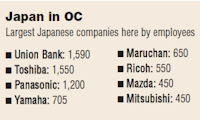
Japanese companies here could see the most fallout.
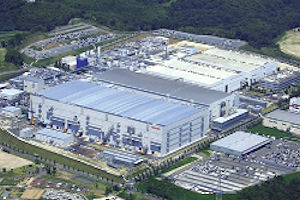
Irvine’s Toshiba America Electronic Components Inc., a unit of Tokyo-based Toshiba Corp. that sells data storage devices, transistors, sensors and other products made in Japan, saw one of two chip plants idled after the disaster.
A Toshiba plant in Kitakami City, in the hard hit northeast, sustained interior damage and had limited water, gas and electricity last week, company officials said.
“The outlook for when the factory can resume production is uncertain,” Toshiba America said in an update on its website.
Another Toshiba plant in central Japan is back up and running.
Toshiba officials said they are concerned about short-term production at all facilities. They’ve seen problems with logistics, underscoring the extent of the fallout on Japan’s factories and transportation network.
Electronics Production
Raw materials used in 25% of the global production of chips and other electronics have been disrupted in Japan, according to El Segundo-based market research firm iSuppli Corp.
A quarter of global production of silicon wafers used to make chips has been suspended, according to iSuppli, part of Colorado’s IHS Inc.
A shortage of raw materials used to make printed circuit boards—namely copper-clad laminate—also is predicted.
Japan produces 70% of the world’s supply of copper-clad laminate.
A shortage could impact several companies here, including circuit board makers Santa Ana-based TTM Technologies Inc. and Anaheim’s Multi-Fineline Electronix Inc.
Others that use circuit boards as part of their finished products include Fountain Valley-based Kingston Technology Co. and Irvine-based chipmaker Broadcom Corp.
The end result could be disruption for makers of computers, networking gear and consumer electronics.
Ricoh
Tustin’s Ricoh Electronics Inc., part of Tokyo-based Ricoh Co., has struggled to restore communication with the hardest hit areas in Japan, making it difficult to assess damages and receive updates.
Ricoh makes digital copiers, assembles chips onto circuit boards and builds all-in-one machines that can print, copy, scan and fax in Tustin.
Ricoh runs four plants in northern Japan. It employs 41,000 people on the island, with some 3,000 production and sales people in the most devastated areas.
At least one Ricoh employee in Japan is confirmed dead and several are missing, along with some relatives of workers, officials said.
Three of four Ricoh sites have regained basic utility services. The fourth, near the city of Sendai, was engulfed in a tsunami wave. It saw equipment damage and lacks basic services, according to Ricoh.
Full recovery may take months, according to Ricoh. Production delays could last a week to two months, according to the company.
“Our first priority is to ensure the safety and well-being of Ricoh employees and their families,” the company told the Business Journal. “We continue to accelerate recovery at our facilities, while looking into the feasibility of alternative sites.”
Conexant
Newport Beach-based Conexant Systems Inc., which designs chips here and contracts for their production in Asia, has seen only minor impacts. Its contract foundry is in Taiwan.
Conexant’s 15-person technical staff in Japan was forced to work from home for several days following the disaster, spokeswoman Gwen Carlson said.
The company has a few subcontractors that get materials from Japan and is keeping tabs on developments, according to Carlson. Conexant is confirming daily deliveries with Japanese suppliers, she said.
Many of Conexant’s subcontractors are turning to secondary suppliers elsewhere in Asia to ensure a ready supply of raw materials, Carlson said.
Conexant makes chips for multifunction office printers, digital picture frames, PC speakers and other devices and has annual revenue of $200 million.
Fallout from the disaster could start showing up in the current quarter.
“There’s a time lag,” said Kaushik Roy, an analyst at Wedbush Securities Inc. in San Francisco who covers Lake Forest disk drive maker Western Digital Corp., Costa Mesa-based networking electronics maker Emulex Corp. and others. “If there’s an impact, it’s going to be in the second quarter.”
In a March 25 report on Multi-Fineline Electronix, a maker of flexible printed circuit boards for cell phones and other devices, Merriman Capital analyst Searle said the Japanese situation requires monitoring.
Fallout is likely to cause “blips” throughout the June quarter, he said.
Major supply issues aren’t expected at Aliso Viejo-based networking electronics maker QLogic Corp. since most of its production is done in China and Southeast Asia, said Jayson Noland, a senior analyst at Robert W. Baird & Co. in San Francisco.
Other companies he follows, including tech bellwethers EMC Corp., Hewlett-Packard Co. and IBM Corp., have more exposure in Japan, he said.
EMC, HP and IBM are major customers for QLogic and others here.
QLogic also sells to Hitachi Data Systems Corp., part of Tokyo-based Hitachi Ltd., a major supplier of data storage computers.
“There could be some demand side issues because of Hitachi,” Noland said. But “it’s not something I would expect to show up in a big way for QLogic.”
Solarflare
Japanese suppliers to Irvine chip designer Solarflare Communications Inc. haven’t been severely affected because of their location away from quake’s epicenter, said Don Kammer, supply chain director.
The company’s Japanese suppliers are operating at about 25% capacity and expect to regain full operations around June, Kammer said.
Solarflare, one of the area’s best-funded chip startups, has stockpiles of substrates—the material chips are built on—in South Korea and the Bay Area, he said.
“We feel good about the position we’re in, but we don’t feel good enough that we don’t need to monitor this,” Kammer said. “I’m really looking out six to seven months to see how things may shape up.”
