

LEGACY LEADERSHIP: Captain Howard N. Coulter (USN), who was the first commanding officer of the base, commissioned it in 1942 to house blimps for coastal anti-submarine patrols during World War II. Base constructed for $10M.
OC SIGNIFICANCE: Played a critical role in Navy and Marine aviation for over 50 years. Built on former Irvine Ranch bean fields in 1942 as Naval Air Station Santa Ana; renamed Marine Corps Air Station Tustin in 1979. Served as the nation’s premier West Coast military helicopter hub from the Vietnam War through Desert Storm.
DEFINING MOMENTS: In 1951, in response to the Korean War, the military reactivated the base and designated it as the country’s first airfield dedicated to military helicopter operations. On July 3, 1999, MCAS Tustin was officially closed. Since the closure, the City of Tustin has been leading the redevelopment of the base now known as Tustin Legacy.
BY THE NUMBERS: At its operational peak in the late 20th century, the base employed nearly 5,000 military and civilian personnel, holding six fully-inflated Navy patrol blimps and 13 active helicopter squadrons at the same time.
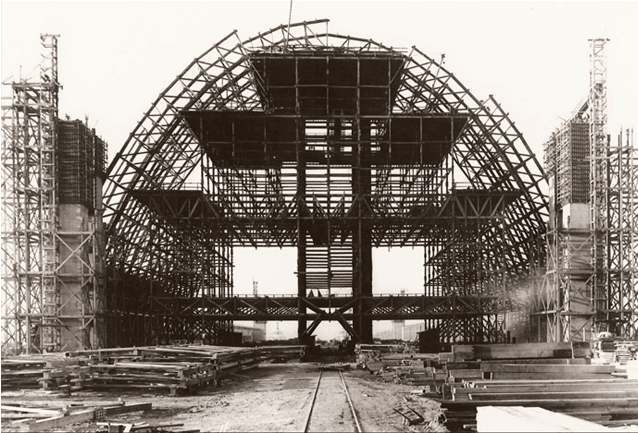
FUN FACT: The base became known for its most recognizable landmarks—two enormous, 17-story wooden blimp hangars. Built in 1942 to house anti-submarine patrol blimps, they were two of the largest free-standing wooden structures in the world. One of them burned down in 2023.
