

Noninvasive brain stimulation could be the secret to treating post-traumatic stress disorder (PTSD).
That theory is under review by Wave Neuroscience LLC, a Newport Beach-based wellness company that’s researching the link between brainwave patterns and mental health.
The company last month received a $1.5 million donation from the Engelstad Foundation for its second phase of clinical trials. It expects to enroll 160 participants in its clinical trials with Texas A&M University Health Science Center Institute of Biosciences and Technology.
“Historically, we’ve been in San Diego and Dallas, and this will allow us to expand to other parts of the country,” Fred Walke, CEO of Wave Neuroscience, told the Business Journal.
The company anticipates submitting for Food and Drug Administration approval by next summer pending the results of the study.
Wave Neuroscience has raised $5.5 million to date for its research and treated 15,000 people.
Since launching in 2019, Walke says the company has “grown by over 100% each year.”
Personalized Treatment
If there is no structural damage from a traumatic brain injury (TBI), the current standard of care either suggests rest or medication.
Neurons slow down while the body recovers from a brain injury, Walke explained.
Resting after a TBI with no additional treatments runs the risk of neurons not returning to pre-injury speed.
Brain stimulation is a noninvasive way of “resetting your brain to its highest level of performance,” Walke said.
Wave Neuroscience’s MyWave technology analyzes an individual’s brainwaves and creates personalized treatments using magnetic e-resonance therapy (MeRT).
It starts with a 10-minute brain scan called an electroencephalogram (EEG).
Electrodes are attached to the scalp to record the brain’s electrical activity and detect any abnormalities.
Based off the results, Wave Neuroscience works with patients to develop an in-clinic treatment plan using MeRT that is tailored to their unique frequency patterns.
MeRT uses magnetic fields to stimulate certain areas of the brain that aren’t functioning the way they should.
“We can do regular scans to see neuron disruption before symptoms present and eliminate suffering,” Walke said.
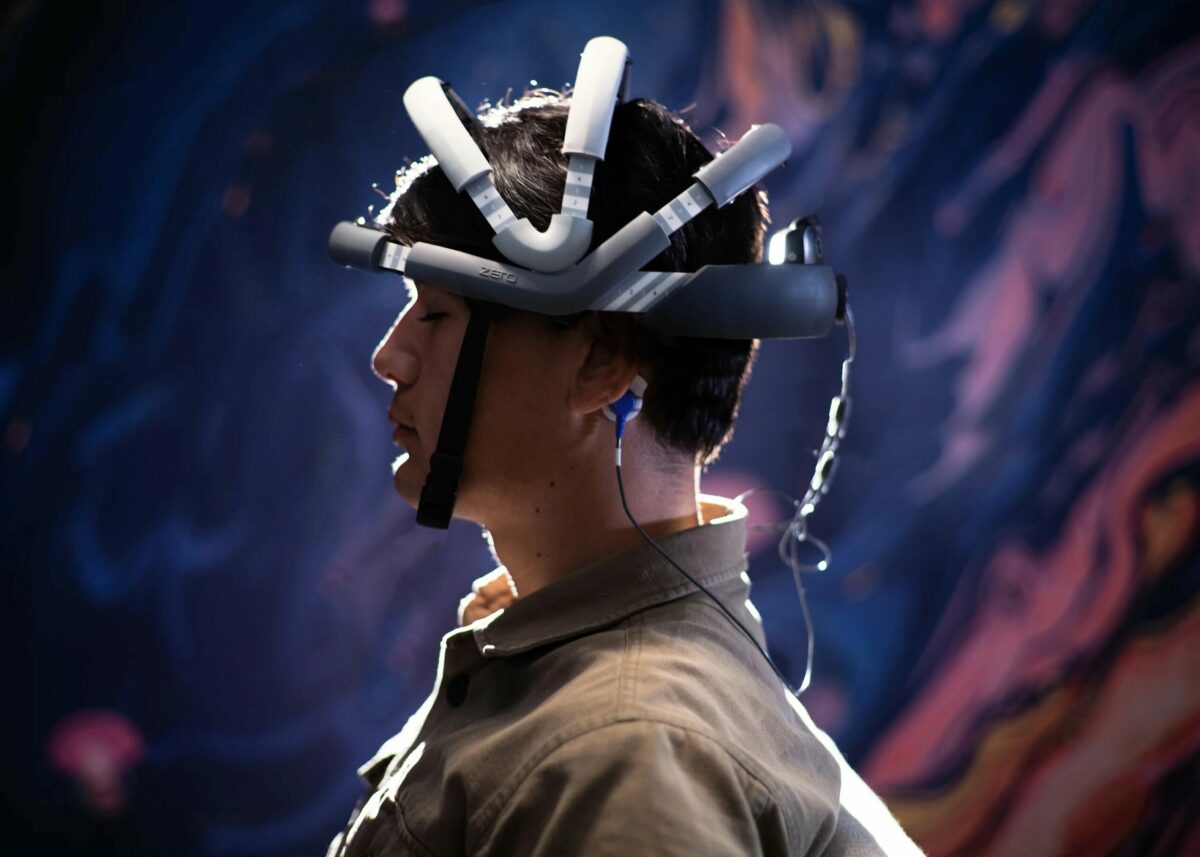
Another option is at-home treatment with Wave Neuroscience’s neuromodulation device, Sonal.
Each session consists of wearing the helmet for 30 minutes per day, every day for one month.
Veterans
PTSD and TBIs are closely associated with military personnel, which is why the first phase of the trials focused primarily on veterans.
Wave Neuroscience’s mission is especially close to Walke’s heart since his father was a part of the U.S. Marine Corps for more than 30 years.
“My goal is to reduce the shame and the pain that comes with mental illness,” Walke said.
He first became interested in neuromodulation therapy when his daughter struggled with depression after suffering from a sports-related head injury.
Traumatic brain injuries lead to depression 40% of the time, according to Walke.
“Most people don’t understand the correlation,” he said.
Walke came across MeRT technology while researching different solutions. After a scan and three weeks of treatments, his daughter was in full remission and resolved of her symptoms.
CEO for Hire
Walke describes himself as a “CEO for hire” for venture capital and private equity firms.
At 29, he was promoted to CEO of MicroDental Laboratories Inc.—acquired by Modern Dental Group Ltd. in 2016—and helped grow it to become one of the largest dental laboratories in the world.
“All of the businesses I’ve worked with have been focused on improving the lives of people,” Walke said.
