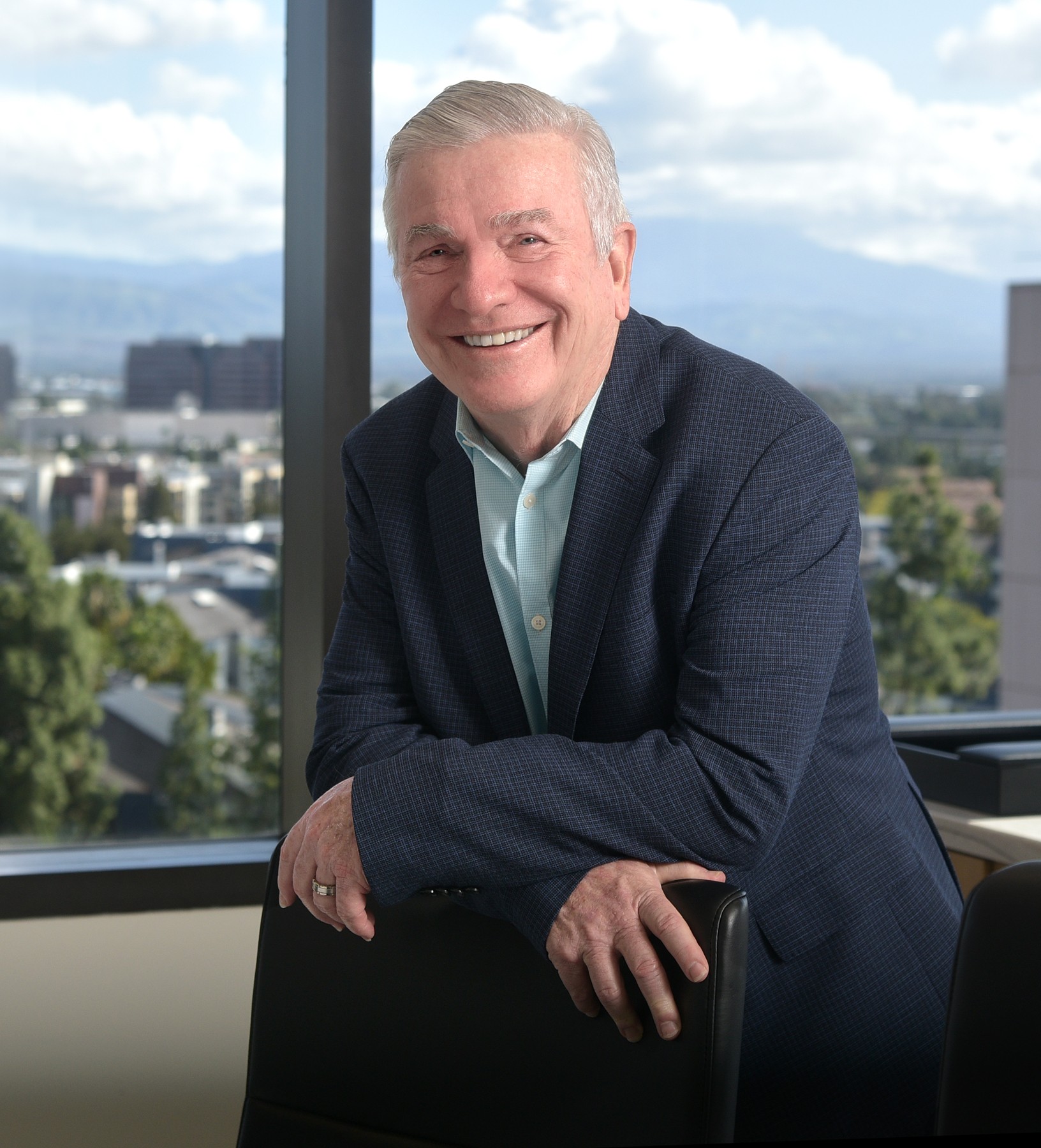
Frank Jaksch aims to grow plants in stainless steel tanks, rather than in the ground.
“We can grow plants without having to grow plants,” Jaksch told the Business Journal. “We can solve a lot of problems that exist.”
Jaksch has a long history of developing health nutrients, having grown dietary supplement and food ingredient company ChromaDex Corp. (Nasdaq: CDXC) from a business in his spare bedroom to a company with a $100 million market cap as of earlier this month.
Jaksch, who has lived in San Juan Capistrano since 1991, last month was named chief executive of Boston-based Ayana Bio, a newly created firm that describes itself as a plant cell technology company using synthetic biology to grow plants.
“It’s a groundbreaking area that Ayana is one of the first to enter,” Jaksch said.
The “plant bioactives” made by Ayana can in theory be used for human nutrition, “thus overcoming challenges in the current ingredient supply chain,” the company says.
‘Healthy Aging’
In 1999, Jaksch began ChromaDex to investigate chemistry-based solutions for nutritional foods. It eventually developed a popular nutritional product called Tru Niagen, a form of vitamin B3, which is marketed as boosting “healthy aging” and is sold as a food additive to companies like Nestlé.
“It was a great experience,” Jaksch said. “I got to do everything I love to do on the botanical side and turn it into a blockbuster product.”
Jaksch stepped aside as CEO in 2018, when ChromaDex, previously based in Irvine, shifted from a testing company to a bioscience company focused on consumers. He retained the role of chairman.
“I’m not a consumer product guy; I’m more a chemistry guy,” said Jaksch, who still owns 3.3 million shares, or 4.8% of the company, worth almost $5 million.
After the change in leadership, new ChromaDex CEO Robert Fried moved the company’s headquarters to Los Angeles. Last year, it reported sales climbed 14% to $67.4 million.
ChromoDex still has a presence in Orange County; this summer it moved its Irvine operations to a slightly smaller, 8,000-square-foot facility at Tustin’s Flight office campus, according to regulatory filings.
Ginkgo Startup
Ayana was a startup launched last year by Ginkgo Bioworks Holdings Inc. (NYSE: DNA), a Boston-based company with a $5.6 billion market cap that promotes biotechnology applications in diverse markets from agriculture to pharmaceuticals.
Ayana’s already raised $30 million in Series A round; backers include Viking Global Investors and Cascade Investment.
The startup has licenses from Ginkgo, its main shareholder, to use some of its technology in its development efforts, according to regulatory filings.
“Extraction from agriculture is the past; ingredient cultivation is the future,” said Ayana co-founder Effendi Leonard, who is now Ayana’s chief technology officer.
Jaksch has known Leonard, who also lives in Orange County, for 15 years when the latter worked on a project for ChromaDex.
The pair plan to stay in Orange County, where they’ll be opening an office early next year. Jaksch isn’t sure if Ayana’s headquarters will remain in Boston; the company currently has six employees.
Passion
Ayana calls itself a maker of “sustainable bioactives for consumer products,” which fits squarely into the new CEO’s skill set.
“My main passion is to develop ingredients based on botanicals,” Jaksch said.
He said many high-value plants such as blueberries don’t translate well to mass produced agriculture, he said.
“Blueberries are very expensive and difficult to grow for specific qualities,” he said. “One crop can be completely different from year-to-year.
“If we can transfer that to plant cells in tanks, we can eliminate that variability,” he said. “Transferring this stuff to tanks is an elegant solution.”
Ayana Bio’s plant cell technology product pipeline includes bioactive compounds from ginseng, berries, cocoa, ginger and other high-value botanicals.
“Our plan is to develop ingredients and make those accessible to the food and beverage and diet-care companies as tools they can integrate into food products,” Jaksch said.
The project will help solve a “large growing problem” of nutrition, particularly among the poor who don’t have access to healthy vegetables and fruits, Jaksch said.
“Calories and foods are cheap but nutrient dense foods that provide real nutrition are too expensive. It’s causing a nutritional problem for families that cannot afford to integrate vegetables and fruits into their diets.”
The company already has a proof of concept that growing food in tanks will work, Jaksch said. The next step is to gear it up for commercial scale production.
“Synthetic biology has incredible potential to support human and environmental health,” Ginkgo CEO Jason Kelly said.
“Frank’s understanding of where to apply plant cellular technology to fill unmet needs in nutrition and complementary medicine coupled with Ginkgo’s platform for cell engineering has the power to transform the category,” Kelly said.