

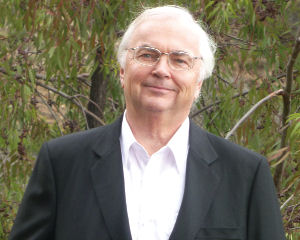
The founder, longtime director and biggest shareholder of Irvine’s Lantronix Inc. is spoiling for a fight.
Bernhard Bruscha, who owns nearly 40% of Lantronix, said he’s mounting a board challenge after more than a year of agitating for change at the maker of networking electronics.
Bruscha, 57, is backing himself and two other change-minded candidates for spots on the company’s nine-member board.
Lantronix is set to elect directors at its December shareholder meeting.
Bruscha’s seeking the ouster of Chief Executive Jerry Chase and Chairman Lew Solomon as well as changes to the company’s bylaws.
“Something needs to be done,” Bruscha said. “I have been trying to push for change inside the boardroom. The next logical step is doing what I’m doing.”
Bruscha’s slate also includes Fred Thiel, a former Lantronix chief executive from 1998 to 2002, and Hoshi Printer, a former chief financial officer with Irvine’s Autobytel Inc.
Lantronix makes small electronic devices that allow vending machines, thermostats, retail terminals, ATMs and other machines to be accessed via the Internet or other computers.
The company’s biggest customers are technology products distributors Ingram Micro Inc. of Santa Ana and Florida’s Tech Data Corp., which supply Lantronix devices to technology consultants.
Lantronix is losing money as sales have been on a continuous slide.
For the 12 months through June, Lantronix had sales of $46 million, down 5% from a year earlier. The company lost $1.5 million, widened from a $780,000 loss a year earlier.
Lantronix had a market value of about $30 million last week. Its shares are flat since the start of the year despite a run-up that brought a 40% rise by May.
SEC Filings
Last week, Bruscha laid out his case against Lantronix in a letter and Securities and Exchange Commission filings that argue that management and directors have presided over “lackluster” results and have a “lack of vision.”
James Kerrigan, a former Lantronix finance chief, and former chief executive Marc Nussbaum co-signed the letter.
They take issue with Lantronix’s product strategy and lack of growth. They charge management with wasting time and resources pursuing dead-end markets.
“The company’s leadership has not kept up with the marketplace’s changing landscape,” Bruscha said in his letter. “As a result, Lantronix today is becoming less and less compelling.”
Lantronix fired back last week in an SEC filing from Chairman Solomon that defended Chief Executive Chase, who joined Lantronix in 2008 from Santa Clara-based Terayon Com-munications Systems Inc.
Chase, a former Marine pilot turned technology executive, was recruited by a team that included Bruscha to stem years of poor results at Lantronix.
“At the time, Jerry seemed like a good choice,” Bruscha said. “He’s a good presenter, and a very professional person. He’s a good project management person. But he’s not a technology visionary.”
A turnaround guy, Chase early on oversaw a big round of job cuts and other cost-cutting measures. He’s revamped the company’s sales teams, made amends with customers and installed managers.
The board stands be-hind Chase, who Solo-mon said has faced an “extremely challenging time” but has seen “nota-ble successes.”
Solomon’s filing placed blame for part of Lantronix’s problems on prior chief Nuss-baum, who left in 2006.
Bruscha contends Chase’s efforts have failed to bear fruit.
Roughly two-thirds of the company’s sales come from older products that were brought to market before Chase came onboard, Bruscha said.
“All I’ve been hearing is that Jerry needs more time to prove his strategy works,” he said. “When you hear it the first time, you believe it. But when you hear it the second, third and fourth time, it gets tougher.”
Lantronix lacks a “coherent strategy,” Bruscha said, to tackle a market that’s seen as growing as medical devices and other products start to link to computer networks.
Chase and Solomon both hail from Terayon Communications, a maker of digital video software. Solomon served as a director there for a decade.
Chase streamlined Terayon by selling two of its three unprofitable units, tripling its sales and, a few years ago, selling the company to Motorola Inc. for $140 million.
When Chase came to Lantronix, the company was struggling to recover from a 2001 accounting error in which it recorded shipments to Transtec AG, a distributor in Germany that’s majority owned by Bruscha, who’s also its chairman.
The sales were booked only to have the products returned later, after Lantronix completed a stock sale.
Lantronix ended up restating revenue for 18 months in 2000 and 2001, eliminating about $7 million in sales.
Bruscha board candidate Thiel was at the helm during Lantronix’s accounting problems. Bruscha was a director at the time.
Both were part of a 2001 company probe and a subsequent SEC investigation. Neither was found to have committed wrongdoing.
Lantronix’s troubled past “hasn’t been a concern” during Bruscha’s talks with shareholders, he said.
“I believe that I have the support of others,” he said. “That’s not an issue here.”
Milwaukee’s Heartland Advisors Inc. is Lan-tronix’s next biggest shareholder at about 14%.
Bruscha, a German of Italian descent who has a home in Laguna Beach, said he’s looking for a Lantronix leader who’s more aggressive.
“We need someone who will tell us where to attack the market,” he said. “We need a general.”
He declined to give names of those he sees as potential leaders of Lantronix.
So is little Lantronix worth the fight?
Bruscha, a seasoned investor, said cutting his losses at the company isn’t an option.
“I don’t need the money,” he said. “Selling at this point is like an admission of losing. It could be I’m a bit emotionally attached to the company and to the people who work there. I want it to do well.”
