

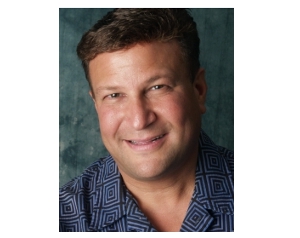
The business plans at Strategic Marks LLC are in constant motion, as is Ellia Kassoff, the man with the plans, but the business of adolescence takes longer than you think.
The Newport Beach-based company sells candy via Leaf Brands LLC, the most popular being the venerable Hydrox brand of Oreo-like sandwich cookies, plus a veritable backpack full of other old-time names: Astro Pop, Tart-n-Tinys, Wacky Wafers, Quicksand and Bonkers.
It helps fill display cases with home-grown ideas that include two from Jelly Belly co-developer David Klein: Farts and David’s Signature Beyond Gourmet Jelly Beans.
Sugar High
Farts beat out 200 newbies to win the most innovative product award at the 2014 National Confectioners Association trade show. Kassoff, 50, markets the “flavorful chewy candy nuggets” under the line, “Have you tried our Farts Yet?”
Yes, they come in “sour.”
Leaf’s cavity-makers produce $1.5 million in annual revenue.
His sweet-spot vision scales even more.
After the recent Toys“R”Us bankruptcy filing, he said he’ll resurrect the decade-dead KB Toys brand, the rights to which Strategic Marks bought last year. KB had 1,000 retail outlets at its peak, closed due to bankruptcy in 2008, and was sold to Toys“R”Us in 2009.
Kassoff wants to reboot, and that does mean retail brick-and-mortar sites.
“We are planning to open stores.”
In fact, he said, toy “manufacturers are coming to us saying, ‘We need you’” due to the loss of Toys“R”Us.
They’ll Pop
He’s thinking pop-ups, like those bargain-basement book outlets selling remaindered titles and last year’s cookbooks for six months at a time, or Halloween costume stores rising from dozens of cavernous retailer graves each fall.
Kassoff said KB could open by Christmas. He first sought help from Austin, Texas-based Go Retail Group, which runs 1,600 temporary toy and calendar stores a year, but a deal didn’t get done.
Instead, “We’ll own the whole process.”
One go-it-alone option could put KB in 100 malls of Indianapolis-based Simon Property Group Inc.
“We’ll test individual markets, look at the numbers, and see which malls can support a” longer lease.
Retail Rodeo
Kassoff’s a one-man show, but this isn’t his first retail rodeo.
A five-year courtroom kerfuffle with Macy’s ended in 2016 with Strategic Marks getting rights to May Co., Bullock’s, Robinson’s and other retail names. Kassoff said he plans “an online retro fashion mall” and that if his castoffs plan at KB works, it could temper Toys“R”Us fallout for workers and toymakers.
The Wayne, N.J.-based retailer had $11.5 billion in annual revenue, 1,500 stores and 65,000 employees, half in the U.S. Stores in the U.S., Canada and the U.K. are slated for closing, but 400 in Asia and Australia weren’t included in the bankruptcy filing and could be sold to their Hong Kong partner for $1 billion.
Van Nuys-based toymaker MGA Entertainment Inc.—its products include Little Tikes and Bratz—bid $900 million in April for 350 Toys“R”Us stores in the U.S. and Canada, but the bankrupt retailer declined.
Greatly Exaggerated
The so-called retail apocalypse is more precisely a few key issues, and Kassoff could benefit no matter how it ends.
Toys“R”Us had $5 billion in debt. It grew big, drew leveraged buyouts, and sank as shoppers’ tastes changed.
Shares in toymakers Mattel Inc. in El Segundo and Hasbro Inc. in Pawtucket, R.I., are down this year, and Mattel said it will close its New York offices as part of a $650 million cost-saving effort.
Retail observers expect a shakeout—the U.S. has 50% more retail space per capita than Canada, twice Australia’s and six times that of Europe and Japan, Morningstar said.
Some 77 million square feet of retail real estate has closed through April, and 2018 should easily surpass 2017’s record of 105 million square feet closed, according to Bloomberg.
But retail sales are steady, data show.
A Deloitte data dive and its polling of 2,000 consumers showed low-priced stores had five-year sales growth of nearly 40% and higher-end ones above 80%.
U.S. retail sales, including online purchases, rose 4% year-over-year last year, minus restaurants, car sales and gas stations, to about $3.5 trillion, said Washington, D.C. trade group National Retail Federation, working from Census Bureau numbers. It projects the same growth rate this year.
Writing on the Wall
New York-based retail consultants Alix Partners LLP wrote in a first-person piece in the New York Times that overall retail hit $5.7 trillion last year and that 91% of that was brick-and-mortar.
Strategic Marks’ strategy of buying up “zombie” names—moribund brands and trademarks—and finding out which cadavers have legs seems savvy when compared to loading a chain with debt and filing bankruptcy when the spigots dry up.
Consider that Kassoff’s concept could include both online and on-ground sales, which taps both types of buying and a growing trend in smartphone-era shopping called showrooming, or customers examining products in stores and buying them online.
Add the data above on luxe and discount products both growing. Kassoff said KB Toys could work in tandem with an FAO Schwartz—also Orange County-based—to cover both ends of the retail spectrum.
Retail’s writing on the wall could be in crayon, and he can buff that right out.
Family Business
Kassoff’s made inroads in kid-friendly stuff and retail distribution with candy—it’s in his blood.
An “aunt married into the Leaf Candy family”—his company name is a zombie trademark he bought in 2010—and “we always had a bunch of test candies around.”
He’d sell it to friends in elementary school in Palm Springs, where he was born to teachers. After college in Boston, he returned to California in 2000 and worked in tech recruiting for 17 years.
He placed “15 full-time partners at Accenture,” and, flush with cash, didn’t find Astro Pops at a local Smart & Final where he’d been loading up on them. He called Spangler Candy in Bryan, Ohio, which had discontinued it, and on the same impulse that sells snacks in checkout lines, offered to buy the brand.
“I’ll buy my favorite candy and ensure it will continue,” he said. “How hard could it be?”
Rocket Science
Harder than it looked.
“The candy was so unique, it needed specific machines to make it.”
Rocket scientists—1960s alumni of San Fernando Valley icon Rocketdyne—designed new cogs and whistles, and Kassoff added other legacy brands over time.
Hydrox—founded four years before Oreo in 1908 and later eclipsed by it—is Leaf’s flagship. Farts is “a funny name to break up the day [and] memorable flavors,” such as cherry “like an Italian ice in New York.”
Social media—Facebook groups for old-time candies, for instance—are part of the mix, and Kassoff isn’t above headline-hijacking press releases. Last fall he floated buying Nestle’s U.S. candy lines—which ultimately sold to Italy-based Ferrero for $2.8 billion.
That didn’t deter his spirit, though. “I wanted to create a fun candy company,” he said. The industry is “dominated by a few large companies, and really boring. Nobody wants to take a chance.”
