

Building environmentally friendly space took a back seat to cutting construction costs during the economic downturn.
Now that things are starting to turn, developers are deciding whether to pick up where they left off and get back to building green.
They seem to be split on the idea and are looking to prospective profits and tenants to help decide.
A recent green building survey shows that development-related professionals are starting to look for a specific financial benefit before doing green construction.
The survey, by law firm Allen Matkins Leck Gamble Mallory & Natsis LLP, consultant Constructive Technologies Group and the trade publication Green Building Insider, found that 92% of 1,600 respondents strongly endorse green building.
That’s a drop from the 96% rate seen three years ago, before the economy began weakening.
At the same time, support for building to Leadership in Energy & Environmental Design certification levels—which can be more expensive and extensive than just adding basic green features—also is down to 62%, according to the survey released in March.
“Cost is a major driver for green building in this economic downturn, with the gap between support for green construction and LEED certification growing over the past two years,” the survey reported.
Only about 30% of respondents said they’ve seen leases in the past year directly from a client’s building being green.
One building that did see a return on its green features was Irvine’s 2211 Michelson, Orange County’s first certified green office tower to go up during the last commercial construction boom.
Hines Interests LP and Crescent Real Estate Equities Co. developed the white-metal-paneled tower, which sold this year for $103 million in the highest-priced office deal here since 2007.
Kilroy Realty Corp. bought the building in part because of its solid roster of tenants.
Officials for Houston-based Hines and Fort Worth, Texas-based Crescent think the building’s environmentally friendly design helped them land more than their fair share of tenants during the tough leasing market OC’s seen in the past few years.
The 265,000-square-foot tower opened in mid-2007 as a LEED silver certified building, just as OC’s office market was beginning to show signs of weakness.
While other new and existing offices around the county have had trouble with leasing, the 12-story tower near John Wayne Airport was almost half full within a year and was about 95% full as of last month.
Tenants include a number of real estate and financial services companies. Several have cited the building’s green features as selling points.
Being in a green building “was the main driver in our decision” to lease at 2211 Michelson, said Louis Tomaselli, managing partner for Irvine’s 360 Commercial Partners, a commercial brokerage that began operations this year.
Signing tenants helped the former owners seal the $380 per-square-foot sale to Los Angeles-based Kilroy last month (see related story, page 3).
But going green has its costs. A majority of survey respondents said they expected a LEED certification at its highest rating would increase project costs by more than 4%.
That estimate appears to be a little more than what was incurred to build the 2211 Michelson tower.
Hines officials said at the time of the building’s construction that its green features could end up costing it an extra 2% or so in construction costs.
Crescent reportedly projected a total $103.6 million development cost for the property at the time it was built, which means the recent $103 million sale didn’t net the developers a profit, but staved off what could have been a much bigger loss.
The biggest reason for building green projects is saving energy and other operating expenses, according to the survey’s results.
Among other productivity and cost-savings benefits, tenants’ utility bills are expected to be at least 10% lower at these types of buildings compared to traditional offices.
Green design features at 2211 Michelson include wastewater and water conservation technologies, high-tech lighting and heating systems and 60% more glass than conventional office buildings.
Those types of features increasingly are showing up in buildings across OC. Similar upgraded features have been added to existing office towers in the area.
Whether tenants routinely will ask for green improvements during lease negotiations is yet to be seen.
360 Commercial’s Tomaselli said his company designed its 2211 Michelson offices, which total about 3,600 square feet, to include green furniture, courtesy of Irvine’s Interior Office Solutions, a LEED-certified contract furniture dealer.
Green is “a big focus for the company,” Tomaselli said.
“Going (to 2211 Michelson) was the only real option for us,” said Tomaselli, a proponent of eco-friendly features who claims to have been the first commercial broker in the county to have bought a hybrid car.
Other Green Buildings
Last summer, the three high-end buildings at the Offices of South Coast Plaza became the first multitenant buildings in California, and three of the first four buildings in the U.S., to get the highest possible rating for an existing office building: LEED-EB Gold certifications for operations and maintenance.
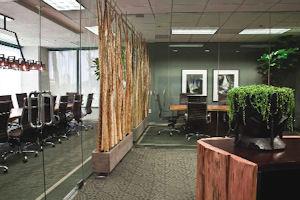
In Newport Beach’s Bayview Circle complex off Jamboree Road, property management firm RiverRock Real Estate Group Inc. recently unveiled its 8,800-square-foot green offices, which include natural lighting, recycled materials and no caustic chemicals or plastic cups in the workplace.
RiverRock officials said the green features are in keeping with the company’s goal to minimize the environmental impact at all of the properties it manages. It oversees some 2.4 million square feet of office, retail and industrial space in OC.
For tenant improvement projects, the company said its clients work with construction managers who understand green practices and how to work with a LEED certified building. RiverRock officials also said they’ve reworked their construction practice to incorporate green and recycling efforts. n
