

Dana Wharf Sportfishing and Whale Watching was the first business that opened its doors at then-sleepy Dana Point Harbor in 1971.
Founder Don Hansen and his crews have weathered many economy-induced storms, but his business strategy has remained the same throughout the years.
“My whole theory on fishing and everything else is to make sure everyone has a good time,” Hansen said. “That’s the key—as long as people go away happy, I’m happy. This business is a service-oriented business, and that’s all we have.”
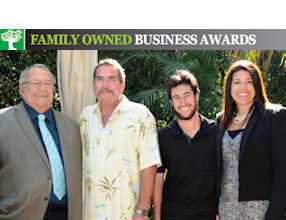
The Business Journal and California State University Fullerton’s Center for Family Business recognized Dana Wharf for its longevity at the 14th annual Family Owned Business Awards luncheon on Nov. 13 (see related stories, pages 1, 4, 5 and 7).
Employees, Sales
The private company has 35 employees. It recorded $3 million in sales last year and expects to close this year slightly up at $3.5 million. Sixty percent of operations center on whale-watching tours, and fishing expeditions bring in the rest of its income. The company also profits from running concessions on nearly half a dozen boats docked at the harbor.
Hansen, 79, officially turned over the rudders of his six-boat fleet to his son, Michael, 50, and daughter, Donna Kalez, 42, when he retired in 2004. But he still keeps an office at the dock. Hansen said he never counted on his kids to join him at Dana Wharf.
“You have children, and you expect them to do better than you did, so I was surprised they came into the business,” he said. “[But] without them, we probably wouldn’t be still in the business. I needed their support.”
Michael came on board some 30 years ago, shortly after graduating from San Diego State University with a degree in history. Donna followed in his footsteps in 1992 after brief stints in retail and teaching.
Both advanced to their current roles as co-owners by carving out a niche in what they’re good at.
“Donna does public relations, and Mike [runs] all the boats. It’s a team,” Don Hansen said. “Donna could not paint or run a fishing boat, and Michael could not do public relations work because he hates talking to people, and you got to have both, and that’s what balances it, what makes it work.”
The arrangement “works out fine,” Michael added. “She makes it happen so I can keep the boats up and running. It’s really nice to have her.”
Michael’s son, Shane, 19, captains the boats, making it a three-generation operation.
Who’s the Boss?
Disagreements do occur, but “time works things out,” Don Hansen said. “Sometimes you get into, ‘Who’s the boss, who’s not the boss.’ We all have our opinions, but luckily after all these years we’ve been able to work 99% of them out.”
So who is the boss?
“They humor me and agree every now and then with what I say,” Don Hansen said. “But they run the show.”
Hansen credits his children with guiding the business out of several economic downturns and finding innovative ways to remain competitive.
The first challenge came right around 2001 when Michael took advantage of growing charter opportunities by investing in a new 95-foot boat, the Dana Pride.
“Our corporate business was through the roof,” Kalez said. “Groups coming to the hotels were getting bigger and bigger, and we didn’t have a boat big enough for all those people.”
Then 9/11 hit, and 100-person outings dwindled to close to nothing, Kalez said, adding that “everything fell out. We had this huge boat here, and big companies didn’t come. It was terrible.”
But over time, the business picked up enough to encourage Michael to make another investment—Ocean Adventures—a luxury 49-person whale-watching catamaran.
“We have four or five major hotels here, and a fishing boat is not what their $500-a-night client wants to go whale watching in,” Don Hansen said.
The family also stuck together through the most recent recession.
Kalez said they’ve been focusing on family-oriented fishing programs in the hopes that the breakdown between the whale watching and fishing businesses will be 50-50 next year.
“It’s a hugely competitive market now,” she said. “There are whale-watching companies that pop up now all the time, and that’s something that we didn’t have to deal with in the past.”
