

The Business Journal’s Paul Hughes asked hoteliers to highlight a key technology change they’ve made this year at their properties or companywide to enhance service levels—how it fit into their market positioning, whether it taps national trends, and any obstacles they faced in making the changes.
Respondents elaborated on any elements where technology might improve guest experience. Many answers involved software to increase interaction among companies, workers and guests via common communication choices: texting, apps and video, for instance. Some also noted changes in the works. Here are excerpts of their edited remarks:
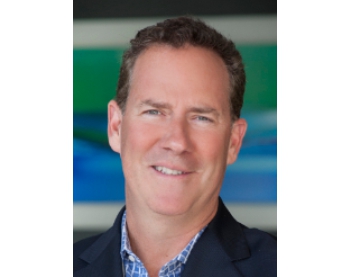
Scott McCoy
General Manager
Irvine Marriott
We’re here to help people harness the power of ideas. Guests can now stream inspiration with curated TED Talks—several thousand presentations on culture, science, business and other topics. We’ve organized 30 viewable on personal devices or via our 55-inch HD TVs into three groups of 10 to help guests focus their efforts:
• Conquer the Block: explore new ways to interact with groups, give a talk, and ignite presentations to match ideas. Creativity blocked? Here’s your channel.
• Seize the Day: talks by people who made things happen—from saving the rainforest to saving lives. They worked to bring ideas to life. Need inspiration? This is the collection.
• Start that Company: for entrepreneurs on the brink—tips on everything from making a pitch to beating patent trolls—and warnings on pitfalls. Following a dream? Start here.
Curiosity travels with you. We worked with TED to design playlists that spark imagination and fire up the mind.
We started this a few months ago here in Irvine as part of a wider agreement between Marriott Corp. in Bethesda, Md., and TED Conferences LLC, a nonprofit in New York. The hotel chain is deploying it through the Americas over the next year; 180 properties are scheduled to be live this month.
We’ve also placed TED Talk lounge areas in event and networking spaces for group viewing. Guests want to spark new thinking through connections and shared stories and experiences. Our TED Talks are uniquely defined for this customer.

Scott O’Hanlon
Director of Marketing & Advertising
Waterfront Beach Resort, a Hilton Hotel
Huntington Beach
We’re now deploying a guest communication platform called HotSOS.
It’s a play-on-words between the International Morse Code signal for distress—and the term hot sauce—an item which usually gets our attention fast. It’s a way for our guests to get in touch with us quickly.
Hotel guests are absolutely clear on what they want, and a main complaint in any unsatisfactory review of a hotel on social media is slow service. HotSOS contributes to the top compliment in online reviews of the Waterfront—and in-person comments—which involve how friendly and accommodating staff is with our guests.
HotSOS automates certain daily operations so we can respond quickly and with care to any guest request. It also lets guests communicate with us the way they often do in daily interaction—via text. They want rapid response, and they appreciate our follow-up once a task is done.
From extra pillows or towels to a sink that’s backed up or a TV remote not functioning—whatever the request, we can route it immediately to the correct department, confirm that we have the request in hand, estimate the time until we are at your door, and close the request with a follow-up text or personal call to make certain everyone is satisfied.
The product is from Amadeus Hospitality in Portsmouth, N.H., and gives us one more tool to be faster, more accurate and treat our guests to even more superb service and satisfaction on a platform they prefer.

Ian Pullan
Vice President, General Manager
Monarch Beach Resort
Dana Point
We have a new running app for guests called RunGo.
The app is from Leaping Coyote Interactive Inc. in Vancouver, British Columbia. It acts as a virtual running partner for guests, giving turn-by-turn direction, much like a car’s GPS or a map app’s verbal directions.
Our team helps guests daily with the best places to jog, walk and hike. We wanted to offer special and simple ways to enjoy the surrounding areas and feel like a local. In many cases people still used paper maps on outings; this cuts that out and makes the experience seamless.
One particular way we’ve seen it put to use is by fitness enthusiasts at our Miraval Life in Balance Spa. Our staff has created custom routes to experience Dana Point and surrounding areas in the most serene settings.
The spa is a stand-out amenity at the resort, and its emphasis on well-being and fitness extends beyond its four walls. The resort also gets a lot of runners in general, and employees wanted to make running easier for them. The app lets them enjoy the views and the beauty of the area rather than having to figure out the route.
Integrating the app itself with specifics about the resort and this area, along with the custom routes, was easy and took only about three weeks to implement.
This sets us apart from other spa- and fitness-focused resorts because we are the first U.S. hotel to offer it. The app’s developer confirmed the next nearest hotel is a Fairmont Hotel in Vancouver.
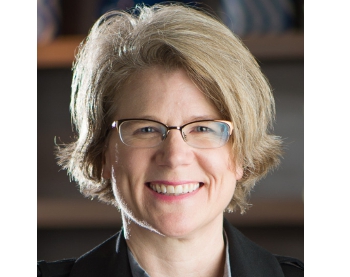
Alison Sansone
Vice President of Marketing & Communications
Twenty Four Seven Hotels
Newport Beach
We’ve been test-driving a new mobile app for two months to engage employees rather than simply informing them.
The Voice Storm app is by Dynamic Signal in San Bruno. It lets hotel managers reach employees on their smartphones, modernizing old-school, interoffice memos that get pinned to a bulletin board in the break room, and delivers it in a more interesting, interactive way that’s similar to mobile experiences people have in their daily routines.
It’s part of our company communication platform and aids internal branding. Just as external branding can attract consumers, internal branding can engage and retain employees. We look to technology for employee engagement, but retaining and attracting top talent is a metric often overlooked when measuring return on investment of the tools.
Technology is vital for efficiency, accuracy, and to inform day-to-day decisions and maintain a competitive edge, but Gallup research shows only 32% of U.S. workers are actively engaged in their work, and that it’s strongly connected to business outcomes the organization would consider essential to financial success.
Interactivity is a key part of our strategy, and the app lets employees talk with other team members internally, as well as share branded company content in public social channels, supporting broader goals.
So there are operational goals for the technology—where team members can exchange key information about guests and hotel activity—and social and cultural goals that inspire them to interact with and comment on a wider range of content.
Claudia Schou
Marketing & PR Manager
Hilton Anaheim
Texting is a widely used form of communication, so it makes sense for hotels to incorporate it into how they work to boost guest experience. We’re doing that with a product from Kipsu Inc. in Minneapolis.
Hilton Anaheim is near the Anaheim Convention Center, down the street from Disneyland Resort, and we have 1,576 rooms—so during a convention or the leisure season, we’re often at full occupancy. It’s a daily effort to keep lines of communication open with guests staying and/or meeting here.
The technology has changed the way we communicate with them.
It lets us engage with them as frequently as needed in real time. It helps improve customer flow—reducing front-desk traffic without reducing the level of interaction we have with them—and provides other benefits far beyond customer satisfaction scores.
It was also pretty easy to incorporate into our overall operations.
Kipsu strengthens the internal work of our teams and touches on external guest experience, for instance, by creating alerts that notify managers when some kind of service response or recovery is needed. If a guest is dissatisfied and posts something to that effect in real time on social media or in feedback on travel review websites, Kipsu can help Hilton staff intervene and respond before that experience escalates.
It acts as a key performance indicator that helps our management team understand guest preferences, concerns, and their overall experiences while here.
It’s a huge advance and tops all recent technology advances we’ve seen in its level of communication between hotel and guest.
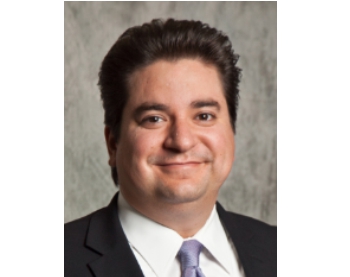
Alex Shotwell
Director of Sales & Marketing
Anaheim Marriott
We’ve expanded our energy conservation program with a $1.1 million investment to buy and install new solar technology. 2017 is the first full year we’ll operate with 1,729 new solar panels on the roof that were added late last year. From January to June, the rooftop system produced 402,320 kWh, cutting our energy consumption by 8%. The program falls in line with SB-100, a California bill that would require the state get all of its power from renewable energy, such as solar and wind, by 2045.
We’ve monitored feedback on the solar project, which has generated interest from other Marriott hotels and tied into a trend of companies looking to book business at hotels involved in green efforts. We have seen groups voice interest in the work, though we can’t say if it was the deciding factor in booking their business with us.
The project, by SoCore Energy LLC in Chicago, went live in November. Its implementation expands on Marriott’s long-term effort to reduce our carbon footprint. Our latest goal involves 20% reductions in water and electricity use.
Next year’s technology efforts include the purchase for our roughly 100,300 square feet of meeting space of 3,200 banquet chairs from Ramler International in Jericho, N.Y.
The chairs have an optional side tray with USB ports that charge devices via battery. They won’t be here until about midyear, but 10% of them will have this high-tech capacity for meeting attendees.
Charles Taft
Operations Support Manager
DKN Hotels LLC
Irvine
DKN expanded its use of HelloShift, a collaboration platform among staff and with guests.
It replaces the venerable Red Book of hotel operators, that pesky day planner that guides communication among employees but is generally accessible only if team members can get to the front desk to read it and sometimes has poor handwriting that’s difficult to decipher.
The software works across team members’ devices to let different departments communicate about the needs of that day. It also tracks the most common issues our hotel guests run into so managers can craft action plans to prevent the problems’ recurrence.
We’d been using the product internally, and the San Francisco company that makes it offered a guest communication module, which we’re integrating into our daily work. It’s increased guest satisfaction scores across the board.
We chose HelloShift as a small but up-and-coming company whose culture and values matched ours. The product was ready to roll, and they had a multiyear plan for significant improvements, in part based on customer feedback, including ours.
Next year we’re looking at in-room technology, possibly the Amazon Echo or one called Myini by a San Diego firm. Either is a fun, interactive feature that increases communication with a hotel’s team. Both products offer concierge-type services, such as answering guest questions with ease.
We’re also looking at placing a hospitality robot at one or more of our hotels. We run mostly Hilton and Marriott branded hotels, and both are working to put robots into hotels to answer questions and perform basic tasks, such as delivering towels to a room.
