

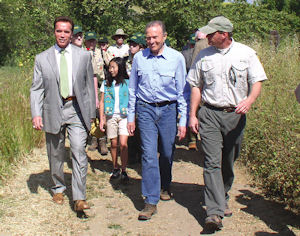
#1 Donald Bren Owner, chairman, Irvine Company
Estimated worth: $12 billion
Just about everyone in real estate saw their wealth decline in the past year. But, by our estimation, Donald Bren isn’t quite like everyone else.
We kept our estimate for the Irvine Company chairman and owner—said to be the wealthiest real estate owner in the U.S.—at $12 billion for the second year in a row.
The value of most real estate is down 15% on average from a year ago, based on brokerage data and a sampling of recent deals. Bren surely has seen some fallout in his vast holdings.
Still, we decided to keep our estimate unchanged based on several factors:
• Rising prices for residential land.
This could be the biggest offsetting factor for Bren. Irvine Co. has sold or is in the process of selling more than 575 homes built on company land in Irvine. The homes have sold quickly, suggesting pent-up demand for new homes in Irvine—and Irvine Co. housing lots.
The sales imply rising values for Irvine Co.’s developable land from a year ago, when the uncertainty of the housing market made the worth of any land questionable.
• Irvine Co.’s relatively low debt and outright ownership of land and buildings.
Unlike other real estate holders, Bren did not see his stakes in buildings and land wiped out as they declined in value and lenders took whatever equity was left.
• Irvine Co., the county’s dominant landlord, has grabbed the lion’s share of recent leases.
Last year, Irvine Co. signed 6.7 million square feet of office leases. So far this year, it’s leased more than 4 million square feet of space.
To be sure, the leases have come at a discount. But empty buildings have suffered most during the ongoing downturn, with full buildings still commanding a premium, based on recent sales.
We also assume that the biggest hit to Bren’s wealth already played out in 2008 and early 2009.
In valuing Bren at $12 billion a year ago, we based our estimate on new input from sources familiar with Irvine Co.’s holdings and debt. The information confirmed that our prior conservative estimates for Bren were too low.
In years past, we’ve said Bren could be worth as much as $15 billion to $20 billion. Now the downturn seems to have brought his wealth closer to our estimate.
Coincidentally, our estimate this year matches that of Forbes’ March list of global billionaires. The magazine ranked Bren as the wealthiest U.S. real estate owner and the 45th richest person in the world.
We haven’t always agreed with Forbes on Bren—for much of the real estate boom of the last decade the magazine’s valuation of Bren was considerably lower than ours.
Bren, the county’s largest land owner, landlord and most prominent businessman, is the wealthiest person seen here. He tops Broadcom Corp. cofounders Henry Samueli and Henry Nicholas at their 2000 peak of $10 billion each.
Irvine Co.’s real estate empire includes office space, shopping centers, apartments, hotels and marinas in OC, San Diego, Los Angeles and Silicon Valley.
The company owns about 87 million square feet of rentable commercial real estate. The portfolio is made up of 472 office buildings, 117 apartment complexes with some 43,000 units, 41 shopping centers, three hotels, three golf courses and five marinas.
Irvine Co., which declined to comment on Bren’s wealth or on specifics related to the company’s holdings, accounts for hotels and apartments on a square foot basis to put them on an equal footing with offices and shopping centers, according to sources familiar with the company.
Applying a $300 per-square-foot estimate for the company’s rentable space would bring a gross valuation in the $25 billion range.
Even assuming a per square foot figure of half that brings a valuation of $13 billion before debt.
Sources peg Irvine Co.’s debt level at about 40% or less of the company’s entire portfolio, compared to 60% to 80% for some real estate owners or specific buildings.
Irvine Co. has an “A” credit rating and stable outlook from Fitch Ratings Inc., confirming its relatively low debt.
The company also is estimated to own 27,000 acres, about half of which probably is developable. The land could accommodate 26,000 lots for homes and nearly 6,500 apartments, after factoring in streets, parks and other uses.
The land has a mix of values depending on the stage of development. Assuming a discounted $1 million per developable acre—versus the $3 million to $5 million Irvine Co. saw during the boom—and the land could be valued at $7 billion, before development expenses. The land carries no debt.
This year, the company’s financed homebuilding on some Irvine land, paying builders a fee to put up nearly 700 homes since the start of the year. Sales likely have totaled $400 million or more so far this year.
Irvine Co. also has taken on the role of homebuilder itself, revamping its dormant Irvine Pacific LP to build homes in one part of Irvine.
The company traditionally has sold lots to builders that put up homes according to specifications set by the company.
That model is starting to return. In Irvine’s Woodbury and Portola Springs developments, Irvine Co. has begun selling lots again to builders, including KB Home, Taylor Morrison, part of Britain’s Taylor Wimpey PLC, Newport Beach-based William Lyon Homes Inc. and Irvine’s Standard Pacific Corp.
Prices are said to be approaching the $3 million an acre mark, according to a source familiar with the sales.
The company is said to generate sizable annual cash flow, even during tougher times. That money has been used in the past four years to develop an additional 6 million square feet of apartments, office and retail space and the Resort at Pelican Hill in Newport Coast.
In OC, Bren’s holdings include large parts of the 5,000-acre Irvine Spectrum, Newport Center, half of Irvine’s 185-acre University Research Park and all of Fashion Island, Jamboree Center, MacArthur Court, the Island Hotel Newport Beach and the Resort at Pelican Hill.
Among recent investments, the company spent close to $100 million on upgrades to Fashion Island in the past year and a half, opening a Nordstrom, among other additions.
The company has scaled back large development in the past few years. Unlike other developers, the company isn’t under pressure to get land off its books by selling at fire sale prices, according to sources.
Irvine Co. made a rare sale in June of a small office complex in Silicon Valley. And it plans to sell land once eyed for apartments or condominiums in San Diego.
The proceeds from the San Jose deal and potential San Diego sale, estimated at less than $40 million for both, are relatively small for Irvine Co., suggesting they weren’t done to raise cash.
Bren got his start as a homebuilder in 1958 and later formed Mission Viejo Co. with the O’Neill-Moiso family before selling his stake to his partners.
In 1977, he was part of a group that acquired control of Irvine Co., the successor to the massive ranch bought by James Irvine in the 1800s.
Bren bought out most partners for $518 million in 1983.
In 1991, he paid a $256 million court award to heiresses Joan Irvine Smith and mother Athalie Clarke for their shares.
He became Irvine Co.’s sole owner in 1996.
The biggest remaining development for Bren is the balance of north Irvine, which eventually could include 20,000 homes and apartments. The company also has land for homes in East Orange and Anaheim Hills.
Bren’s set aside more than half of the 93,000-acre Irvine Ranch as parks, trails and open space. In July, a long-planned gift of 20,000 acres to the county was finalized.
Immense wealth has brought sizable giving by Bren. In 2008, Bloomberg BusinessWeek magazine ranked him one of the nation’s most generous philanthropists, estimating his lifetime giving at more than $1.3 billion.
The University of California, Irvine, has been a big beneficiary with $70 million in giving, including $20 million for its law school that opened last year.
Bren also has given to University of California, Santa Barbara. He’s endowed more UC distinguished faculty chairs than any other individual donor, earning him the University of California Presidential Medal in 2004.
California Institute of Technology and Chapman University are other education beneficiaries.
In 2006, Bren’s personal foundation pledged $20 million to Irvine schools for arts, music and science programs.
Since 2006, he’s pledged some $10 million to Think Together, a Santa Ana nonprofit that offers after-school programs.
—Michael Lyster, Mark Mueller
#2 James Jannard Founder, Oakley Inc..
Founder, chief executive, Red Digital Cinema Camera Co.
Estimated worth: $3 billion
Inventing and investing have made Jim Jannard the second richest person on OC’s Wealthiest, based on a revision of our estimate for him.
Our $1.5 billion valuation last year was too low, according to a source familiar with Jannard. This year’s $3 billion figure is said to be more accurate and also closes a gap between us and Forbes.
Jannard didn’t double his wealth in the past year—we presume he should have ranked No. 2 on last year’s list as well.
Part of Jannard’s wealth comes from selling a 64% stake in Foothill Ranch-based Oakley Inc. to Italy’s Luxottica Group SPA in 2007. Jannard’s take in the $2.1 billion cash deal was $1.3 billion.
Jannard’s said to have gone into Treasury bonds before Wall Street’s downturn of 2008 and early 2009, dodging the crash. He’s also said to have gotten back into stocks at the market’s bottom.
At the time of the Oakley sale, Jannard said he planned to invest in Luxottica, though it’s unclear how much he owns, if any, in the company.
Luxottica’s U.S. traded shares are up about 10% in the past year.
Jannard also holds several patents, which add to his wealth.
His key investment these days: Lake Forest-based Red Digital Cinema Camera Co., a startup maker of digital cameras for TV and movie productions.
The company makes cinema-quality cameras that are cheaper to use than film models. The cameras have been used in movies “Angels and Demons” and “District 9” as well as TV’s “Leverage.”
In January, Jannard bought the former Ren-Mar Studios in Hollywood and renamed it as Red Studios Hollywood.
He’s using the studios to showcase the company’s camera and for company events.
Jannard also is pursuing an 80-acre Red Digital campus in Las Vegas with plans to build a camera factory, sound studio and homes for him, actors and others from the industry.
Getting a valuation on Red Digital is difficult. It’s said to be fast growing.
Jannard, a photography enthusiast, started Red Digital in 2005.
At Oakley, Jannard remains a cult-like figure and still has an office at the company’s headquarters.
He’s Oakley’s moral compass, according to Chief Executive Colin Baden, a longtime friend.
“If he sees us doing something that isn’t brand appropriate, he’ll give me a call, and then I’m headed up to Red for a talking to,” Baden said.
Jannard started Oakley in 1975, selling motorcycle grips out of his station wagon. He eventually added goggles and sunglasses to his lineup.
Today, Oakley has yearly sales of $1.1 billion and is one of the fastest growing parts of Luxottica.
Jannard splits his time between Southern California, Nevada and the channel islands of Washington State.
—Michael Volpe
#3 David Sun Cofounder, chief operating officer, Kingston Technology Co.
estimated worth: $2.75 billion
#3 John Tu Cofounder, president, Kingston Technology Co.
estimated worth: $2.75 billion
The county’s memory kings are back on the up.
Kingston Technology Co., the biggest maker of memory products for computers and consumer electronics, appears to be having a banner year with a rebound in prices for memory chips and the economy.
2010 sales are on track to grow by about 45% to roughly $6 billion, which would be a record for Kingston.
That’s after the company managed to consolidate its market share lead during the downturn to command 40% of the market for what’s called memory modules—circuit boards with memory chips for desktop computers and servers.
Kingston is getting a boost from a rebound in memory chip prices, which have nearly doubled from their depressed level of a year earlier.
Prices and profits on Kingston’s products move in tandem with memory chip prices.
Sun and Tu are estimated to own the vast majority of the company. They also have other investments.
We’ve pegged them at $2.75 billion each this year, up 58% from a year earlier.
The duo rose three spots on our ranking to No. 3, up from a revised ranking of No. 6 a year earlier.
Our estimate is based on Kingston’s revenue projection, market share gain, memory price rebound and comparisons to two publicly traded rivals.
Shares of Fremont-based Smart Modular Technologies Inc., which makes memory modules, and Milpitas-based SanDisk Corp., which makes flash memory products for consumer electronics, have doubled or more in the past 12 months.
We presume a premium for Kingston, given its role as the largest maker of memory products.
Kingston buys memory chips from Asian, European and American suppliers and assembles them on to circuit boards used for short-term data storage in computers. The company also builds chips into memory cards and flash drives used in cameras, cell phones and other consumer electronics.
Sun and Tu have branched out a bit in the past year or so, linking up with Intel Corp. to make solid state drives, which use flash memory to store data and are seen replacing traditional disk drives in some computers.
Fortune came to Sun and Tu after they built Kingston and then sold 80% to Japan’s Softbank Corp. for $1.5 billion in 1996. Three years later, they bought it back at a discount.
Both men are on their second fortunes, having founded memory products maker Camintonn in the 1980s and selling it to former Irvine computer maker AST Research Inc.
They left AST to start Kingston after losing millions in Camintonn proceeds in the 1987 stock market crash.
Sun and Tu are known for their generosity. They made headlines in the 1990s when they handed out $100 million in bonuses to workers after selling the company to Softbank.
Kingston has put its name behind fundraising events by local nonprofits, including the Boys & Girls Clubs of Huntington Beach and Fountain Valley and the Juvenile Diabetes Research Foundation, which has a chapter in Irvine. Kingston’s British operations give to Vision Charity, which raises funds for blind and dyslexic children.
Sun has given to Taiwanese charities, the Presbyterian Church and education causes.
Tu, with wife Mary, recently gave $250,000 to KOCE-TV. He’s also backed projects to help homeless youngsters in Brazil.
And Tu has given to stem cell research, inspired in part by friend and AST cofounder Tom Yuen, a dialysis patient.
In Erin Gruwell’s “The Freedom Writers Diary,” a book that was made into a movie, Tu is the businessman benefactor for a group of inner-city high school kids.
Tu, originally from China, moved to the U.S. in 1972. He once worked as a cook in his uncle’s Chinese restaurant and as an apprentice welder while living in Germany as a young man.
Sun, who was born in Taiwan, came to the U.S. in 1977.
—Sarah Tolkoff
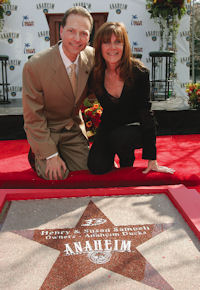
# 5 Henry Samueli Cofounder, chief technical officer, Broadcom Corp.
estimated worth: $2.3 billion
Henry Samueli can be a little more focused on his work these days as the engineering visionary for Irvine chipmaker Broadcom Corp.
Samueli, the company’s cofounder, resumed his title of chief technical officer in December after a tumultuous 2009.
In December, U.S. District Judge Cormac Carney dismissed a case against Samueli related to stock options backdating at the company.
Samueli had struck a deal with federal prosecutors to plead guilty to one charge of lying to investigators in a probe of options backdating.
The judge threw out the plea on a lack of evidence and a finding of prosecutor misconduct.
The move marked the beginning of the end of a long saga for Samueli and Broadcom cofounder and former chief executive Henry Nicholas, No. 6 this year’s OC’s Wealthiest.
In May, federal prosecutors dropped a bid to appeal the dismissal of cases against Samueli and Nicholas.
We estimate Samueli’s wealth at $2.3 billion, up about 30% from a year ago with a 40% rise in Broadcom’s stock.
Samueli’s 30 million Broadcom shares account for about half of his wealth by our estimate.
He’s been steadily selling Broadcom shares but remains a dominant shareholder. Samueli’s sold $1.2 billion in shares since the company went public in 1998, including about $65 million worth in the past year or so.
Samueli is a mentor to Broadcom’s engineering groups and does high-level strategy and product development, reporting to Chief Executive Scott McGregor.
One of Samueli’s other investments is the Anaheim Ducks hockey team, winner of the 2007 Stanley Cup championship. A lifelong hockey fan, he bought the team from Walt Disney Co. for $75 million in 2005.
Samueli also owns the company that operates Honda Center, the Ducks’ home ice. He’s hoping to lure a basketball team to the arena.
Samueli and wife Susan have given away more than $250 million in the past decade and are among the county’s top philanthropists.
They’ve given to the University of California’s Irvine and Los Angeles campuses, which named their engineering schools after Samueli.
In all, the Samuelis have given more than $35 million to UCLA, where Henry Samueli has earned three degrees. In June, Samueli was awarded the UCLA medal, the university’s highest honor.
At Chapman University, a library is named for Samueli’s parents, Polish Jewish immigrants who survived Nazi Europe.
Wife Susan is a big supporter of alternative medicine. UC Irvine’s Susan Samueli Center for Integrative Medicine is named for her.
The Samuelis give to numerous nonprofits through their foundation, which focuses on healthcare, youth charities and Jewish causes.
—Sarah Tolkoff
#6 William Gross Cofounder, co-chief investment officer, managing director, Pacific Investment Management Co.
estimated worth: $2 billion
Anyone who says you can’t get rich with bonds should talk to Bill Gross.
At an estimated worth of $2 billion, the cofounder of Newport Beach-based bond fund manager Pacific Investment Management Co. is one of OC’s Wealthiest.
Gauging Gross’ wealth isn’t easy—his compensation and investments aren’t public. Our estimate is a round one and is up from the $1.1 billion figure we had for him last year.
This year’s estimate is based on a revaluation—we don’t believe Gross doubled his wealth in the past year. But we do estimate his wealth to be up from last year—from a revised 2009 estimate of $1.8 billion—based on a big milestone.
At the end of 2009, Pimco surpassed $1 trillion in assets under management for the first time. Gross’ $234 billion Total Return Fund is the largest mutual fund of any kind.
The company’s funds have seen a big influx of money as investors have turned to bonds after the stock crash of late 2008 and early 2009 and continued uncertainty about Wall Street’s rebound.
As Pimco’s co-chief investment officer, Gross oversees investments alongside Chief Executive Mohamed El-Erian.
Gross invests by speculating on shifts in bond prices as well as the yields they pay. He’s been known to change his strategy without notice.
Part of Gross’ wealth comes from the 2000 sale of Pimco to Germany’s Allianz SE for $4.7 billion. Gross is believed to have received $400 million in the sale.
On top of that, Gross reportedly has been paid a sports star-type salary and bonuses. Before Pimco’s sale, he’s believed to have collected big dividends based on the performance of his funds.
Humble and almost shy, Gross got his first taste of money management playing blackjack, turning $200 into $10,000 in four months. He also ran a Kentucky Derby pool while at North Carolina’s Duke University.
After earning a business master’s degree from the University of California, Los Angeles, Gross became a securities analyst at Newport Beach-based Pacific Life Insurance Co.
In 1971, Gross helped start Pimco within Pacific Life. The bond fund manager set off on its own in 1994 as Pimco Advisors.
An avid stamp collector, Gross has spent an estimated $100 million on his hobby. He’s said to own every stamp produced in the U.S. from 1847 to 1869.
In May, he sold $1.5 million worth of rare European stamps to benefit Doctors Without Borders, the latest in a series of sales to benefit charities. Last year, Gross gave $8 million to the National Postal Museum in Washington, D.C.
With wife Sue, his other giving includes $23.5 million to Duke University for scholarships, $20 million to Hoag Memorial Hospital Presbyterian for its women’s pavilion and $10 million to the University of California, Irvine, for stem cell research.
Gross made waves in the local housing market last year when he paid $23 million for a house on Newport Harbor’s exclusive Harbor Island.
He intends to raze the home and build a new one.
Harbor Island is home to others on OC’s Wealthiest, including Irvine Co. Chairman Donald Bren and businessman George Argyros.
Gross and his wife now live in Laguna Beach.
—Michael Lyster
#6 Henry Nicholas Cofounder, Broadcom Corp.
estimated worth: $2 billion
Henry Nicholas not only is rich, he’s now free of legal issues that have dogged him for the past few years.
Nicholas, cofounder and former chief executive of Irvine chipmaker Broadcom Corp., saw a long running legal drama end in May when federal prosecutors dropped an appeal of a stock options backdating case against him.
In December, a federal judge threw out the government’s case citing a lack of evidence and prosecutor misconduct. Separate drug charges against Nicholas also were dismissed.
Nicholas, who left Broadcom in 2003, had pleaded not guilty in both cases.
The cases, which could have dragged on for years, had the potential to impact the wealth of Nicholas, who has spared no expense on lawyers and advisers in recent years.
We estimate Nicholas’ wealth at $2 billion, based on his Broadcom shares and other investments. A year ago, we estimated Nicholas at $1.7 billion.
Broadcom, a maker of chips for computers, cell phones and consumer electronics, has seen its shares rise 40% in the past 12 months.
Like Broadcom cofounder and technology chief Henry Samueli, Nicholas has been steadily selling Broadcom shares.
Nicholas owns 29 million Broadcom shares with a recent market value of about $970 million. He’s sold an estimated $1.2 billion in shares since the company went public in 1998.
We value Nicholas at slightly less than Samueli, who owns 30 million shares.
A big question remains about Nicholas’ pending settlement of his assets, following his 2008 divorce from former wife Stacey. The financial settlement stands to impact future estimates for Nicholas.
The two still are working out a settlement, according to a spokesman.
The process has been slowed by legal disputes.
Last year, a judge dismissed a lawsuit by Stacey seeking to remove Nicholas from a joint trust that controls 28% of the voting power of Broadcom, plus other investments.
Nicholas continues his activism on behalf of crime victims’ rights and philanthropy that aims to boost education.
His Nicholas Academic Centers in Santa Ana are sending 66 graduating seniors to college this year. The centers offer after- school tutoring, computers and mentoring programs.
He has given to the engineering and computer science programs at the University of California, Irvine, where he established the Nicholas Prize research grants.
Nicholas also gives to Pacific Symphony, Habitat for Humanity, the Episcopal Diocese of Los Angeles and the Oakland Military Institute, among others.
—Sarah Tolkoff
#8 Igor Olenicoff Owner, founder, president, Olen Properties Corp.
estimated worth: $1.5 billion
Developer and real estate owner Igor Olenicoff appears to have made it through the worst of the commercial real estate downturn in better shape than many of his peers.
We’ve estimated Olenicoff’s wealth at $1.5 billion this year, reflecting a revision to our figure for him last year.
A year ago, we pegged Olenicoff at $1.2 billion. Based on input from a source familiar with Olenicoff, we now estimate he was worth $1.7 billion a year ago.
This year’s estimate reflects an ongoing slide in commercial real estate in the past 12 months and Olenicoff’s exposure to some hard-hit markets.
As with just about all of our estimates, our figure for Olenicoff is conservative.
Olenicoff’s company, Newport Beach-based Olen Properties Corp., owns more than 6 million square feet of commercial real estate, much in Orange County. A 260-apartment complex in Brea is nearly done.
Olen also has nearly 12,000 apartments in Las Vegas, Arizona and Florida.
Olenicoff owns close to 1,400 acres of land in Temecula, Nevada, Arizona and Florida that surely have fallen in value.
An offsetting consideration is what sources say is relatively low debt for Olen. The company’s been able to pay off or refinance projects in the past year at affordable rates, boosting cash flow.
In the past year, Olenicoff is said to have been focused on buying discounted mortgages on office buildings from institu- tional investors, including on some local properties.
Olenicoff’s recent acquisitions are said to have been largely in cash.
In 2006, he bought Chicago’s One South Dearborn tower for a reported $362 million, in one of the most expensive buys that city’s seen in the past decade.
Olen’s most prominent national investment now probably is worth closer to $400 million.
In early 2005, Olenicoff paid about $135 million for a pair of 13-story office towers on Irvine’s Main Street. It was his first big local high-rise office buy.
Other sources of wealth for Olenicoff include stocks, loans he’s made and cash holdings, according to sources.
Olenicoff made his fortune after his family fled Soviet Moscow and landed in America, by way of Iran, in 1957. He started Olen in 1973.
In 2008, he settled a long-running tax dispute with federal authorities regarding the size of his holdings and money kept in overseas accounts, paying about $50 million in penalties.
Olenicoff moved more than $300 million in previously undocumented overseas accounts to the U.S. as part of the settlement.
He’s suing his former UBS AG bankers for $500 million, saying they gave him bad advice and turned him in to the feds to protect themselves. Olenicoff said he’d donate any money won for that case, which is still ongoing, to charity.
—Mark Mueller
# 9 George Argyros Owner, chairman, chief executive, Arnel & Affiliates; Limited partner, Westar Capital LLC
estimated worth: $1 billion
George Argyros is a perennial among OC’s Wealthiest.
We’ve pegged Argyros at $1 billion this year, down an estimated 15% from a year ago amid the tough commercial real estate market and downturns in key stock holdings.
Our estimate differs from Forbes, which put Argyros at $1.5 billion on the magazine’s March list of global billionaires.
Argyros owns Costa Mesa-based Arnel & Affiliates, a real estate development and investment company he started in 1968.
Arnel holds close to 5,500 apartments and some 2 million square feet of office, industrial and retail space in and around Orange County.
Among its holdings are the 280,000-square-foot Metro Pointe shopping center in Costa Mesa and the 356,000-square-foot Puente Hills Business Center in City of Industry.
Conservatively factoring in debt, the Business Journal estimates Argyros’ wealth from real estate to be worth close to $600 million.
The rest of Argyros’ fortune comes from other investments, primarily stocks, which didn’t help his wealth much in the past 12 months.
Argyros is the largest individual investor in Kansas City-based software company DST Systems Inc., owning 10 million shares with a market value of $365 million at recent check.
DST’s shares are down about 10% in the past 12 months.
The company is an early investment of Costa Mesa’s Westar Capital LLC, Argyros’ investment firm.
He has a smaller stake in Santa Ana’s First American Financial Corp., where he’s a director, and recent First American spinoff CoreLogic Inc.
Argyros also owns shares in Costa Mesa-based Pacific Mercantile Bancorp, where he’s a director of the bank holding company.
For the most part, Argyros has kept a low-profile during the real estate downturn. He’s said to be looking to capitalize on the tumult in the real estate and credit markets through investments, according to confidants. He’s placed money in a few local endeavors, they say.
Born in Detroit and raised in Pasadena, Argyros graduated from Chapman University in 1959 with a major in business and economics.
He also attended Michigan State University.
Argyros served as chairman of Chapman’s board of trustees from 1976 until his 2001 appointment by President Bush as ambassador to Spain.
He rejoined Chapman as a trustee upon his return 3 years later. Argyros is one of the school’s biggest benefactors. He and wife Judy also give large donations to several causes.
—Mark Mueller
# 10 Caroline Getty Heiress to J. Paul Getty, Governing council officer, The Wilderness Society
estimated worth: $950 million
# 10 Anne Catherine Getty Earhart Heiress to J. Paul Getty, Founder, president, Marisla Foundation #
estimated worth: $950 million
Caroline Getty and sister Anne Catherine Getty Earhart keep a low profile while funding environmental and Democratic causes with their oil inheritance.
They’re granddaughters of late oil tycoon J. Paul Getty.
The sisters are two of the nation’s richest women and are among 16 grandchildren of the autocratic billionaire.
We estimate their worth at a conservative $950 million each.
The sisters’ wealth comes from J. Paul Getty, who struck oil in 1953 and founded Getty Oil Co. in 1956. He died in 1976.
After a nine-year battle over Getty’s will, a 1985 settlement gave Earhart, Caroline Getty and one other daughter of his late son George Franklin Getty II $750 million each.
The family sold part of Getty Oil to what’s now Chevron Corp. for $10 billion in 1986. Caroline Getty and Earhart got an additional $400 million each from the sale.
They continue to give away money.
Earhart, 57, lives in Corona del Mar. She’s founder of Laguna Beach’s Marisla Foundation, which unsuccessfully fought the San Joaquin Hills (73) Toll Road in the 1990s.
Since 2000, Earhart has contributed nearly $300,000 to direct mailers supporting the endeavors of Larry Agran, a Democratic Irvine councilman and chairman of Irvine’s Great Park.
In 2008, Earhart gave richly to Democratic candidates, including Barack Obama, Hillary Clinton, Joe Biden and Al Franken.
Getty, 52, also is an environmental activist. She’s a member of the governing council of The Wilderness Society and has served on the boards of the World Wildlife Fund and the National Fish and Wildlife Foundation.
—Sherri Cruz
# 12 Paul Merage Chairman, Falcon Investment Group LLC, Stoneridge Capital Partners, Silverpoint Investments
estimated worth: $850 million
You know you’re one of OC’s Wealthiest when people gawk at your home on the Internet.
Paul Merage is something of an online standout with a sprawling Newport Coast mansion featured on luxury home blog homesoftherich.net and other sites. It’s the home that Hot Pockets built.
Merage invented microwavable Hot Pockets with brother, David Merage. Together, they sold their Colorado-based Chef America Inc. to Nestlé SA for $2.6 billion in 2002.
We estimate Merage’s wealth at $850 million based on the sale, after factoring in the stake of his brother (who lives primarily in Colorado), as well as any other ownership, debt and taxes.
Our estimate is conservative. Merage likely is worth more and was rich before selling Chef America.
In OC, Merage is largely known for his philanthropy and family investment firm, Newport Beach-based Falcon Investment Group LLC. Falcon manages more than $450 million.
Merage also is chairman of Newport Beach-based Stoneridge Capital Partners, which invests in commercial real estate, and Silverpoint Investments, a private equity firm that invests in small to midsize businesses.
A good chunk of Merage’s time is spent giving away money through the Merage Foundations.
The Merage Foundation for the American Dream focuses on immigration issues and chooses bright, graduating college seniors for $20,000 grants.
Merage himself is an immigrant, having come to the U.S. from Iran in the early 1960s.
His Children First foundation recruits skilled retirees to work in jobs in early childhood development with low-income kids.
The Merage Foundation for U.S.-Israel Trade seeks to promote business ties between the countries.
He’s also a major benefactor to local Jewish causes through the Merage Jewish Community Center of Orange County in Irvine.
Merage is best known locally for his $30 million donation in 2005 to the University of California, Irvine’s business school, which is named after him. He sits on the dean’s advisory board at the business school.
He also has served on several boards, including those of the Orange County Performing Arts Center and the Pacific Symphony.
—Sherri Cruz
