

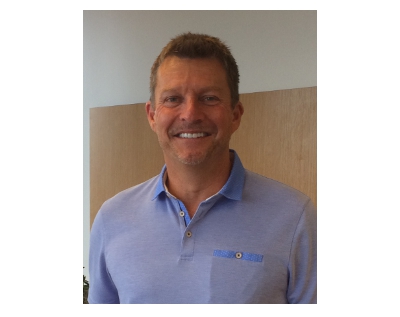
As the founder of the largest telecommunications firm based in Orange County, Gary Jabara has been a mainstay on the Business Journal’s annual listing of the area’s most influential and prominent businesspeople for nearly a decade.
You could make the case that he now deserves consideration for entry on the OC 50 based solely on his ventures outside the realm of Mobilitie LLC’s core business line, which is centered on telecom infrastructure.
The growing and eclectic portfolio he started involves both cutting-edge technologies and traditional industries, including real estate, booze and publishing, all sharing some similarities, Jabara said last week at his company’s Newport Center headquarters.
“Everything we do is scalable,” he said. “And everything we’ve done has been started here. We haven’t acquired anything.”
What’s more, with the exception of Jabara’s extensive real estate investments—he’s one of the largest privately held commercial property owners in the area, recently focusing on apartments—he said most of the business lines should be relatively recession-proof.
Chihuahuas and Worms
A former Ernst & Young Entrepreneur of the Year and Businness Journal Excellence in Entrepreneurship Award winner, Jabara is in the middle of ramping up two business lines in Newport Beach that he said “will be great enterprises for OC businesses in the next few years.”
Chihuahua Cerveza, a locally based beer maker that produces four types of Mexican-style lager, employs about 15, and has big plans on tap. Its goal is to make about 1 million cases of beer per year by the end of next year.
“It will be the fastest-growing beer company in the country,” Jabara said.
He said the beer will be contract-brewed at sites across the country to start with, though the company plans to build a brewery in OC next year.
“Right now, we want to invest the money into marketing and the brand,” he said.
Positioning the beer as a competitor to other large Mexican beer brands, such as Corona and Pacífico, should help the firm crack the country’s tight-knit distribution network, according to Jabara. When two large beer distributors are active in a market, typically only one of them has all of the major Mexican brands. Chihuahua Cerveza will go after the other distributor.
It also recently launched the Social Worm LLC publisher with a heavy online component.
The business employs about a dozen people and has invested a few million dollars, primarily on development of an online app, its initial focus on sports-related books emphasizing interaction between the authors and readers.
The first set of Complete Athlete-branded books offers up-and-coming soccer and baseball players training tips and larger life lessons. Hall of Fame pitcher Trevor Hoffman is involved in the baseball book, and Mia Hamm and coach Arsene Wenger are among those who’ve contributed to the soccer publications. Similar books on other sports are being developed.
Books are offered in hard-copy format and via an app offering an interactive guide that allows authors and publishers to get better feedback from readers.
“Parents buy the books, but kids download it,” Jabara said.
The app also allows interaction with a team’s coach and players who are reading a book together.
Jabara said the platform’s interactive capabilities should make the business appealing to educational publications and other niches.
Social Worm’s online focus is similar to one aspect of another Jabara investment, luxury brokerage Villa Real Estate in Newport Beach, which he helped kick off in 2013. It’s now one of OC’s top residential brokerages, heavily invested at its outset in an app allowing people to easily access home listings and rate individual brokers from their cellphones.
“It’s like Tinder for houses,” he joked, referring to the dating app.
Villa has also invested big in brokers themselves. Last week it added top area luxe home broker John Stanaland from Pacific Sotheby’s International Realty.
LA Stadium
The focus of Social Worm’s first set of books continues Jabara’s foray into the sports world. He was part of an ultimately unsuccessful 2012 bid to buy the San Diego Padres.
More recently, Mobilitie staked out ground as the country’s premier provider of distributed antenna systems, or DAS, large-scale wireless networks for sporting venues, casinos, office towers, malls and other areas where tens of thousands of people are in close proximity and expect strong cellphone connections to stream data and share pictures and videos.
The company recently installed a DAS network in downtown Los Angeles for the new 22,000-seat Banc of California Stadium, home of the professional Los Angeles Football Club soccer team.
Mobilitie built the stadium’s DAS network in three months, and the venue opened on April 29 at an estimated cost of $350 million.
Mobilitie, which began operations in 2005 as an owner of cellphone towers, has expanded into providing a variety of wireless infrastructure systems and services. It’s planning a major expansion to Europe next year with its DAS network products.
Cellphone reception in many stadiums there “is terrible,” Jabara said.
Small Cells, Merger
In the U.S., Mobilitie still has its hands full deploying a different type of product: small cell base stations, which the country’s largest wireless companies use to prep their networks for upcoming 5G service.
Small cells are designed to improve a wireless carrier’s network capacity in areas with high mobile data usage, particularly in large cities where installation of traditional cell towers might be impractical.
The company has gotten its share of local and national press over the past 18 months as it processed thousands of applications to install small cells, which use street lights, utility poles and other outdoor structures as hosts. The stations’ aesthetics and locations haven’t always been well-received by municipalities and residents.
“We were way out in front of this, and took an incredible amount of criticism,” Jabara said. But he indicated that the outcry has largely died down and that local jurisdictions better understand the technology.
A recently enacted regulatory streamlining process announced by the Federal Communications Commission for small cell deployment will further help, the company said.
Mobilitie works with Overland Park, Kan.-based Sprint Corp. and Bellevue, Wash.-based T-Mobile USA Inc. on their respective small cell deployments; the two companies announced plans last week to merge. One reason they cited for the combination is that together they’d be better equipped to roll out a next-generation 5G network.
Jabara said his company wouldn’t be impacted much by the merger, which he hopes will get regulatory approval.
“I think it would be really good for consumers,” he said. “It will help with 5G.”
He said the biggest concern about a combined telecom from an infrastructure perspective is that if both networks’ users were immediately able to roam the other’s networks, crashes could occur in some areas where one network is weaker than the others.
