
Vans Inc. has yet to step it up after missing the mark on earnings for three consecutive quarters.
The Costa Mesa-based apparel and footwear company’s performance “is not where we know it can be,” Steve Rendle, chairman, president and CEO of Vans’ parent company VF Corp. (NYSE: VFC), said at the firm’s Investor Day in September.
Revenue for Vans, VF’s largest brand, fell 13% to $952 million for the second quarter ended Oct. 1 of fiscal 2023, not factoring in foreign currency fluctuations, the company reported on Oct. 26.
Total revenue for VF, whose brands include The North Face, Dickies and Supreme, fell 4% to $3.1 billion.
Footwear Challenges
Company officials chalk up Vans’ decline to a mix of external and internal factors.
A “disappointing” back-to-school season in North and South America is primarily at fault for Vans’ drop in second-quarter sales, officials told analysts. Vans’ wholesale partners, according to Rendle, are also becoming more “choiceful and cautious” in their spending.
The brand’s decline follows a 7% decrease in revenue to $947 million in its prior fiscal first quarter, while fourth-quarter fiscal 2022 revenue was flat at $991 million.
Company officials a few years ago said they thought the brand could reach $6 billion in annual revenue by 2024.
Vans’ declines align with a national downturn in footwear sales. Revenue for the U.S. footwear industry fell 4% to $11 billion second quarter this year, according to market research firm The NPD Group Inc. In the first quarter, industry revenue was down 3%.
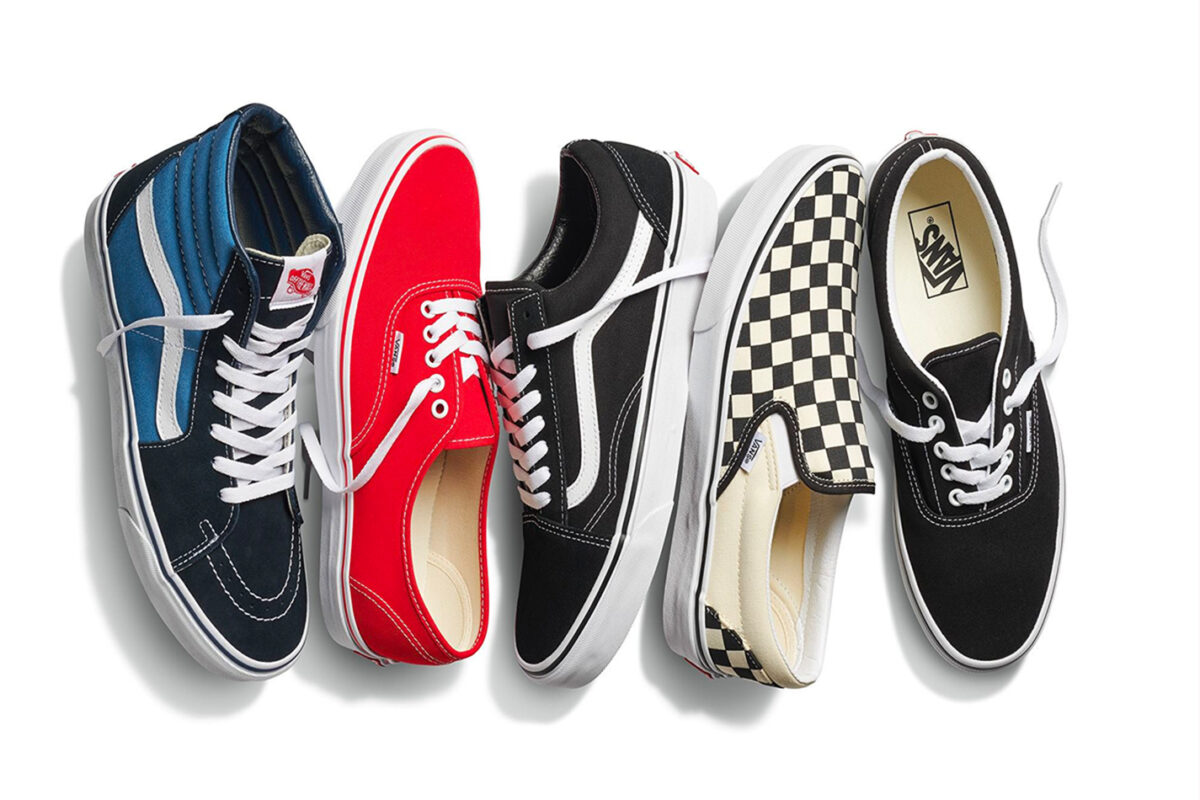
Vans Global Brand President Kevin Bailey, who took on the position in March, also said that the company became overdependent on its Classics footwear line, which includes Old Skools, Authentic and SK8-HI styles.
The Classics line comprises roughly two-thirds of the company’s global footwear business.
“Our actions to accelerate momentum at [Vans] are still early,” Rendle told analysts. “It will still take some time for the product-facing initiatives to be introduced.
“[But] when they come, we are confident that they will have a positive impact on the brand’s results.”
Parent Jobs Cut
Vans’ Denver-based parent company, VF, last quarter reported drops in revenue for its biggest brands, excluding The North Face. Dickies fell 19% to $186 million, while Timberland slipped 4% to $542 million.
VF eliminated 600 office-based roles in August—half of which were held by current employees while the remaining half the company postponed hiring, according to Rendle.
The job cuts will save the company over $100 million, VF CFO and Executive VP Matt Puckett told analysts. The number of job losses at Vans’ offices in Costa Mesa were not specified; the apparel company employed nearly 650 in Orange County as of earlier this year, according to Business Journal data.
North Face Adds
Amid the cut jobs, Vans has appointed two new execs from The North Face to help reinvigorate consumer interest.
Former VP and general manager of The North Face Americas region Marissa Pardini was appointed to Vans’ newly created role of chief product and merchandising officer.
Pardini, who has previously worked for Vans, joined the footwear brand in 2010 and worked her way up to VP of merchandising. In 2020, she moved to The North Face.
Pardini’s new role combines the responsibilities of head of apparel and footwear.
“The goal here is to focus on how do we better serve the head-to-toe needs and the consumer types, and think more specifically about the merchandising of the marketplace,” Bailey said.
The company last month also appointed Sarah Kleinman, former global VP of digital experience at The North Face, to Vans VP and general manager of global digital.
The recent hire is to help the company advance its “digital-first” agenda, which aims to engage consumers across social, experiential, and gaming platforms, according to Bailey.
The brand’s new emphasis on its digital side also comes after a successful product launch for its “Stranger Things” collaboration, which was revealed on its online custom shoe creator before it went to market.
Following the launch, the “Stranger Things” shoes “sold through really quickly, faster than we were ready for,” Bailey said.