

Perseverance pushed William Wang.
The chance to revolutionize homebuilding enticed Ron Simon.
Market opportunity led Anthony Hsieh back to the drawing board, while John Tu and David Sun took a chance to regain fortunes lost in a stock market crash.
Each of these high-profile entrepreneurs had different reasons for setting out to build second fortunes.
They share some common bonds, too.
Wang made his first million before age 30.
Within the next decade he had lost $40 million and had a life-altering brush with death.
The captain of a Singapore Airlines flight he was on mistakenly took off on a runway under construction as a typhoon raged around the 747 jet. The plane crashed into construction equipment going 165 miles per hour and split in half. More than 80 passengers died on the Halloween flight in 2000.
Wang was among 96 survivors in the crash in Taiwan.
The second chance led to a new perspective on life and business—and renewed efforts.
Vizio Starts
Wang started Irvine-based Vizio Inc. two years later, jumping into a crowded field of well-established consumer electronics companies in search of a share of the flat TV boom (see OC’s Wealthiest listing, page 55).
He set out to be better than Sony Corp.
Many industry experts and peers balked at his vision of making flat TVs affordable to the masses.
He pressed on, taking out a $300,000 second mortgage on his home and securing another $300,000 from investors to launch the company.
“You have to have a lot of faith, you have to believe in yourself,” he said. “Don’t give up because there are a lot of obstacles.”
Vizio’s strategy mirrored one of Wang’s earlier ventures, a local computer monitor company called Mag InnoVision Co.
He started Mag InnoVision in 1990 at age 26 with about $350,000 in loans from family and friends and an investor in Asia. The goal was to build a better monitor than IBM Corp.
Mag Inno Innovision rose with the technology boom of the 1990s.
The company started struggling as prices for PCs eventually fell.
Taiwan’s Mag Technology Co., which made the monitors on a contract basis, bought the business in 1998.
Princeton Digital, his second venture, also had a rough go. The company made custom video displays for slot machines, high-definition TVs and other devices.
None of them stuck.
Hard Lessons
“I unfortunately learned the lesson the hard way,” said Wang, who was named Entrepre-neur of the Year by the Business Journal in 2008.
Managing growth had been Wang’s Achilles’ heel, but he’s seemed to find a recipe that works with Vizio, which has yearly sales of about $3 billion and has taken away business from big-name rivals. The field includes his personal benchmark Sony, along with Samsung Group and Funai Electric Corp., which sells sets under the Philips brand in the U.S.
Vizio now ranks among Orange County’s top private companies by sales.
“I don’t micromanage like I did before,” Wang said. “I have good people I can trust.”
That’s a sentiment long shared and practiced by Tu and Sun, the minds behind Fountain Valley-based Kingston Technology Inc.
“I don’t think John Tu and David Sun’s management style has changed at all over 20 years,” Mark Leathem, Kingston’s vice president of corporate marketing, said in a prior interview with the Business Journal.
Their first hit came in the early 1980s, when they launched computer parts maker Camintonn Corp. out of a garage and went on to make the trip from rags to riches.
They sold the company to AST Research in 1987— and then lost most of their fortunes in the stock market crash later that year.
Tu and Sun started their second effort with Kingston months later.
They’ve grown it into a top maker of memory products for computers and consumer electronics.
Softbank Deal
The two-gained national publicity in 1996 when they handed out $100 million in bonuses to workers after selling 80% of Kingston to Japan’s Softbank Corp. for $1.5 billion.
They bought the company back in 1999 at a steep discount as the technology bubble burst.
Sun and Tu got the company back on track and then some.
Kingston claimed half of the market last year for the most common memory products used in computers. Kingston’s shares of sales of dynamic random access memory—chips mounted on circuit boards that boost computer performance—rose from 39% in 2009 to 50% in 2010, according to market tracker DRAMeXchange.
That topped off a banner year for the company. Record sales topped $6.5 billion as prices for memory chips rebounded and demand improved. It’s now Orange County’s largest privately held company.
The performance earned the pair a nod as the Business Journal’s 2010 Businessperson of the Year.
Simon Says
Ron Simon was told his idea about changing the way homes are built was unattainable.
He made his first fortune making cabinets, then turned to housing.
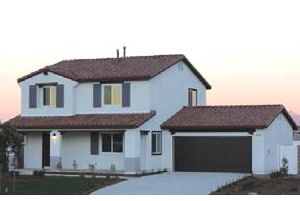
He wanted to bring his manufacturing expertise to build easily assembled homes that could sell for less based on savings in the production process. His homes are marketed under the New House by RSI name—and they’re selling.
“I had a team of homebuilders saying what I set out to do was impossible,” he said. “It was the challenge that motivated me to do it.”
The venture borrowed a page from Simon’s cabinet business, Newport Beach-based RSI Home Products, which has been able to compete with Asian rivals with efficient manufacturing.
The company makes cabinets in Anaheim, North Carolina, Kansas and Mexico.
In the 1980s, Simon sold Perma-Bilt Industries, a cabinetmaker founded by his father, to an Australian company.
He left to start RSI Home after Perma-Bilt’s owners rejected his plan to compete with emerging Asian rivals.
Perma-Bilt is no longer in business, while Simon used his plan as the basis for RSI Home.
In 2008, Simon sold half of RSI Home to Toronto-based private equity investor Onex Corp. for $318 million.
He then put $100 million behind New House (see OC’s Wealthiest listing, page 50).
15 Days
It took the company 15 days to put up its first two homes in Santa Ana. One was 1,600 square feet and sold to the city for $85,000. The other was 2,000 square feet and went for $95,000.
In late June the Business Journal reported that New House sold out 103 homes at its initial development in Menifee, north of Temecula, solidifying it as one of Southern California’s top home sellers.
That project has been the top-selling development in the Inland Empire’s hard-hit housing market, according to Newport Beach-based market tracker Concord Group.
The company recently became profitable.
“Real success is accomplishing what others believe is impossible,” Simon said.
Hsieh’s Way
Hsieh is making another run in the mortgage business.
He’s made several fortunes building and selling mortgage businesses, and he looks to be at it again.
Since LoanDepot.com was launched in January 2010, the online lender has become one of the largest in the country.
It’s moving from Irvine to Foothill Ranch, where it has plans to set up a headquarters with room for growth.
Two of the three buildings are set to serve as a headquarters while the other will house a wholesale lending company expected to start soon, according to Hsieh.
“There’s a lack of good lenders that are available to the public,” he said in an earlier interview with the Business Journal.
Back to Business
The venture is a return to the mortgage business for Hsieh, who has seen plenty of booms and busts but seems to escape the worst of times.
LoansDirect.com was an early online lender that grew from 10 to 800 employees.
E*Trade Group Inc. bought the company in 2001.
Hsieh went on to found HomeLoan Center.com, which expanded to 1,000 employees within two years during the mortgage boom.
He sold that company to Charlotte, N.C.-based LendingTree LLC in 2004.
Hsieh served as president of Lendingtree .com for a while, appearing regularly as a mortgage expert on cable news outlets and in prominent newspapers.
He left the company in 2007 as problems mounted. LendingTree.com was racking up heavy losses in the housing slump, fighting lawsuits for allegedly failing to shop loans and was laying off people.
After leaving LendingTree, Hsieh indulged in a passion-turned-business by buying Crow’s Nest Yacht Sales, a Newport Beach yacht dealer. The company was a sponsor of Hsieh’s professional fishing team, Bad Company.
The leisure of a semi-retired lifestyle didn’t suit him for long, though.
“I just got bored,” Hsieh said. “At the end of the day I’m a lifer in the mortgage business.”
