

The sale-leaseback transaction appears to be making a comeback in Orange County’s commercial real estate market after taking a breather for a few years.
Sale-leasebacks—a form of financing in which a company sells a building to an investor for cash while remaining a tenant with a long-term lease—gained traction locally in 2007 and 2008 as area businesses took advantage of historically low capitalization rates to free up cash for operations.
A Business Journal story on the trend, written in January 2008, listed close to $300 million in local sale-leaseback deals closing over the prior year, particularly among owner-operators of industrial buildings whose property values had been holding up better during the last downturn.
Companies such as Amcor Sunclipse North America, which has local operations in Buena Park, Lake Forest-based General Monitors Inc. and PCA Aerospace Inc. in Huntington Beach were among area companies completing sale-leasebacks during that time. Some of those deals approached $30 million for the sales component.
The trend soon faded, and sale-leasebacks—like most other commercial real estate transactions—saw a steep decrease in activity over subsequent few years. But there were signs of a rebound in sale-leasebacks in year-end brokerage reports, with more than $100 million in big-dollar property sales over the past quarter featuring a leaseback component.
Among notable deals, Chicago-based Quaker Oats Co. last month sold a Fullerton industrial building it owned to San Francisco-based Prologis Inc., one of the country’s largest owners of industrial buildings, in a sale-leaseback transaction.
The $18.3 million sale of the 229,400-square-foot building at 2501 E. Orangethorpe Ave., completed in late December, was the priciest industrial sale in OC last quarter. The subsequent leaseback also was the largest industrial lease for the quarter, according to the Irvine office of Colliers International.
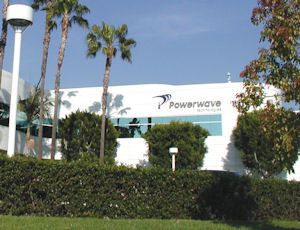
In October, Santa Ana-based Powerwave Technologies Inc., a maker of cellular base station gear for wireless networks, sold off its headquarters in a sales-leaseback deal.
The $49.6 million deal was among the top local office sales of the fourth quarter and ranked as the fifth-largest office sale in OC for all 2011, according to data from Newport Beach-based Voit Real Estate Services.
Buyer Cash Flow
A unit of New York-based private equity firm Angelo, Gordon & Co. bought the Powerwave building and is leasing the 367,045-square-foot property back to the technology company in a 15-year deal. The deal calls for Powerwave to pay a little under $4 million a year in rent at the start of the lease, which has two 10-year lease extension options, according to regulatory filings.
Private capital and institutional investors such as Angelo tend to view sale-leaseback deals as stable sources of cash flow.
The private equity firm has a net lease division called AG Net Lease that looks to invest in sale-leaseback transactions, in deals that can run anywhere from $5 million to $300 million, according to the company’s marketing materials.
Another New York-based real estate investor, W.P. Carey & Co.—whose founder William P. Carey passed away earlier this month—is largely credited with creating the sale-leaseback model in the early 1980s. The company has worked on billions of dollars of transactions in the country since then, including a 2009 deal for the Manhattan headquarters of The New York Times.
Prominent OC deals W.P. Carey has worked on included a sale-leaseback deal about a decade ago for the Irvine Spectrum headquarters of Racal Instruments Inc., which now operates under the Eads North America Test and Services name.
Changing Motivations
Investor motivations have largely remained consistent over the past few years, but seller motivations for getting a sale-leaseback deal done have changed since the last busy season, according to area brokers that specialize in those deals.
“We didn’t see too much activity the last two years, but within the past three or four months, there’s been a pick-up,” said Gary Stache, executive vice president for CBRE Group Inc.’s investment properties division, based in Newport Beach.
You can thank a difficult financing market for much of the latest uptick in business, rather than generally improving market conditions, said Stache, who said he’s working on a few larger sale-leaseback transactions that have yet to close.
“It’s because borrowers have loans coming due, and they can’t refinance,” Stache said. “Banking lines have dried up.”
Some sellers need cash for their day-to-day operations, and others believe they can get better returns on their money by investing money into their business, rather than real estate, Stache said.
Meantime, capitalization rates—the expected initial return from rents—have been inching down of late, particularly for fully leased industrial facilities. That’s good news for sellers.
Industrial building owners can expect to sell their buildings for a cap rate of around 6% or 7% in a sale-leaseback deal, while office building owners likely can get a deal done at cap rates closer to 8%, Stache said.
Some other property owners have been looking at sale-leaseback deals as a last-ditch way to pay down debt.
Shorter Leaseback
In the most prominent local property sale of the past quarter, the Crystal Cathedral ministry in Garden Grove sold off its 35-acre campus to get out of bankruptcy (see story, page 24).
The headline-making $57.5 million sale of the property to the Roman Catholic Diocese of Orange includes a short-term leaseback provision, which will let the church lease back core buildings for three years.
Paying down debt also appears to be the case in last quarter’s Powerwave sale-leaseback transaction, which was completed during a turbulent time for the company’s stock.
The company makes antennas, filters and other equipment for cell phone towers. Its devices capture and boost radio signals between cell phones and base stations inside towers.
The sale of the Powerwave’s headquarters—at 1801 E. St. Andrew Place—came as the company reported steep revenue drops, due to a “significant” slowdown in spending by North American network operators and the scrapped merger between AT&T Inc. in Dallas and Bellevue, Wash.-based T-Mobile USA Inc., the U.S. wireless operation of Deutsche Telekom AG.
