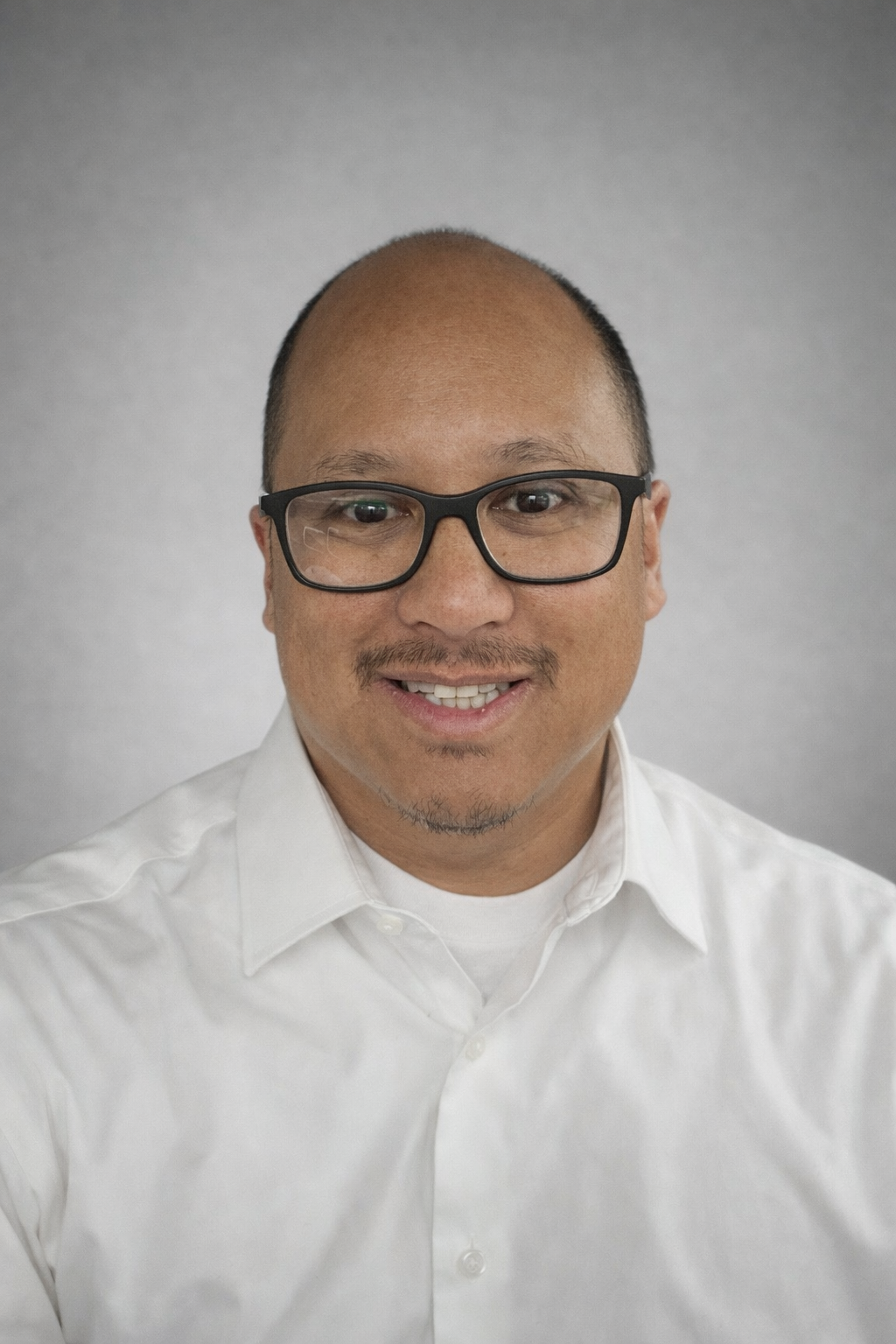
In a Trumark Homes boardroom, Southern California Division President Richard Douglass stands before a large map displaying the company’s housing developments throughout the region.
He points down to Ocean Breeze Ranch, where the company is currently under construction on a 379-home single-family tract in Bonsall, in northern San Diego County.
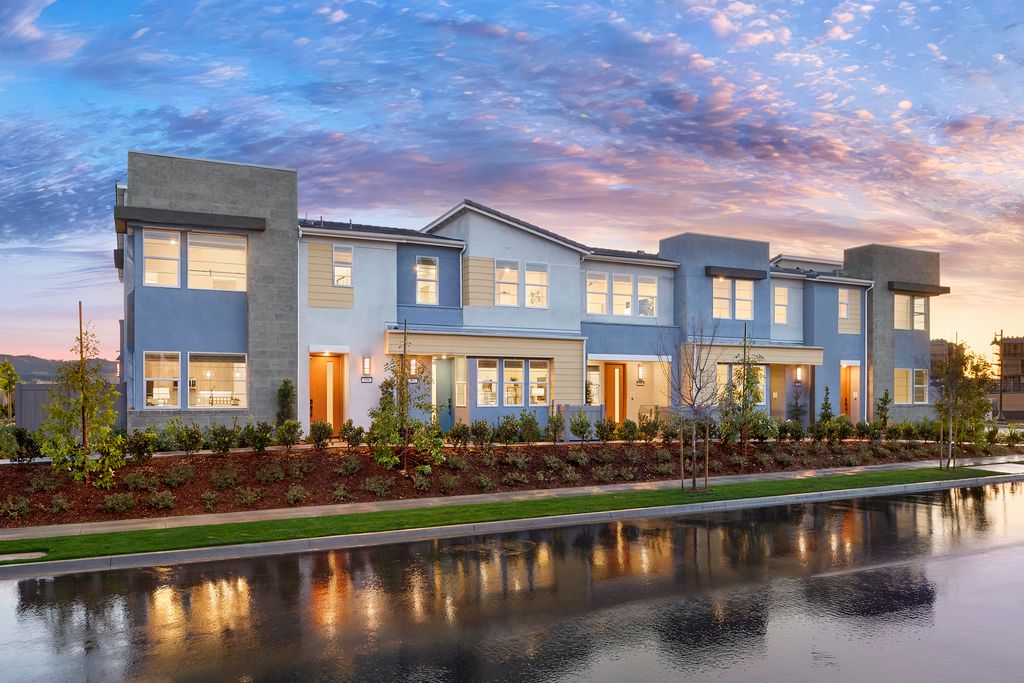
Next, his eyes scour Orange County. He says Andara is an infill site at the Great Park in Irvine, where construction is already in progress. The project will feature 85 single-family attached homes in the master-planned community’s Luna Park neighborhood.
Then there’s Elaris in Corona’s Horsethief Canyon. This 45.7-acre site will have 226 conventional single-family homes.
Douglass, who joined Trumark Homes in 2015, said the company plans to “aggressively” expand its Southern California portfolio in 2026. The company has secured more than 750 new homesites across the region.
He said the projects are a “culmination of years of work” that only now shows up as a clean set of projects and timelines.
“It looks like expansion,” Douglass told the Business Journal. “What it is, it’s years of work.”
Trumark ranks No. 7 on the Business Journal’s annual list of homebuilders, reporting 82 homes were sold last year.
Stars Aligning for Buyers?
Trumark’s expansion comes as the U.S. housing market appears to be shifting toward buyers as inventory is climbing, mortgage rates have dropped to around 6% from a high of 7.5% in 2022, and sellers are more apt to offer concessions.
“For buyers new to the market, as they test the waters and dip their toes into the housing arena, they are finding the stars are finally beginning to align,” wrote Steven Thomas, an economist at Reports on Housing, an Orange County-based real estate data newsletter.
However, high home prices, especially in Orange County and parts of Southern California along with buyer affordability issues, are still keeping demand at record lows.
Douglass believes that choosing good locations and making smart land purchases matter more than the current ups and downs in the housing market.
“Market conditions are uneven, but for the right locations, there remains robust demand for new homes, and we have targeted lots in the best locations,” said Douglass.
“Orange, Riverside and San Diego Counties are highly desirable destinations, and these new projects will present opportunities for a wide range of homebuyers to enter the market or move up or down in exceptional communities.”
Aggressive Expansion
Founded in 1988 and based in San Ramon, Trumark is a residential builder and developer mainly working in California and Colorado. While its headquarters are in Northern California, the company also has an office in Newport Beach.
In 2020, Japan-based Daiwa House Group bought a 60% majority stake in Trumark. The original owners have remained with the support of the Japanese housing company.
Douglass said the ownership structure improved Trumark’s access to capital, enabling the company to compete with large public builders while maintaining a private-company mindset.
“It effectively puts us on par, for the most part, with public companies,” said Douglass. “Our capital, our ability to raise money, and to operate from a high level have been enhanced because of both conventions.”
Douglass described Trumark as a company that takes on complicated, high-risk development work, which many large public builders tend to avoid due to cash-flow pressures and quarterly reporting that discourage long entitlement timelines and challenging sites.
He said this approach comes from Trumark’s roots as a private, entrepreneurial company that works across various product types, including urban infill and, earlier, mid-rise and high-rise projects in Northern California.
‘A Locations’
Despite the recent housing downturn, Trumark is banking on the old real estate saying, “location, location, location.”
Douglass said that, even as the housing market changes, some “A locations,” as he calls them, with limited supply, tend to handle downturns better than weaker areas.
He said it helps that Trumark had already acquired the land at a lower and better price for some of the developments they are working on, which can be the difference between moving forward or stalling.
He said timing helps the company keep going even though affordability is tight right now.
“Fortunately, we’ve bought the land long enough ago that it’s going to give us a chance to make it,” said Douglass. “We, hopefully, have enough resilience and land value to be able to keep up with the market. The market is in flux.”
For example, at the Bonsall project, they are building conventional, detached homes, which he calls “regular old houses,” while many builders focus on smaller, attached homes to offer lower prices.
Bonsall will feature 379 single-family homes with 15 floor plans ranging from 2,766 to 3,465 square feet across five distinct neighborhoods.
He said the development will focus on open space, including trails, parks and recreation areas. About 953 acres are planned for preservation. Construction on the model homes will begin in late 2026, with a grand opening anticipated in Winter 2026.
Trumark aims to attract nearby medical professionals and retirees to buy the new homes. Prices will start in the low millions, he said.
In Orange County, Trumark is building 175 new homes in the Great Park and 226 in Riverside County.
Where are the Buyers?
Douglass said buyer demand varies across Southern California depending on the submarket and product type. The company is building homes to meet the needs of different buyers.
He said the Rancho Mission Viejo project, in which they are building 120 single-family houses across two new neighborhoods, attracts move-up buyers from South Orange County, while parts of San Diego County may see more older buyers, including retirees, due to nearby medical facilities and the climate.
He said first-time buyers are more likely to be found in price-sensitive infill projects, like the townhomes they built in Covina.
“This is more suited for the first-time home buyers,” he said.
State Needs More Housing
Douglass’ broader critique of California housing policy echoed themes from a Leader Board column he wrote for the Business Journal in 2024 where he said too many programs and bills focus on headlines instead of feasibility, meaning the real costs of buying land, paying fees, financing, building and selling homes at prices buyers can afford.
He pointed to some transit-adjacent housing ideas as examples where, in his view, policymakers push plans without fully considering the costs, leaving projects dependent on subsidies or stuck in approval processes.
Even when projects get approved, Douglass said delays and red tape can stretch timelines to years. He argued the state needs faster, more streamlined permitting to close the gap between housing demand and supply.
When asked what to expect in 2026, Douglass said there won’t be a return to the ultralow rates of the pandemic era.
Instead, small improvements like modest rate relief, stronger job growth, and what he calls “regulatory release” could ease the market by boosting resale activity and giving buyers and builders more room to breathe.
Looking further ahead, he said the bigger question is what happens when places like Orange County run out of easy-to-build land.
“There’s plenty of land,” Douglass said. “It just needs to be recycled.”
How Old Are Orange County’s First-Time Homebuyers?
First-time homebuyers in Orange County tend to be older than the national average, and many potential buyers are looking to the Inland Empire for relief, according to Irvine-based property data provider Cotality.
The average age of a first-time homebuyer in Orange County is 36, compared to 35 in California and 32 nationwide.
The data was provided exclusively to the Business Journal by Cotality, formerly known as CoreLogic. The data excludes investors, second-home buyers, and all-cash buyers.
Cotality officials say the higher age reflects the region’s and state’s higher housing costs.
When residents choose to leave Orange County to buy homes, about 47% move to the Inland Empire, Cotality said. Others leave the state for more affordable metro areas like Las Vegas, Phoenix, and the Dallas-Fort Worth area in Texas.
At the same time, Orange County still attracts homebuyers mainly from other expensive markets.
The Bay Area, which includes San Francisco, San Jose, Oakland, and Santa Clara, accounts for about 75% of incoming homebuyers. Others come from Tucson and the Seattle area.
Still, most residents are staying local.
About 65% of Orange County buyers remain in Southern California, buying homes within the larger Los Angeles-Long Beach-Anaheim metro area, Cotality said.