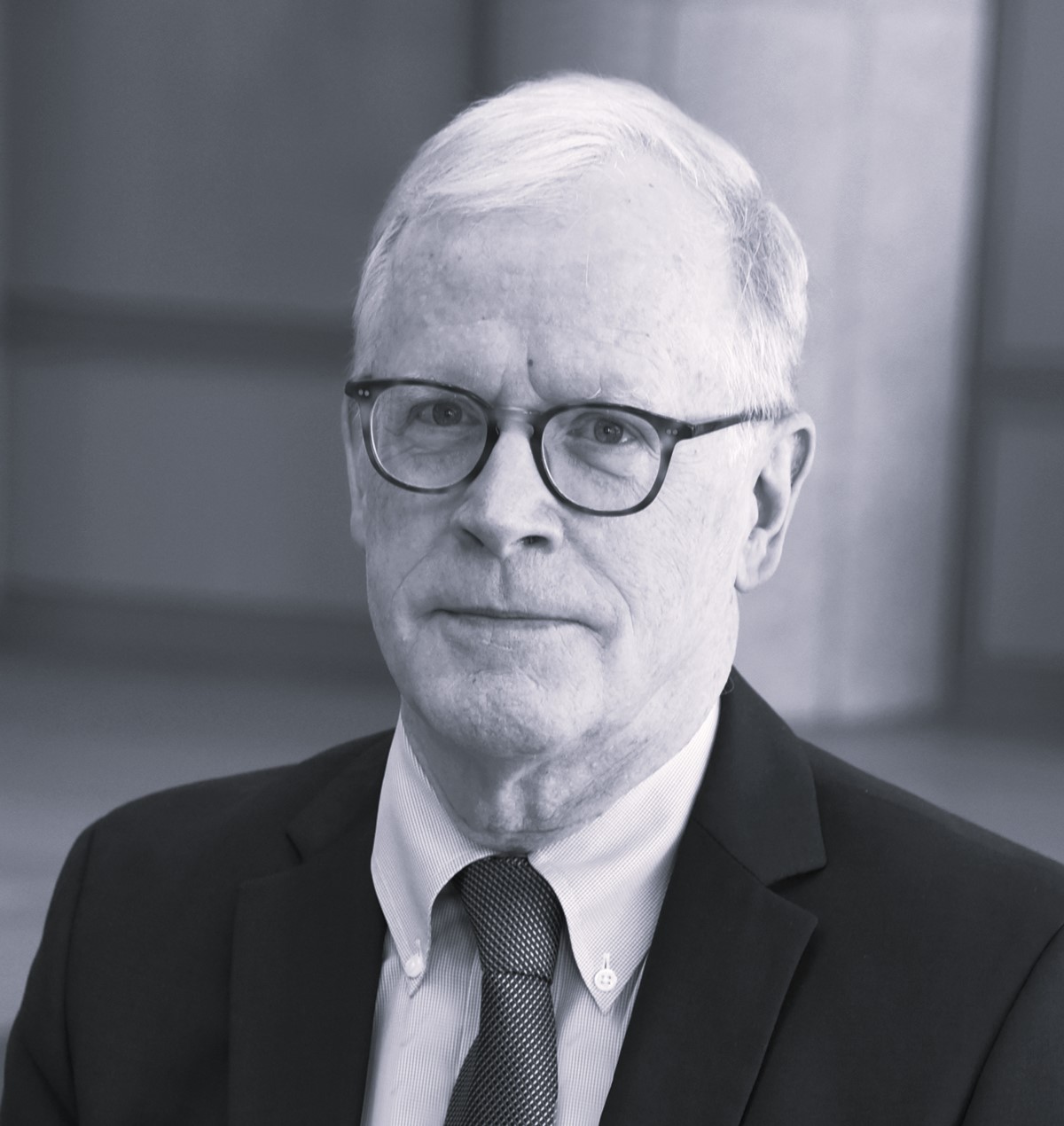
Kurt Busch, CEO of semiconductor and AI computing company Syntiant, says “we’re deploying our technology in satellites” in a further expansion after years of focusing on Earth-bound uses, such as hearing aids to automobiles.
The orbiting demonstration conducted with Novi Space of Virginia marks another key step for Syntiant, co-founded by Busch almost a decade ago to enable low-power devices.
“Satellites are both very power-constrained and space constrained, so we’re basically deploying AI software in that case in an extremely power-constrained environment,” Busch told the Business Journal.
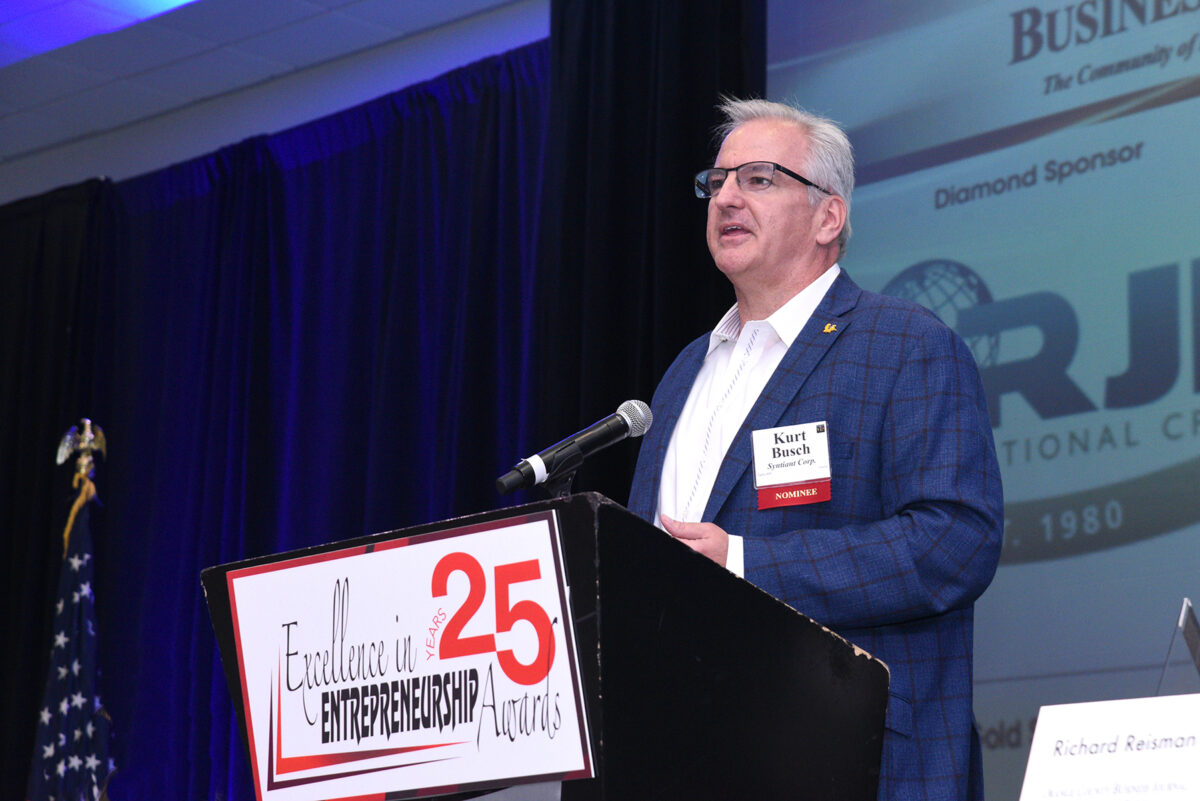
Busch spoke in an interview on March 27, the day after receiving the publication’s Excellence in Entrepreneurship Award before more than 300 guests at the Irvine Marriott.
Double Degrees from UCI
Busch earned a Bachelor of Science degree in electrical engineering and another degree in biological science from UCI.
Prior to Syntiant, he was president, chief executive officer and a member of the board of directors at Lantronix of Irvine (NASDAQ: LTRX).
He co-founded Irvine-based Syntiant in 2017 and has built it up to 1,600 employees, with another 10 to 20 expected to be added in non-manufacturing roles by the end of the year.
The low-power technology places the data processing at the user level—called “at the edge”—rather than bouncing to the cloud or a data center, saving valuable time.
As of now, Busch says, “We’re approaching profitability.
“We’re planning on doing a number of acquisitions this year as well to expand our footprint.”
Making AI Pervasive
“If we do our job right, we can make AI pervasive, and you won’t even know it’s there.”
“We’ve really turned into an AI platform companies for devices.”
That includes sensors, microphones, processors and software.
“More likely than not you’re talking to me on a Syntiant microphone,” he said during the telephone interview in late March.
The road to success hasn’t been easy. Busch recounts two “near death experiences”—the COVID-19 pandemic that smothered the world economy in 2020 and the collapse of Silicon Valley Bank three years ago.
The bank’s sudden closure on a Friday “made for a very tough weekend” though the company got all of its money back thanks to a government bailout of the bank.
Taiwan, Singapore, China
Busch said Syntiant’s chips are made in Taiwan and Singapore, while the packaging of the various components is handled in China and Malaysia.
“We ship approximately 2,000 products every minute,” he told the OCBJ award ceremony.
“Not everyone knows they’re there, but thank you very much for your business,” he said with a smile.
The company first gained attention for its chips that power Amazon’s virtual assistant Alexa.
Cars, Security Cameras
Self-driving cars present another development area, since California law requires that a person outside the car must be able to communicate with the system or the person inside it.
The solution: vibration sensors that turn the surface of an automobile into microphones usable from the outside, while Syntiant technology cleans up the sound.
Syntiant’s chips enable smart devices to recognize voices and sounds, such as in the Ring Alarm’s glass break sensor.
Last year Syntiant launched a new machine learning-powered vision system for security cameras that enables ultra-fast and precise identification of specific people or objects.
Syntiant’s products can also detect audio-based events including glass breaking, smoke alarms and carbon monoxide alarms; products also detect and process voice-activated commands.
Syntiant showcased some of its latest voice-activated and audio products at the giant Consumer Electronics Show (CES) in Las Vegas in early January, including technology for “smart frame” eyeglasses and voice-activated TV remote controls.
Busch won the Business Journal’s 2020 Innovator of the Year Award. Syntiant is No. 14 on this year’s list of largest OC semiconductor companies.