

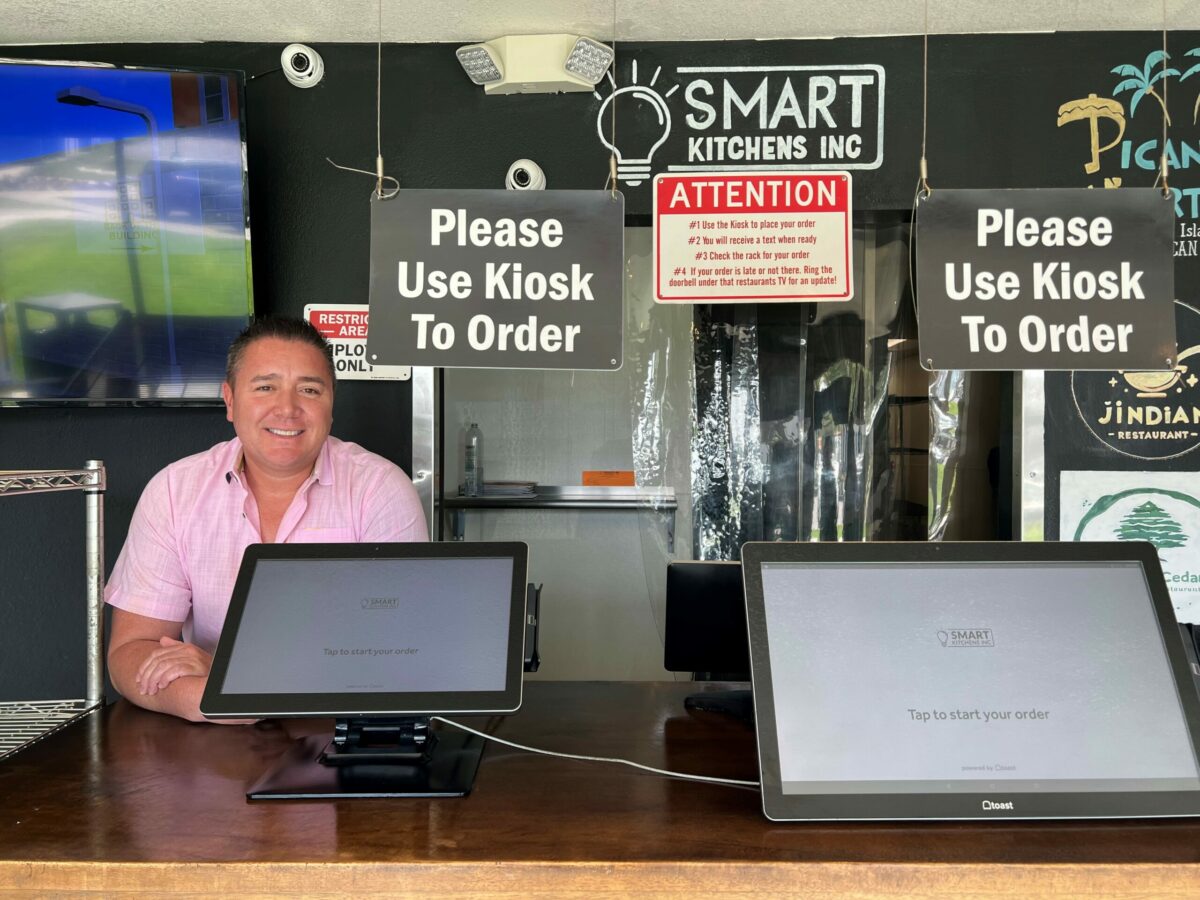
In 2019, Nick Crane was itching to launch a new food service-focused project in Orange County after a few misses.
At the time, he’d previously founded roughly 30 different companies including a membership program that offered happy hour prices all day at 500 Southern California restaurants. He also ran a social media marketing company that focused on getting restaurants more “likes” on Facebook.
“Lots of failures, no amazing exits, but I keep trying,” Crane, co-founder of Irvine-based startup Smart Kitchens, told the Business Journal.
While hunting around for his next big idea, he was drawn to Uber co-founder Travis Kalanick’s latest business venture: ghost kitchens.
The timing was fortuitous.
Pandemic Fuels Ghost Kitchen Growth
Prior to the COVID-19 pandemic, a few ghost kitchen startups—including Kalanick’s CloudKitchens—began popping up across the U.S., including Southern California.
The goal of a ghost, cloud or dark kitchen is simple: save restaurants on costly leases and labor by providing them a kitchen they could rent to fulfill takeout and delivery orders. There’s no dining room for walk-in customers. The kitchen spaces are small, up to 300 square feet, and require fewer employees so the overhead is minimal.
The strategy took advantage of the growing demand for delivery, driven by the popularity of fast-growing companies like DoorDash, Grubhub and Kalanick’s Uber Eats.
In 2019, Crane was considering becoming a Dickey’s Barbecue Pit franchisee. But, once he heard about Kalanick’s string of ghost kitchen projects, he pivoted.
He found and leased a commissary kitchen in a mixed-use area within the Irvine Business Complex near John Wayne Airport. Instead of investing in opening three brick-and-mortar Dickey’s restaurants—a Texas-born brand that would later fail in Orange County—Crane decided he’d sell his “own barbecue” from the 4,000-square-foot ghost kitchen space on Sky Park Circle.
“Why not open up a few more kitchens and rent them out so it covers (the rent) in case I don’t make it as a restaurant,” he told himself.
“So that’s kind of how it all began,” he said. “I call it WeWork for restaurants.”
While the pandemic wasn’t so kind for WeWork’s coworking office model, it proved to offer ideal conditions for Smart Kitchens.
The company opened in mid-March of 2020—about the same time that restaurants closed dining rooms to the public—forcing them to rely solely on delivery to survive.
Crane scrapped the idea of launching his own restaurant and went all-in on finding clients for his rent-a-kitchen business. Turns out, it was not too difficult given that the delivery business was growing like gangbusters.
“We got lucky. Delivery was great,” he said.
In 2022, Smart Kitchens added more kitchens, bringing the total commissary space to 6,000 square feet outfitted with 15 kitchens, up from eight. Smart Kitchens peaked at more than $1 million in annual sales in 2022; sales have been lower since then, he said.
Unlike national ghost kitchens such as CloudKitchens and Miami-based Reef Kitchens, which partner with major brands such as Wendy’s and Chick-fil-A, Smart Kitchens works with local restaurants, offering spaces ranging from 160 square feet to 800 square feet.
“They’re all really mom and pops,” Crane said.
Paying Off for Picante
One of his first clients was Picante Martin’s Mexican Food, a family-run restaurant on Marine Avenue in Balboa Island. Unable to sustain the business during the pandemic, owner Martin Diaz closed the restaurant in September 2020.
“It was difficult to operate,” he told the Business Journal.
Crane’s Smart Kitchens offered him a lifeline.
He and two others now cook and assemble tacos, burritos and combo plates for takeout, delivery and catering. The hours are flexible, and this format allows him to focus solely on the food, he said.
“The overhead is smaller,” Diaz said.
After a tough few years, he said the restaurant finally turned a profit in 2024.
Still, delivery demand is not as high as it used to be a few years ago.
Crane says delivery sales are down 20% compared to the peak pandemic years.
But with inflation and labor costs rising every year, Crane said restaurants see the value in operating from a ghost kitchen. He charges anywhere from $2,500 to $5,000 a month rent, depending on the size of the kitchen. Thirteen of the spaces are occupied currently.
He said he can’t complain about a slowdown too much, as delivery is “still a good” market. And, unlike his other business ventures, this one is growing strong after five years in business.
“Smart Kitchens has been a great and rewarding business endeavor and investment,” he said. “It’s like Shark Tank for food entrepreneurs. We can help them grow and scale.”
