Imagine walking through the layout of your future home or commercial building before it’s even built or renovated.
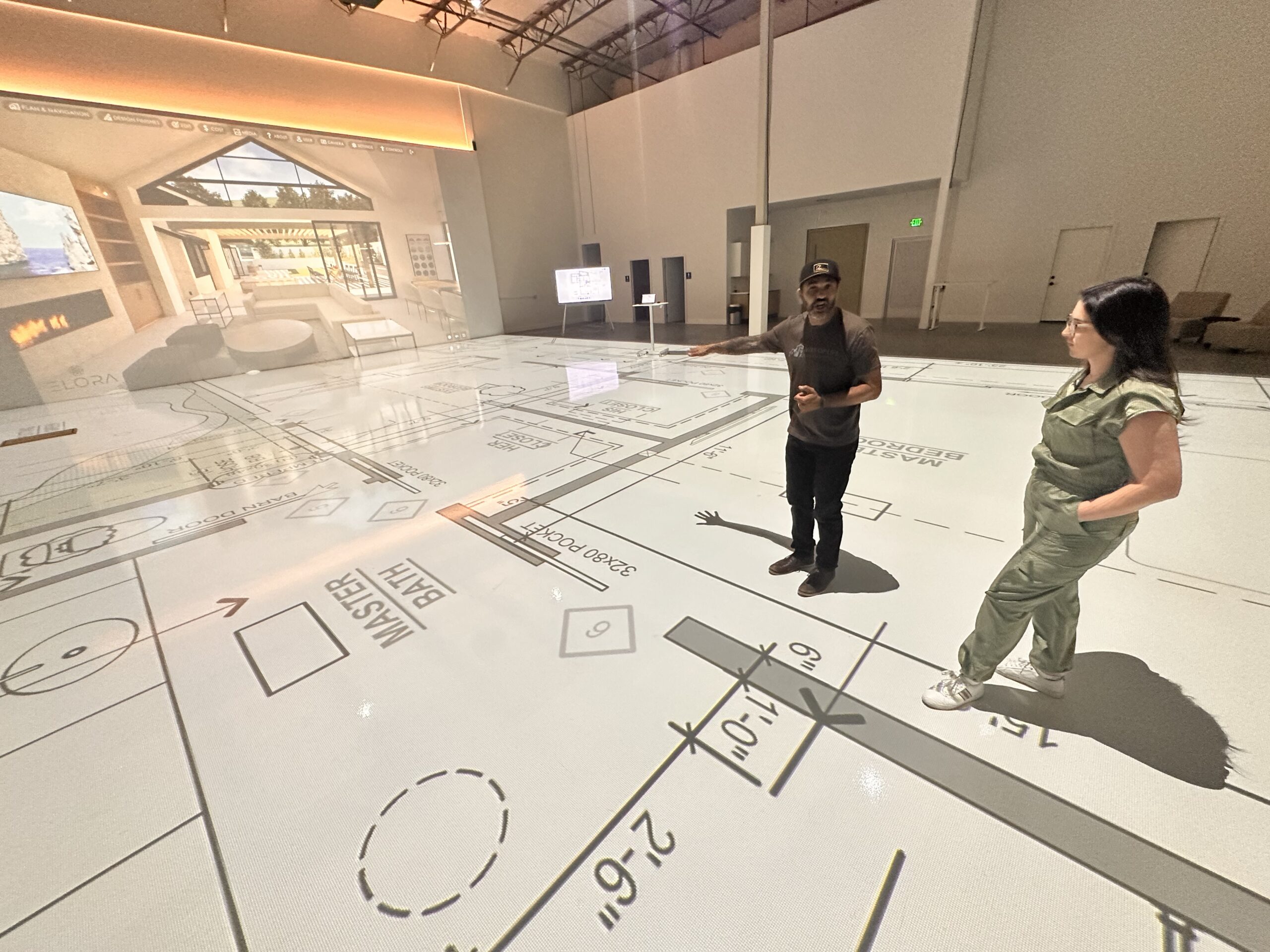
Inside a large, dimly lit studio in Irvine, outlines of kitchens, hallways and living rooms glow across the floor in bright projected light.
You look down and walk slowly through the blueprint, checking the kitchen’s size. A few steps later, you reach the laundry room and realize the space feels too small. You jot down your thoughts.
This experience is at Walk Your Plans Orange County, a design studio where clients literally walk through their building plans 1:1 before construction or remodeling begins.
The studio uses high-resolution projection technology to display architectural plans across about 3,000 square feet of floor space and an 18-foot wall. This creates a full-scale layout that allows homeowners, architects, builders, designers and contractors to physically explore a two-dimensional space they plan to build or renovate.
“We’re really trying to help the industry with clarification and communication,” said co-founder Andy Morales, a San Juan Capistrano-based contractor who helped launch the Irvine studio with co-founder Becky Vickers last year.
“A lot of people are approving plans they don’t truly understand because it’s just lines on paper,” he told the Business Journal as they demonstrated the process.
Walk Your Plans
Entrepreneur Joe Matejka started Walk Your Plans in 2022 in Cleveland. The concept quickly went viral on social media, and the company has since grown to 47 locations nationwide.
The Orange County studio operates through a licensing agreement with the national brand, Vickers said.
The studio caters to residential and commercial clients.
Vickers said the concept addresses a common problem in construction: costly changes made after projects have already begun.
“A typical walkthrough will make anywhere from 10 to 20 changes per hour,” Matejka said on a social media post.
Morales said that once plans are submitted for city permits, even small changes can cause delays.
He explained that once construction starts and a client wants to move a structural wall or dislikes a certain area, they usually have to contact the project manager, then the engineers, architects to update drawings, and resubmit the plans to the city for review.
This often causes construction delays of weeks or even months and ends up costing the client more money, Morales said.
“If we figure it out beforehand, that problem disappears,” said Morales.
Smoother Construction Process
During walkthroughs, clients stand inside the projected rooms and discuss design details as they go.
Design teams can test hallway widths, kitchen layouts and even furniture placement by projecting plans onto the floor. Many bring measuring tapes and other tools to check the space.
More interior designers are using the studio to try out furniture, fixtures and equipment to see sightlines and spot tight spots, Morales said.
The Irvine studio is located in a 6,000-square-foot space and hosts walkthroughs with architects, builders, developers and homeowners from all over the county.
Sessions usually cost around $2,000 for two hours. Vickers hopes clients view this as a useful part of the design process, not just an extra cost.
“We want people to treat this as part of their project budget,” she said. “If spending a couple thousand dollars helps you avoid tens of thousands in change orders later, that’s a huge win.”
The studio also acts as a neutral ground where designers, contractors and homeowners can come together to make final decisions.
Morales said that having this clarity early on can ease the tension that often comes up during construction.
“Building is expensive and emotional,” he said. “If people can actually see what they’re getting before construction starts, it saves time, saves money, and makes the whole process smoother for everyone.”