

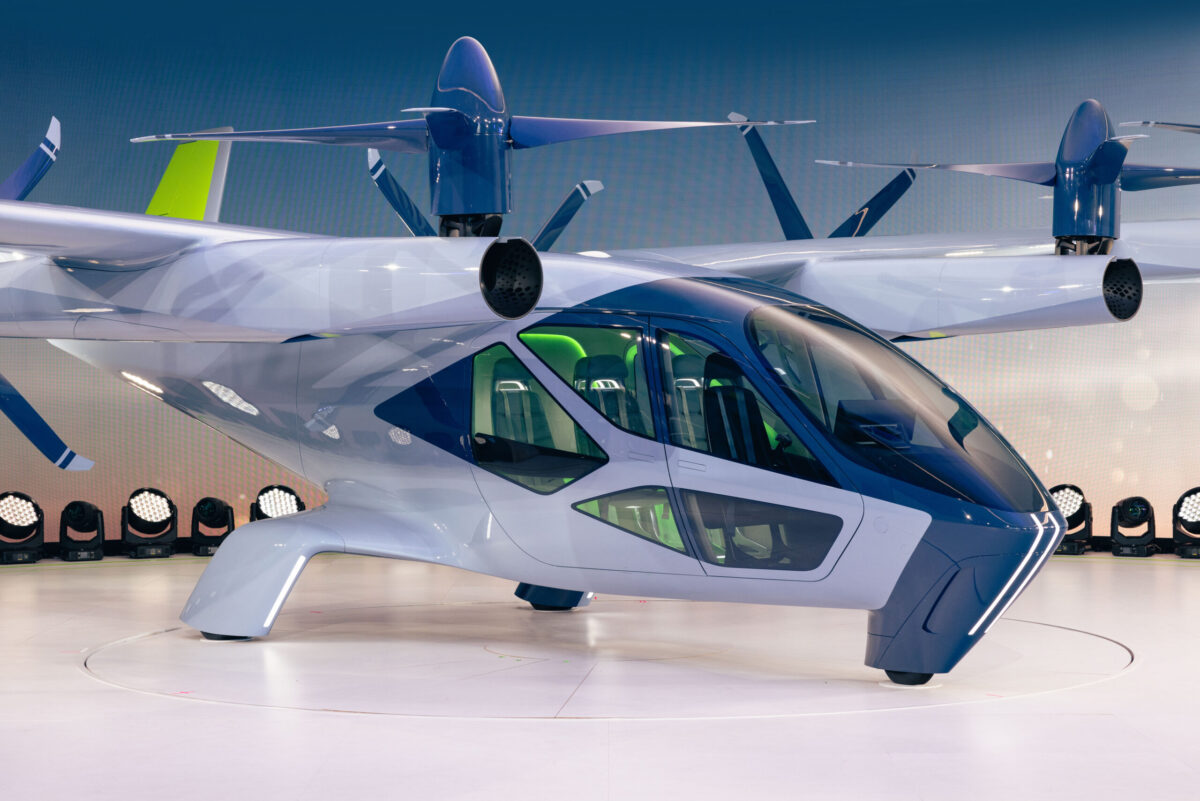
Supernal, a subsidiary of Hyundai Motor Group, saw its dreams of fully electric flying taxis take a setback late last month after slashing 296 employees.
The layoffs, which took place on Feb. 27, affected roughly 80% of its workforce across Supernal’s headquarters in Irvine, as well as facilities in Fremont and a test site in Mojave.
The reduction leaves Supernal, which moved to Orange County from Washington, D.C. in 2023, with 70 to 80 people in Irvine to continue operations, the company confirmed.
Despite decimating its staff, the company made it clear in an email that it was not ceasing operations. “Supernal is not shutting down.”
The layoffs are another sign of trouble for an emerging industry known as electric vertical takeoff and landing (eVTOL).
Santa Ana-based Overair, which previously aimed to have a flying taxi service in Dallas in time for the FIFA World Cup, quietly wound down its operations last year. Archer Aviation Inc. announced last August that it acquired Overair’s technology and hired some of its key employees.
These aircrafts, which can carry about four passengers, can hover like helicopters, thus eliminating the need for runways. Once underway, they can transition to flying like airplanes.
Even though Supernal hit its first milestone a year ago when it began flight tests of a demonstrator aircraft, it paused its flight program following the departure last August of Chief Executive Jaiwon Shin and Chief Technology Officer David McBride.
A Supernal company spokesperson called the recent layoffs “a strategic pivot to ensure our staffing and cost structures are optimized for the long-term delivery of our market-aligned aircraft design.”
“Supernal’s immediate focus will not be impacted by this decision, and remains on stabilizing the company, shaping a new business model, and developing a commercially viable aircraft,” the spokesperson told the Business Journal.
Committed to Air Mobility
The company said Hyundai Motor Group “remains committed to the Advanced Air Mobility (AAM) business as part of its future mobility vision, and Supernal will continue to serve as the Group’s dedicated AAM execution arm for aircraft development.”
In March 2025, Hyundai announced that it would invest $21 billion in the U.S. from 2025 to 2028. Of that, $6 billion would be earmarked to drive innovation in autonomous driving, robotics, AI and advanced air mobility (AAM). Some of those funds will support “advancing R&D with Supernal” to commercialize an eVTOL vehicle by 2028, Hyundai said at the time.
A few months later, in the summer, Supernal announced it would lay off 53 employees, or about 8% of its workforce. Officials told state labor officials that the cuts were made “to align with long-term strategic goals.”
Prior to the layoffs, Supernal reported having 613 employees with 456 based in Orange County as of last August, according to the Business Journal’s annual list of aerospace and defense companies.
Pauses Work on Flight Program Amid Leadership Shakeup
Supernal was established in 2020 as Hyundai Motor Group’s Urban Air Mobility Division. Its prototype vehicle is the S-A2, a four-passenger aircraft designed to cruise at 120 miles per hour with an initial range of 60 miles. The company previously said it planned to begin commercial flights in 2028.
It seemed poised to take the lead in eVTOL aircraft with the backing of South Korean giant Hyundai, which runs its American automotive unit in Fountain Valley where it employs 884 people.
Even though Supernal hit its first milestone a year ago when it began flight tests of a demonstrator aircraft, it paused its flight program following last August’s departure of Shin and McBride.
McBride, whose departure was never officially announced by the company, was named CTO of Supernal in 2024. Before joining Supernal, McBride was at NASA for more than 40 years, serving as director of the Armstrong Flight Research Center.
Emerging eVTOL Industry
The layoffs come amid continuing questions about the economic viability of commercial flying taxis and public acceptance of the new mode of urban transport.
Supernal is among a handful of U.S. companies pushing to get their electric flying taxis in the air.
Other companies developing eVTOLs include Santa Cruz-based Joby Aviation (NYSE: JOBY), Boeing-owned Wisk Aero in Mountain View and Archer Aviation (NYSE: ACHR).
San Jose-based Archer Aviation expanded into a 57,000-square-foot site in Huntington Beach last April after it was selected to be the official air taxi provider for the 2028 Summer Olympics, which will be held in Los Angeles.
Archer has also been partnering with defense company Anduril Industries in Costa Mesa to develop a next-generation hybrid vertical take-off and landing aircraft for the military.
