
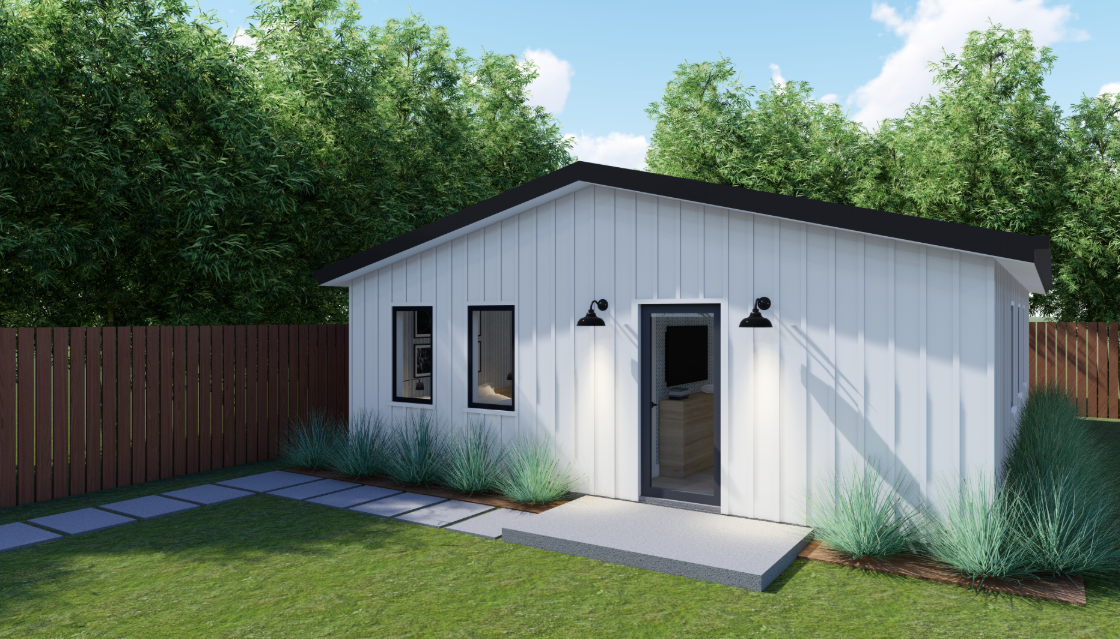
Accessory dwelling units, once a small slice of the housing market, are neck-and-neck with single-family home construction in Orange County as homeowners respond to high costs, changing family needs and the chance to generate extra income.
In the past two years, 3,283 permits were issued for ADU construction in OC, with 1,367 in 2024 and 1,916 in 2025, a 40% increase, according to Irvine-based Cotality, a real estate data provider formerly known as CoreLogic.
By contrast, Orange County and its cities issued 3,288 single-family home building permits over the past two years: 1,829 in 2024 and 1,459 in 2025, a 20% decrease, according to data Cotality shared with the Business Journal.
Cotality Economist Matt Delventhal told the Business Journal that this marks the beginning of an ADU-building trend he expects to continue over the next several years.
“It doesn’t look like affordability is likely to improve by very much in California very soon, so there will be the economic incentive to build them,” Delventhal said.
Relaxed State Rules Triggers Growth of ADUs
The data shows that ADUs are now one of the fastest-growing sources of new homes in the county, where home and land prices make traditional development more difficult.
Right now, the median list price for a home in Orange County is $1.4 million, according to Reports on Housing. For builders, an acre of land costs between $3 million and $9 million, depending on the area.
Deborah Diep, director of Cal State Fullerton’s Center for Demographic Research, told the Business Journal that even with this rapid growth, ADUs still make up only a small part of Orange County’s total housing.
ADUs, in times past called granny flats, guest houses or mother-in-law units. They are small backyard homes that usually range from 250 to 1,200 square feet, depending on local regulations.
Housing experts say ADUs can help ease California’s housing shortage and give homeowners more flexibility.
In 2019, Gov. Gavin Newsom signed a series of laws designed to make it easier to build ADUs or convert garages into housing, part of a broader push to increase supply statewide.
Last year, Newsom signed a law allowing homeowners to build up to three ADUs on a single lot.
Growth of ADUs
Before 2016, only 211 legal ADUs had been built in Orange County, according to a Cal State Fullerton Center for Demographic Research report that began tracking it in 2005.
That changed during and after the pandemic. With many homeowners stuck at home, they began looking around and searching for ways to house aging parents, house young adult children, or generate extra income.
In the subsequent years, Orange County added more than 5,200 ADUs from 2020 through 2024 alone, according to the Fullerton report.
Even with the rapid rise, ADUs still represent a small fraction of Orange County’s overall housing inventory.
Diep estimates there are fewer than 10,000 legal ADUs countywide, about 1% of the housing stock, even when accounting for older or undocumented units.
“[ADUs] is a nice chunk of the housing growth that’s occurring on an annual basis,” Diep said. “But it would take a whole lot more activity to change that share of the county stock as a whole.”
Still, rising housing costs and changing family needs are pushing more homeowners toward “tiny living” whether as rental units, backyard homes for relatives or downsized living options for themselves.
TinyFest Celebrates Living in Smaller Places
Costa Mesa recently highlighted ADUs with an event called TinyFest, which celebrates living in smaller spaces.
Renee Seevers, founder and CEO of TinyFest, told the Business Journal that the housing crisis has made people more open to rethinking the traditional idea of buying and living in “bigger” homes.
“Housing prices have gone significantly up and people feel pinned,” Seevers said. “They’re just trying to pay the bills.”
Seevers started TinyFest in 2017 after she downsized to a 100-square-foot home in Portland. She said interest in the event has grown as more people have been searching for alternatives.
“People need to see that there’s another option,” she said. “A lot of people can’t picture it until they step inside.”
Tiny homes and ADUs are often mentioned together, but they are not the same thing.
Seevers explained that tiny homes usually refer to the size, often under 400 square feet, while ADUs are defined by being a second or third unit on an existing residential lot.
Andrew Moore, CEO of Irvine-based Superior ADUs, told the Business Journal that this distinction matters in Orange County because many tiny homes on wheels do not meet local building codes.
He said that many of the units shown at the festival would need to be placed on permanent foundations and brought up to code before they could be used and lived in locally.
Moore said that for homeowners, building an ADU can be both a personal and financial choice.
He explained that building a new ADU or converting a garage can cost between $100,000 and $250,000. However, the investment can raise property value and provide rental income.
“Where could you ever build a house for that much on a prime lot in Orange County?” he said.
He also mentioned that demand for ADUs is often driven by families who want to keep adult children nearby, care for aging parents or stay flexible in an uncertain housing market.
Moore said that instead of selling and risking being priced out, some homeowners rent out their main house and move into the ADU. Others use the ADU to house relatives while keeping their independence.
“I love my mother to death, and she loves me to death, but we wouldn’t want to live together under the same roof,” Moore said. “They have their independence. That makes a big difference.”