
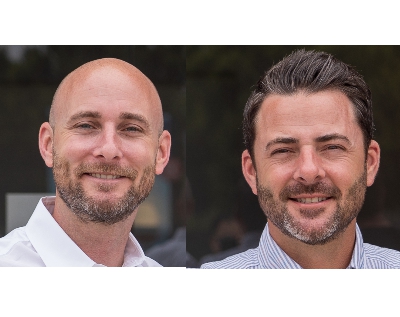
Digital advertising company Viant is back in the hands of its co-founders, Tim and Chris Vanderhook.
The duo plans to make the Irvine firm—whose technology and database of consumer information is used to help ad buyers plan, create, execute and measure their digital advertising investments—financially strong enough to go public in the next few years.
The latest moves add another notable chapter to the recent history of Viant, perhaps best known for its 2011 purchase of social network Myspace, a $35 million transaction backed in part by singer and actor Justin Timberlake.
Since then, Viant’s beefed up its advertising capabilities through a variety of new digital-focused product lines, changed hands several times, and also had a few name changes; it was previously called Interactive Media Holdings.
The latest ownership change gives the company a unified ownership structure for the first time in three years, and positions the firm toward a potential IPO going forward, company officials said this month.
“Our goal is certainly to build a company that is strong enough to go public,” Chief Operating Officer Chris Vanderhook told the Business Journal.
The company is currently profitable, Vanderhook said, although he declined to disclose revenue figures.
Chris said he expects 50% growth this year for the 300-person company, about half of whom are based at the firm’s airport-area headquarters.
Time, Meredith
The Vanderhook brothers earlier this month purchased back the 60% share of the company that had been held by Meredith Corp. (NYSE: MDP), a Des Moines, Iowa-based media conglomerate valued at about $1.7 billion.
“We saw the opportunity to keep building out on the current vision that we had set forth,” Chief Executive Tim Vanderhook said.
“We already owned 40%. To buy out the other shareholder and continue and charter our own direct course exactly as we had was really exciting. We think we got a great deal.”
No purchase price was cited in the Meredith transaction; a deal in the $50 million range appears likely.
Officials with Meredith said this month that the combined sales of its holdings in Viant and an unrelated sale of its Money.com website this quarter were expected to bring in around $75 million. News reports have pegged the latter of those deals at around $20 million.
The brothers sold their stake in Viant to New York-based Time Inc. in 2016 for $87 million, regulatory filings indicate.
About $23 million of that price was for the company’s technology and database, with another $7 million for Viant’s websites, Time’s financial statements said.
About a year after that deal was completed, Time said that Viant’s intellectual property—such as consumer data, and e-mail addresses—included information on about 250 million unique Myspace users.
Viant bought Myspace in 2011 largely to capture that consumer data, even as usage of that site was in sharp decline.
Time’s stake in Viant was subsequently taken over by Meredith, which bought out Time in 2018.
Facebook, Google
Myspace isn’t the only website—or digital advertiser, for that matter—adapting to a changing world, officials note.
There has been consolidation in the digital ad sector, leaving few independently owned firms that are thriving.
“Obviously, everybody in digital advertising competes with Google and Facebook,” Chris said.
Viant runs a “demand-side platform,” to let buyers purchase various forms of advertising in an automated way.
Such platforms make ad buying cheaper, more streamlined and more efficient while cutting down on the involvement of humans, the duo said.
Viant said it has made strides in using machine learning to help marketers and advertisers improve their advertising campaigns, and the company continues to invest in providing a wide array of methods to reach audiences on a broad scale.
That includes digital billboards in theaters, at bus stops and along highways, as well as television and digital audio services.
“Where we see this is continuing to build out the ability for marketers to place ads across all of their channels of advertising,” said Tim. “All of these formats of ads can now be placed through Viant. We’ll continue to build out those different channels to offer an omni-channel demand-side platform.”
Luckey’s Neighbor
Founded in 1999, Viant counts its primary base in Irvine. It has 11 offices across the U.S., including Los Angeles, Chicago, Atlanta, Detroit, and New York.
The company recently moved into a high-profile office building a few blocks from John Wayne Airport, at the corner of Michelson Drive and Jamboree Road—the city’s busiest intersection.
They’ve got another notable firm as corporate neighbors: Palmer Luckey’s border security tech company Anduril Industries occupies the back half of the 2722 Michelson facility.
Viant subleases about a third of the 155,000-square-foot creative office building.
“We’re really just being local Orange County entrepreneurs,” Chris said. “We take a lot of pride in maintaining our headquarters here.”