

A clinical stage drug company from Newport Beach thinks its core product could be the answer to millions of people suffering from celiac disease, an as yet incurable digestive ailment that destroys the lining of the intestines.
What’s more, ImmunogenX’s product, called latiglutenase, might be available in as little as 18 months, beating the offerings of potential competitors by three to five years.
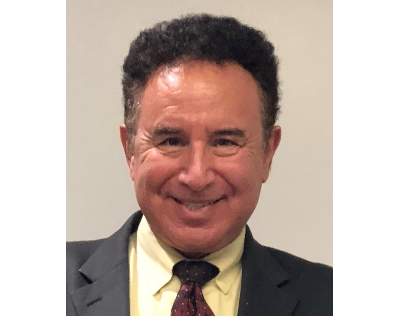
“Nobody else is in the market or in clinical trials,” Jack Syage, co-founder and chief executive of ImmunogenX, told the Business Journal.
There is no approved drug for the treatment of celiac disease; news reports suggest the market for drugs and products treating the disease could run roughly $550 million by 2023, in the U.S. and Europe.
In addition to treating the nearly 3 million Americans affected with celiac disease, latiglutenase has shown promise in helping the estimated 20 million people in the U.S. who are gluten intolerant.
The global gluten-free product market is now estimated at another $5 billion, and is growing some 7% annually.
Stanford Call
Recent trial results have given Syage and his company reason for optimism.
Earlier this month, the company announced that Stanford University’s School of Medicine will be hosting their Phase 2 clinical trial, which will be funded by a $2.3 million grant from the National Institute of Health’s National Institute of Diabetes and Digestive and Kidney Diseases (see story, this page).
The grant addresses the potential for latiglutenase to provide relief for patients who face insurmountable dietary challenges in managing their diseases, he said.
The company is conducting the trial at Stanford University School of Medicine’s Pediatric Department, which has well-established Type 1 diabetes and celiac disease programs.
Studies have indicated that the two conditions are genetically linked autoimmune diseases.
“It’s just so important to catch this disease early because it can cause what is called ‘failure to thrive,’” Syage said.
Stanford University Dr. David M. Maahs, who is a co-principal on the study along with Syage, said latiglutenase is a “promising therapeutic candidate that is critically needed” for patients who suffer from celiac and Type 1 diabetes.
“Latiglutenase has demonstrated great promise as a therapy to reduce the burden of celiac disease, which afflicts 5%-10% of people with Type 1 diabetes, and the challenge of a gluten-free diet,” Maahs said.
Proven Chemist
Syage has a long history as a business executive and researcher.
He is credited with about 30 patents issued or pending, and has published more than 120 papers and given 80 invited talks.
In 2011, he sold his Tustin-based company Syagen Technology Inc., a provider of chemical analysis instruments to detect explosives carried by airline passengers, to French company Safran, for an undisclosed amount.
He then decided to use his chemistry skills to improve the health of others.
“After many years working as a scientist in government labs and then forming a business where the government was the customer, I just felt I wanted to do one more big gig that benefitted people, and healthcare and life sciences attracted my attention,” he said.
A colleague, Jennifer Sealey-Voyksner, who is diagnosed with the illness, has dedicated her career to celiac disease research. The pair in 2013 started their company, which has the official name of Immunogenics LLC.
There’s some shared science between Syagen’s screening devices—the company sold its products to government agencies such as the Transportation Security Administration—and ImmunogenX.
ImmunogenX notes that it is “pioneering advanced mass spectrometry methods to identify and measure physiologically relevant gluten peptide sequences found in wheat, barley, and rye.”
Similarly, Syagen used mass spectrometry technology to detect explosives threats.
Mass spectrometry refers to the analytical technique that measures the mass-to-charge ratio of ions, to determine the elemental or isotopic signature of a sample.
AbbVie Castoff
ImmunogenX’s Chief Science Officer Sealey-Voyksner has more than 30 years of experience in commercial research, including developing new drug candidates at Purdue Pharmaceuticals LP and Boehringer Ingelheim.
In 2016, Syage said “opportunity knocked” when ImmunogenX was able to acquire the noncash assets of Alvine Pharmaceuticals, which was backed by AbbVie Pharmaceuticals and venture capital. Alvine’s key product was latiglutenase, which has more than 50 issued or pending patents.
Latiglutenase “was the leading candidate and probably the most well-financed with VC syndicate and AbbVie money,” he said.
AbbVie—now looking to buy drugmaker and aesthetics company Allergan PLC, which has large operations in Irvine—and other investors, who had invested at least $70 million, abandoned the project when a Phase 2b trial didn’t show statistically significant improvement for the drug versus a placebo.
However, Syage and Sealey-Voyksner saw the drug’s potential and bought the assets for an undisclosed price.
The company has gained fans who know the illness well; its advisory board includes celiac experts from Harvard Medical School, Columbia University, and Minnesota’s Mayo Clinic.
Fast Track
Celiac disease causes destruction of the lining in the intestines, which when ingesting gluten results in bloating, vomiting, diarrhea and abdominal pain.
According to the Celiac Disease Foundation, for now “the only treatment for celiac disease is lifelong adherence to a strict gluten-free diet.”
Individuals diagnosed with Type 1 diabetes and celiac diseases face enormous restrictions on their diets, such as maintaining tight blood sugar control while on a gluten-free diet.
During ImmunogenX’s Phase 1 clinical trial conducted in 2017, the drug showed promise in reducing the immune response in “seropositive” patients—meaning they had gluten-reactive antibodies, according to a review from the National Institutes of Health.
The most recent grant was awarded under a fast-track program.
The company could benefit from the FDA’s special trajectory for certain pharmaceuticals being developed in which there is a “serious or life-threatening condition [that fills] an unmet medical need.”
An 18-month timeline for bringing the product to market isn’t out of the question if studies continue to show good results, according to Jack Syage, co-founder and chief executive of ImmunogenX.
Vetted Thrice by NIH
ImmunogenX has raised $5 million from undisclosed investors.
It has also won three grants totaling an additional $6 million from different centers at Bethesda, Md.’s National Institutes of Health.
In addition to the just-announced $2.3 million grant from the National Institute of Diabetes and Digestive and Kidney Diseases, the other two NIH funded programs are:
• The National Center for Complementary and Integrative Health awarded $1.2 million to study intestinal protection and symptom relief due to the enzyme treatment from latiglutenase.
The study is also to demonstrate a diagnostic blood test for non-invasively measuring intestinal health as an alternative to a biopsy. The trial is in progress at the Mayo Clinic.
• The National Institute of Allergy and Infectious Diseases granted $2.5 million to study symptoms and quality of life relief in seropositive patients who have a positive test result in a serum.
The study, which will be held at trial sites at Mayo Clinic, Columbia University and two private sites, is in preparations. The first patient enrollment is expected in November this year.
“These are good projects and they see the value in them,” Chief Executive Jack Syage said.
