

Look for continued supply chain disruptions next year, get rid of paper in today’s data-driven world, and watch for a much larger group of workers using sophisticated analytics tools.
Four key figures at Irvine data analytics software maker Alteryx Inc. (NYSE: AYX) peered into the latest batches of numbers, not their crystal ball, for thoughts on tech and economic trends for next year and beyond for the Business Journal. Their insights follow below.
New Normal?
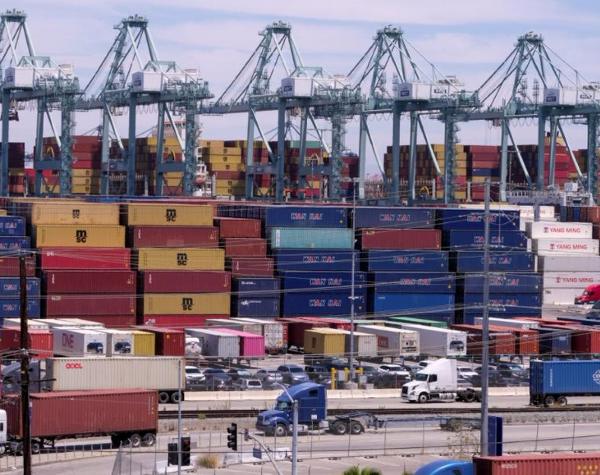
Supply chain disruption will certainly last into 2022 and potentially become the “new normal.”
To start making immediate improvements, business leaders should target decisions they make daily at key chokepoints in the supply chain. Many of these—from understanding difficult-to-track customer demand to procuring the necessary inputs from a network of uncertain capacity—are characterized by a lack of insight into predictable outcomes and time-sapping, inefficient analytic processes that stand as barriers to a customer-centric supply chain.
Analytics Automation unlocks the potential of outside influences—or signals—embedded in external data such as weather, economics and government, to discern fine changes in customer demand and potential disruptions to supply lines to support an experience that captures and retains customers.
Preempting disruptive events through improved decision-making will characterize supply chains that succeed in 2022 and beyond.
–Gib Bassett, Solutions Marketing Director, Alteryx
Evolution to Teacher
With the continued democratization of analytics, data scientists need to evolve from “problem solvers” to “teachers.” Organizations are now looking to fill these roles with someone who can articulate and explain— not just code to encourage people to be creative and think critically. However, there is an existing skills gap between data scientists as practitioners and those as teacher.
–Alan Jacobson, Chief Data and Analytics Officer, Alteryx
Ditch Paper
The digital world needs to ditch paper.
Many organizations are still working from printed documents leaving pertinent data on the table that needs to be extracted. Getting the data out of paper has been difficult to date, but with computer vision and text analytics capabilities, organizations can extract insights from shipping invoices, paper records, receipts, etc.
–David Sweenor, Senior Director of Product Marketing, Alteryx
More Empowerment
Data scientists will no longer be the only workers that understand analytics.
As we continue to democratize analytics and empower teams with the skills needed to understand data, organizations will no longer need to rely solely on a data scientist to make sense, and gain insights, from data. Empowering a much larger group to create insights and allowing the data scientists to focus on the problems where they can have the most impact.
–Jay Henderson, VP of Product Management, Alteryx
