
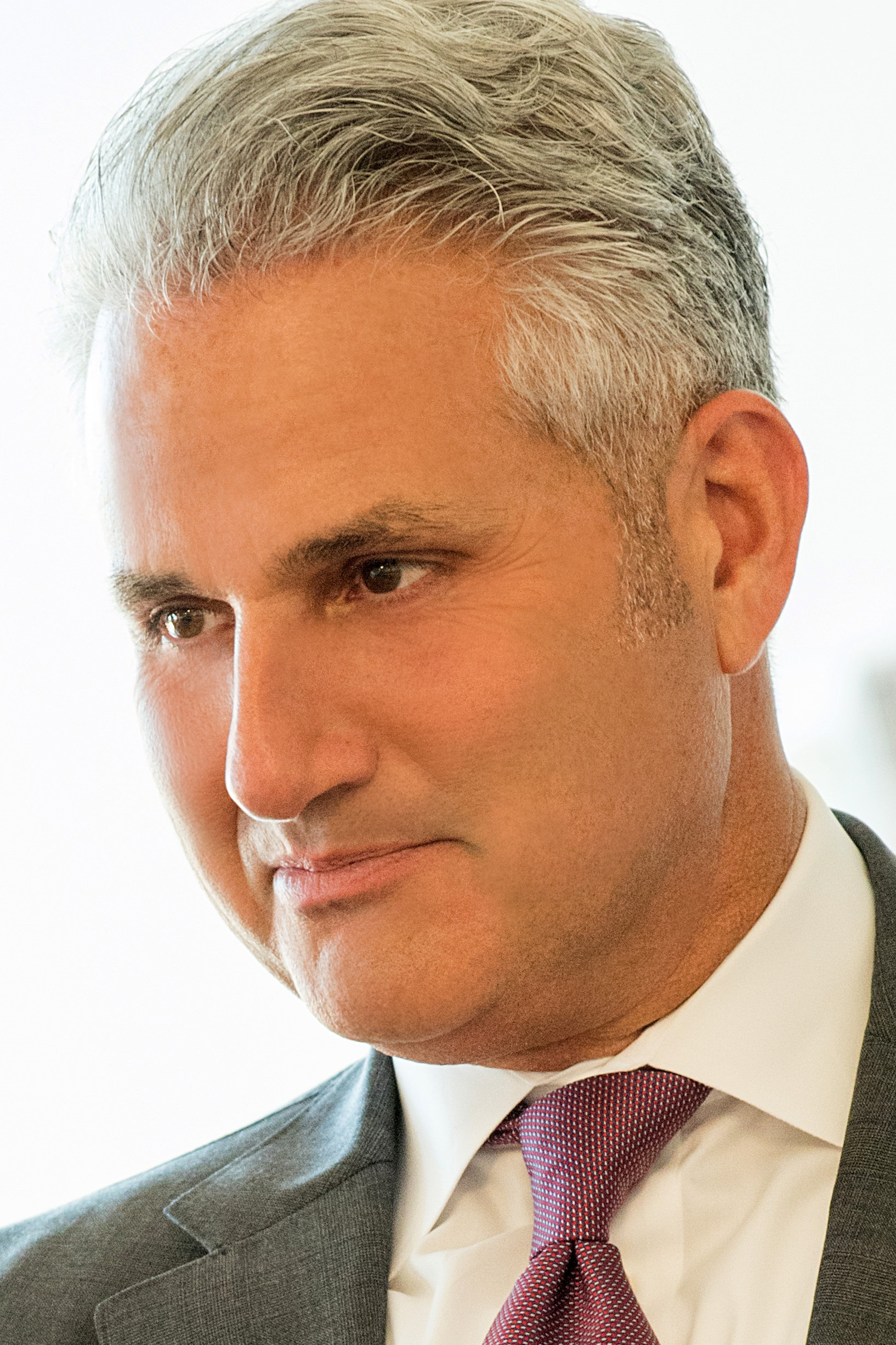
Since Steve Gordon’s surprising departure last week as chief executive of Opus Bank, the once high-flying company he co-founded in 2010, the question is what will happen to Orange County’s third-largest bank by assets.
Last week the departure was the talk of rival local bankers, who’ve battled with Gordon for years for customers and executives. They wondered if customers and top executives will also leave the Irvine-based bank.
Some speculated Opus was for sale in the past year and say they believe it will likely happen next year, Wall Street analysts agree.
The bank may “receive increased interest in an acquisition while the board looks for a new CEO as commercial banks look to target the fragmented Southern California lending landscape for expansion,” JMP Securities analyst Chris York wrote in a note to investors.
“We believe sale speculation may support a higher valuation,” Keefe Bruyette & Woods analyst Jacquelynne Bohlen said in her note to investors.
The bank (Nasdaq: OPB) said it replaced Gordon on Nov. 26 as both chief executive and board director.
It named Chairman Paul Greig interim chief executive, and hired Korn Ferry to conduct an executive search.
New Leadership
The press release announcing the executive changes didn’t praise Gordon, who built the bank to $6.1 billion in assets and a market cap once topping $1 billion.
It’s now valued at about $780 million.
“The Board believes that new leadership will help restore growth momentum to the bank, enabling us to deliver strong results consistent with our existing strategic plan while maintaining an appropriate risk profile,” said Mark E. Schaffer, chairman of the board’s nominating and corporate governance committee, in a statement.
Schaffer, who’s served on the board since Opus’ founding, has known Gordon for many years, as they previously worked together at other banks.
Schaffer praised Greig as “the right person to lead Opus Bank while we focus on selecting a successor CEO.”
Neither the bank nor Gordon returned messages seeking comment.
Gordon, an investment banker in the 1990s, successfully ran Irvine-based Commercial Capital Bancorp, which was sold in 2006 to Washington Mutual for $1 billion.
Opus was founded when a group of investors led by Gordon completed the acquisition and recapitalization of Bay Cities National Bank in Redondo Beach.
It attracted prominent Wall Street investors, such as Paul Singer’s Elliot Associates LP, Barry Sternlicht’s Starwood Capital Group Global LP and publicly traded Fortress Investment Group.
According to a proxy statement issued in March, the three control a combined 39% of the bank’s shares, while Gordon owns 5.85%—worth about $45 million as of press time.
Cracks began to appear at Opus in 2016, when it ran into problems with commercial loans and announced $38.8 million in charge-offs.
It later reported criticized loans, those “with potential weakness,” had tripled to $359 million by March 2017 from a year earlier. It also reported inadequate internal controls, was forced to raise cash, and eliminated its dividend for a year.
Institutional Shareholder Services Inc. gave the bank low marks for governance and audit and risk oversights.
Gordon worked to resolve the problems by implementing stricter controls and hiring new executives. Shares gradually increased, topping $30 in June.
Lost Board Support
There were signs Gordon had fallen out of favor with the board.
Last year it brought on Greig, who has extensive banking experience, including as a director of the Federal Reserve Bank of Cleveland.
Greig served as chairman and chief executive of FirstMerit Corp., which grew organically and through acquisitions from $10 billion to more than $26 billion. In 2016, he sold it for $3.4 billion to Huntington Bancshares Inc.
Greig’s background led to speculation both locally and on Wall Street of a potential sale of Opus.
In January, the bank quietly said Gordon was no longer chairman, a title he held since its founding.
Regulatory filings showed Gordon’s compensation declined for three straight years from $4.8 million in 2014 to $1 million last year.
A 2015 proxy statement said Gordon had signed a three-year contract, and the 2018 proxy didn’t indicate whether it had been renewed.
The company hit another roadblock on Oct. 22 when the bank released third-quarter results that missed Wall Street expectations, and shares fell 22%.
“A decline of 22% was a huge correction,” York said in an interview. Some investors concluded that “the restructuring and recovery efforts were not occurring and that something is not functioning properly at this bank.”
Since Opus went public in 2014 at $30 a share, its stock reached a high of $40 in 2015. During Gordon’s tenure, shares fell 32%, in contrast to the 36% increase in the benchmark KBW Nasdaq Regional Banking Index.
Bank Buyer
Potential buyers could include East Coast or Midwest banks that want a foothold in Southern California.
Executives at Cincinnati-based Fifth Third Bank and Oregon-based Umpqua Bank told the Business Journal this year of plans to expand organically in Orange County.
An Opus buyer would get a leading lender to developers of and investors in apartment buildings, one of the best-performing commercial real estate market sectors of the decade.
They would also get a bank with a weak deposit base that attracts customers by paying interest rates higher than competitors, a strategy that reduces profit.
York named a potential acquirer as Phoenix-based Western Alliance Bancorp. (NYSE: WAL), which has more than $20 billion in assets and owns a variety of banks in Arizona, Nevada and Northern California.
Opus shares, which closed at $21.23 on Nov. 29, might fetch $26 to $30 a share, which “represents a relatively attractive price on a tangible book value basis,” York said.
Greig moved quickly last week to retain top executives when he named two as vice chairmen: Brian Fitzmaurice, chief credit officer, and Ed Padilla, head of commercial real estate banking.
“Both Brian and Ed have consistently demonstrated excellent judgement and skill in their respective roles,” Greig said in a statement.
The bank faces a competitive market for large customers and top executives, who might be enticed by more stability at rival banks, such as Irvine-based First Foundation Inc. (Nasdaq: FFWM) or Pacific Premier Bancorp (Nasdaq: PPBI).
Opus’s problems “present opportunities for them to poach bankers and to poach commercial banking relationships,” York said. “There is a lot of uncertainty at Opus right now.”