
The 10 largest issuers of municipal debt that aren’t school districts owe a cumulative $9.84 billion, according to a Business Journal analysis.
The good news is that nine of those are rated investment grade, which means they can obtain lower interest rates after ratings agencies have examined their books in detail.
“The vast majority of debt in Orange County is in good shape,” said Terry Loughran, a muni portfolio manager at the Irvine office of City National Rochdale LLC. “Municipal issuers in Orange County are generally perceived as good, safe investments.”
With reminders of infamous bankruptcies in 2012, such as Stockton and San Bernardino, not to mention OC’s 1994 implosion, the Business Journal sought to ascertain the amount and quality of debt of municipal entities in the county.
The Business Journal, with the help of the municipal investment team at City National Rochdale, compiled a list of OC issuers, which total approximately 140, or about four issuers per each of OC’s 34 cities.
The biggest number of issuers are school districts, 44; followed by cities, 20; water districts, 19; and redevelopment agencies, 15.
Altogether they owe about $22 billion, which is relatively small, 0.6%, when compared with the $3.8 trillion in overall municipal debt in the U.S. OC’s population of 3 million is less than 1% of the nation’s 327 million.
The debt ranges from less than $1 million owed by cities such as Orange or Cypress to the granddaddy of debt issuers, the Transportation Corridor Agencies, which owes $4.7 billion.
For this article, we examined the 10 largest nonschool issuers of debt. In future articles, we’ll look at debt issued by schools, cities, redevelopment agencies and others.
What’s clear about the top 10 nonschool issuers is that their payments don’t rely on taxpayers, but rather on users.
For example, commuters are paying for the toll roads, hotel guests are paying for the Anaheim Convention Center expansion, and users of electricity and water are paying for the amounts they use. Some taxpayers do pay a flat fee for water.
Besides revenue, the chart (see this page) also shows the debt service coverage ratio, which reveals how much the entities are generating in revenue over the amount of annual principal and interest payments.
What Bankruptcy?
One thing is for sure: Another county bankruptcy similar to 1994—$1.7 billion and a U.S. record at the time—isn’t expected by issuers, investors or credit agencies. The main reason is a law passed after the bankruptcy that prohibits municipal entities from issuing debt to leverage in a pool, which is what then OC Treasurer Bob Citron did to cause the collapse.
“It won’t happen in the same way,” said Brett Barbre, a director at the Municipal Water District of OC who previously worked in the OC Treasurer’s Office. “What got Citron in trouble was leverage. The state put in strict measures to eliminate leverage.”
The OC bankruptcy nightmare ended last year when the county made its final payment. In total it paid $1.52 billion in bankruptcy-related debt. The county currently owes $69 million in muni debt, most of which involved bonds for buildings.
“What’s important is why the county filed bankruptcy—it was financial mismanagement. It wasn’t because the county had poor fundamentals,” said Michael Korzenko, the director of municipal research at City National Rochdale.
Nowadays, when muni investors study issuers in OC, they see a large tax base and wealthy residents with metrics higher than the state, which scores higher than the nation, Korzenko said.
“The county has maintained very strong ratings,” he said. “There is no stigma attached due to the bankruptcy.”
Moody’s and S&P just upgraded OC debt to AA+, “high quality” and a notch below “best quality.”
Following are comments on the debt of other OC cities and agencies.
Toll Roads
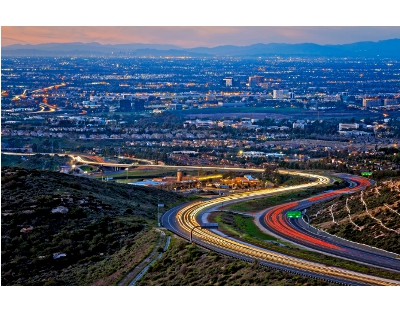
The TCA manages a 51-mile toll road system, which includes the 73, 133, 241 and 261 freeways, also known as Foothill or San Joaquin.
The roads garnered a risky reputation in their early years because projections were based on traffic estimates that were too optimistic. When the roads were refinanced in 2013, the projections were based on traffic of the prior 15 years, upon which conservative payment estimates were made, according to Chief Financial Officer Amy Potter.
The toll roads also developed a better congestion pricing system in order to nimbly raise prices when traffic is heaviest.
The result is that the toll roads handily meet their debt obligations. Plus, the TCA has more than $1 billion in reserves in case of shortfalls.
“We’ve been exceeding our projections every year; we’ve put together the right debt structure,” Potter said. “We’re doing outstanding. We’ve had some really terrific years.”
The market agrees. When the TCA refinanced a $125 million, 40-year bond, it was able to reduce its rate to 3.95% from the previous 5% as demand exceeded $1 billion.
“What’s unique about these roads is that $4 billion of infrastructure was financed with solely nontax dollars,” Potter said. “It’s not like government roads that are financed by taxpayers.”
Anaheim
Anaheim has a total debt portfolio of $1.76 billion, the highest of any city in the county. The biggest portion, $857 million, was to improve the Anaheim resort area and convention center; the debt is paid by a tax on hotel rooms and new Walt Disney Co. properties. Another $705 million is owed by the city-owned electric utility. The city’s water utility owes another $162 million; both debts are paid by users.
Through the years, the bonds have improved the convention center, now the largest on the West Coast, and the city’s water, power and sewer systems, according to city spokesperson Mike Lyster.
“As a city, we are fortunate to have a strong economic base driven by more than 25 million annual visitors,” he said.
“We also are seeing record investment of nearly $4 billion across Anaheim.”
The investment includes the largest expansion of Disneyland Park with construction of the 14-acre Star Wars: Galaxy’s Edge; a recent addition to the convention center; and several projects around Angel Stadium.
Much of Anaheim’s debt is rated AA, which is considered high grade and two rungs below the pristine AAA. Its debt service ratio, or the amount of revenue that can cover the debt service, is 2.44 for the Anaheim resort and 2.02 for its utility.
“Anaheim has really strong credit,” analyst Korzenko said.
OC Sanitation District
The district services 2.6 million people in central and northwest OC and has what it calls “the world’s largest indirect potable reuse system.” The system, done in collaboration with the OC Water District, helps release a higher quality of water into the ocean. The Sanitation District also spent more than $500 million on the Headworks Replacement, the heart of its sewer treatment plant.
Those capital improvements have left the district $1.04 billion in debt. Not to worry—it generates 3.4 times the amount of revenue needed to service it.
“Those are well-regarded credits in the muni market,” Loughran said.
The district hasn’t issued debt since 2010. Beginning in 2014, it issued four debt financing refunding obligations that generated $67 million in savings due to lower interest rates.
It projects it will spend more than $1 billion in capital to improve its plant and collection systems. And it will do it the old-fashioned way—from the money at hand.
“No new debt issuances are being proposed over the next five years,” the most recent annual report said.
Irvine Ranch Water District
The district halved its debt from $1.3 billion in 2011 to $553 million in 2016, when its debt service coverage ratio was 4.6 revenue times debt. Then last year, it decided to issue more debt, increasing total debt 38% to $762.9 million.
The increase was for two major capital improvement projects: the Biosolids & Energy Recovery Facilities, which integrate a new organics-handling system to make renewable resources; and the Baker Water Treatment Plant, which provides 28.1 million gallons of drinking water per day to 63,000 homes. The latter was developed among five water districts, which each financed and owns a percentage.
Irvine
The city of Irvine hasn’t reported debt for the past two years. However, it does issue special tax and assessment bonds on behalf of property owners to finance infrastructure improvements in various assessment districts.
Altogether those total $1.07 billion, which is down from the original $1.67 billion issued. The 30 bonds are not general obligations of the city and are payable solely from special tax and assessments.
The largest issuances are for Great Park, which has two debt issuances totaling $208.4 million. Neither of these obligations, which are being used for infrastructure, has been rated. The bonds will be paid back through a special tax on future homeowners.
John Wayne Airport
Last year the airport refinanced to save $13.6 million in interest costs. Nowadays it owes $155 million, ranking it 12th on our list. The money was to build a terminal, parking structure, and commuter hold rooms.
The airport’s finances indicate it can borrow a lot more. Its net revenue was 6.68 times the coverage for annual debt service. The airport has no plans to issue more debt, a spokesperson said.
OCTA
The Orange County Transportation Authority has $293.5 million in debt, which is paid by the Measure M sales tax. It also owes $104 million for the 91 Express road.
“The OCTA bonds are a good, clean example of how muni bonds work,” Loughran said. “Part of the sales tax goes to pay bond holders.”
OCTA is spending $1.9 billion to widen a 16-mile stretch of the San Diego (405) Freeway from Costa Mesa to the Los Angeles County line. About $1.1 billion will come from Measure M sales tax, of which $450 million in debt will be issued this year.
The agency also issued a $629 million bond last year that was guaranteed by the federal government, thus receiving a 2.91% interest rate and saving about $300 million in interest payments over the 35-year loan’s lifetime.
Moody’s wasn’t impressed, giving the bond a Baa2 senior lien rating, which is two levels above junk bonds. By contrast, it has given OCTA’s 91 Express toll road a rating of A1, five levels above junk bonds.
Moody’s said there are uncertainties with the public’s acceptance of toll lanes that will be used to pay back the 405 freeway bonds, and with the quality of the contractors. On the other hand, it estimated the debt service ratio will be 4.35 times.
Moody’s analysts seem to know what it’s like to be stuck on the 405 in rush hour.
“High daily sustained traffic congestion on this heavily traveled corridor supports the rationale for the 405 project,” it said.