

There are several ways to parse the paltry number of Orange County companies going public this year, a total of three initial public offerings reaping relatively meager proceeds of about $210 million combined.
Trends are at least heading in the right direction. Irvine-based biopharma company Urovant Sciences Ltd. made its Nasdaq debut on Sept. 27, selling 10 million shares at $14 each, raising about $140 million in proceeds.
The clinical-stage drug company’s haul doubled the local companies 2018 IPO proceeds to-date.
The OC performance runs counter to other markets in the Western region and the U.S. as a whole, where the domestic exchanges are having a banner year in terms of IPOs.
The region’s 157 deals represent a spike of 31%, while the $43.8 billion those offerings raised in proceeds are up 57% versus the first nine months of 2017, according to Ernst & Young’s Global IPO report.
There’s a myriad of reasons that OC companies haven’t participated in the public parade this year, according to EY executives.
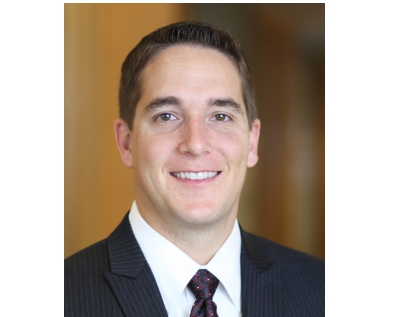
“I wouldn’t say it’s a bad thing, [it’s] not reflective of the health of this economy,” said Tim Rahall, EY’s technology partner in its Irvine office.
That health is reflected in local companies setting a record pace this year of raising private capital, poised to eclipse the $1.3 billion raised in Y2K-crazed 2000.
And the more venture capital and private equity funding that comes in, “it has to exit at some point,” Rahall said. “There’s multiple paths—ultimately [an] IPO is most likely. But what we’re also seeing is new private financing, new private equity coming in. That’s a new phenomenon.”
Unicorns Abound
The lack of entries into the public markets hasn’t prevented a number of Orange County companies from gaining unicorn status, the now common VC-coined term for gaining a value of $1 billion as a privately held company, and in all likelihood not yet being profitable.
Cybersecurity leader Cylance Inc. has done so, with over $300 million in venture support to-date.
Fusion-energy explorers TAE Technologies has done the same, this year surpassing $500 million in raised capital, much of it from well-known wallets like that of Microsoft Corp. co-founder and Portland Trailblazers and Seattle Seahawks owner Paul Allen; actor Harry Hamlin of “L.A. Law;” former Emerald Bay resident Buzz Aldrin, the second man on the moon; and Google Ventures.
Huntington Beach-based satellite launcher Rocket Labs also boasts well-known investors’ like Silicon Valley VC Khosla Ventures and aerospace giant Lockheed Martin. Reports give it a $1 billion valuation.
“So it’s the emergence of unicorns,” said Sandip Bhagat, chief investment officer at Pasadena-based Whittier Trust Co. and a 40-year Wall Street veteran of firms such as Morgan Stanley and Citigroup.
“Normally any one of those would have gone public long before, but there is a large pool of capital available within the state, in Orange County in Southern California and then in Silicon Valley, and through asset owners like family offices and intermediaries like VCs and PE [private equity] firms.”
EY’s Rahall sees the trend continuing. “Companies in Orange County [have] easy access to capital—and they can continue to get that capital.”
And then there’s the absence of scrutiny and regulation. Bhagat says those were the driving forces behind Elon Musk’s infamous bid to retake Tesla Inc. private this past summer.
It may also be that there are some OC IPOs in the pipeline that are sneaking up on us.
Pursuant to the JOBS Act that former President Barack Obama signed into law in 2012 with bipartisan support, designed to promote more public offerings as a way to raise capital for growth jobs, companies termed “emerging growth companies”—up to about $1 billion in sales—could do confidential S-1 registration filings, and avoid the long roadshow and scrutiny before they needed to, up until just a weeks before selling their shares.
That was the case with a couple local companies that went public the past few years, including Aliso Viejo-based developer Five Point Holdings LLC and Irvine-based big data firm Alteryx Inc.
“Confidential filings are a great way to get feedback from the SEC,” Rahall said. “We work with companies on addressing those comments—avoid the scrutiny before you need to—companies can shop that S-1 document.”
“We know OC companies are doing that.”
On the Other Hand
Rahall remains a fan of the public markets, pointing to the average first-day returns this year of 26% and post-IPO returns of 27%.
“It’s still where you get the best valuation … and valuations are so high now, it’s a good time to go public,” he said, and adds that beyond life sciences, and fintech and IT, “what I see are more mature companies going public—REITs, oil companies.”
The largest IPO in the West this year was Las Vegas-based hospitality and construction real estate investment trust Vici Properties Inc., which brought in nearly $1.4 billion in proceeds.
San Francisco-based file and video-sharing upstart Dropbox Inc. is second, raising $869 million and gaining a valuation of $8.3 billion out of the IPO gate in March.
It doubled that by mid-June but has since fallen from $43 per share to $26, still about 25% above the $21 per share IPO, with a market value in excess of $10 billion.
Wall Street vet Bhagat sounds other cautionary notes for companies cowed by the public markets. “There’s a downside to a lack of transparency, in that it could hinder true recognition of value … you give up liquidity, and those private sources of funding could just dry up.”
Fame has a price, but it can also carry a payoff.
“Investors ultimately are looking for the best return. And a splashy IPO is a great way to attract talent,” Rahall said.
