

Another local electric vehicle maker, Phoenix Motor Inc., is vying for Wall Street’s attention, with hopes of raising as much as $150 million in an initial public offering.
Phoenix Motor, which moved headquarters from Ontario to Anaheim earlier this year, revealed plans for an IPO last week. It comes on the heels of Irvine-based Rivian Automotive Inc.’s (Nasdaq: RIVN) blockbuster public listing in November, which brought the Amazon-backed company $13.7 billion in gross proceeds and the title of largest IPO this year.
Phoenix didn’t indicate share pricing details in its regulatory filing and said proceeds from the offering would be used for technology, research and development.
It would be listed on the Nasdaq under the ticker “PEV,” and would count as its largest shareholder parent company SPI Energy Co. Ltd. (Nasdaq: SPI) of Santa Clara.
SPI is a solar energy and EV-focused firm with ties to China that bought Phoenix last year and subsequently invested $17 million into the business.
Class 4 Strategy
The electric vehicle maker is a different proposition from buzzier names such as Rivian or Tesla Inc. (Nasdaq: TSLA) as a maker of Class 4 vehicles.
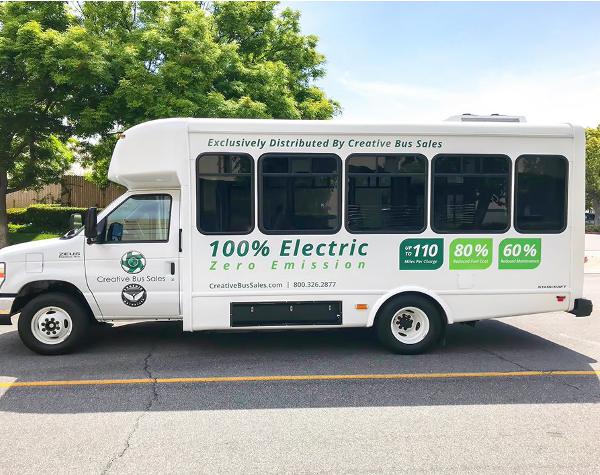
In other words, passenger vans, school buses and super duty pickup trucks are Phoenix’s bread and butter. It also makes vehicle chargers.
Its existing fleet of EVs have a maximum range of 160 miles and minimum recharging time of five to six hours.
While the vehicles it currently makes look similar to existing gas-powered vans and trucks, the company says it is in the design phase for a fleet of more futuristic-looking vehicles.
The company’s consumer EV affiliate EdisonFuture Motor Inc. of Santa Clara revealed the EdisonFuture EF-1 pickup truck and EF-1 V van at the recently concluded LA Auto Show, with hopes for a release in 2025.
These vehicles promise solar-powered roofs that can charge the vehicles while in use or parked during the day. Phoenix said that in August it filed a design application with the U.S. Patent Office for the design of a “Retractable Solar Roof for a Motor Vehicle.”
Modest Revenue
Phoenix is banking on the vehicles already in the market as proof of its ability to develop and deliver commercial EVs and make money.
It’s already generating modest revenue, unlike Rivian, which has just begun the rollout of its first electric pickup trucks and Amazon delivery vans.
Phoenix said it had revenue of $1.7 million for the nine months through September, down from $3.8 million in the year-ago period. The decline, the company said, was driven by delivery delays and supply shortages that mostly impacted its battery packs.
The company said it delivered 98 EVs in the nine-month period ended in September, the majority of which were shuttle buses.
Phoenix said it has about $9.3 million in backlog revenue that it’s working on, which stemmed from the rollout of a third-generation drive system in the second quarter. The company also said in a regulatory filing it has orders for 25 chargers worth about $700,000.
Regulatory Advantages
Phoenix is one of a number of EV makers looking to secure its place in a market projecting big growth, with national and state regulations aimed at electrifying fleets in a bid to reduce carbon emissions.
“We believe that given the corporate fleet electrification commitments, together with increasing government incentives and stringent government regulations, the market for electric buses and trucks will experience substantial demand and significant growth in the foreseeable future,” the company said in its Securities and Exchange Commission filing.
The company specifically cited the regulatory environment in California around the greening of airport shuttles, public transit buses and other fleets in relation to its business potential.
“While the current market penetration of electric commercial vehicles is low, the segment is expected to see significant growth. Phoenix is specifically targeting the medium-duty EV segment, particularly Class 4, 5 and 6 segments,” the company said.
Management, Infrastructure
Phoenix’s first vehicle debuted in 2014 and the company has since built a customer roster that includes cities, transportation agencies, campuses, hotel chains, airport shuttle companies, last-mile delivery and other fleet users.
The city of Irvine was an early customer, using the company’s work trucks in 2015. Los Angeles International Airport is another customer, with a fleet of 39 Phoenix electric shuttles.
The company is working with autonomous vehicle technology provider EasyMile SAS on the development of buses and delivery vans. That includes development of autonomous electric shuttle buses for the Metropolitan Transit Authority of Harris County for use in downtown Houston. Phoenix said that project is expected to yield it $500,000.
It’s also now developing a new drivetrain, a fourth-generation model, for its vehicles that could allow it to move away from the Ford E-450 chassis on which all of its vehicles are currently built.
SPI Backing
All of this is happening as the company’s parent SPI Energy bolstered the Phoenix management and internal infrastructure this year.
January kicked off a hiring spree that brought on former Denso Corp. executive Frank Jenkins as vice president of business partnerships and development, followed by early Tesla employee Edmund Shen as vice president of product management and supply chain.
The following month saw the appointment of Joseph Mitchell to CEO, joining from electric powertrain maker UQM Technologies where he was president and CEO.
May saw the company tap Ron Iacobelli to be chief technology officer and the next month Ira Feintuch as senior vice president and global head of EV charging solutions.
Its board also already has an OC tie in Lance Zhou, the CEO of Irvine luxury electric vehicle maker Karma Automotive Inc.
Phoenix now counts 37 full-time employees.
In August, the company moved from Ontario to a 39,043-square-foot facility on Lakeview Loop in Anaheim.
The property includes about 21,000 square feet of manufacturing space, which Phoenix estimates could produce 120 vehicles annually. That output could be doubled if the facility added a second shift.
