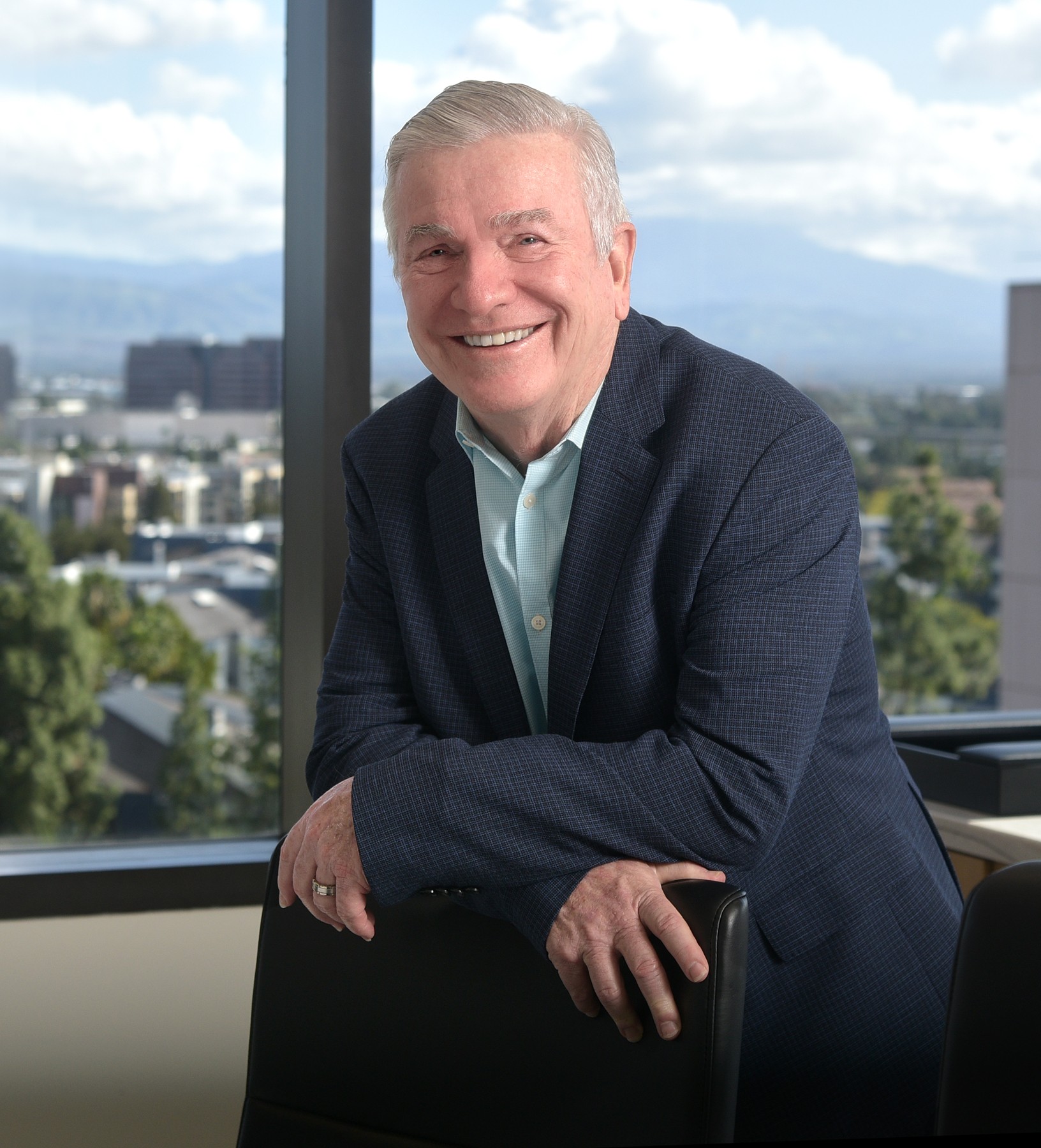
“There was a group of people pulling together” since it was founded in 1984, he recalled.
“They said the Black folks in the community weren’t being recognized.”
He became more active in 1992 when he was asked to start a scholarship fund, which over the years has given more than $100,000. He’s been the chamber’s president since 1995.
McDonald’s been in the private sector his entire life, mostly in the shoe clothing business, providing sporting goods for high schools, colleges and the professional leagues. At one point, he was one of the top sales reps in the U.S. for shoemaker giant Adidas.
McDonald developed the chamber’s educational outreach programs and has established the chamber’s veteran’s business network programs. Through a partnership with Explorer Studios, two award-winning educational films have been produced, “Building the Dream” and “History of the Buffalo Soldiers.”
He comes from a long line of soldiers—four uncles and his father were Buffalo Soldiers, a term that became synonymous with all Black regiments. One relative, Lt. Virginia McDonald, was a World War II Army officer in the Nurse Corps, which was quite difficult in those days for a Black female, he said.
McDonald himself is a U.S. Navy veteran, having served from 1965 to 1968, including a stint in Vietnam.
He’s worked on the PBS SoCal Board of Trustees where he’s assisted with presentations on Black history.
Main Theme
The Black Chamber has 130 members, from which 99% work at corporations. It has a database of 5,000 Black professionals, he said.
Among its board of directors are Chairman Davina Samuel, Union Bank; Vice Chairman Charles Moore, Moore Educational Services; and Secretary Marlene Dyce and Harold Hutchison, both from World Financial Group. Its advisory board includes executives from Wells Fargo, Southern California Edison and PBS SoCal.
The chamber has four goals: create access to capital and procurement opportunities; to support disseminating relevant information; to strengthen the organization; and to contribute to the general welfare and progress of the African American community through economic development.
“Our main theme is access to information by making sure you have the right information to improve, enhance and grow your business,” McDonald said.
Despite the pandemic that’s forced him to work from his home instead of its Anaheim office, “I’ve been busy as a bee,” he said.
The chamber is producing more webinars on education and community engagement; it held a virtual luncheon.
It’s working with entities like the Orange County Business Council and Cal State University, Fullerton, as well as other chambers to discuss racial equity.
“We can make sure that we highlight our different ethnicities and don’t step on each other’s toes,” he said. “Our goal is to continue to reach out to corporations. We want to encourage small businesses to give them some information so they can put together their own program.”