

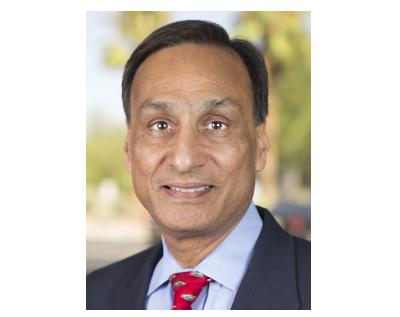
Microchip Technology Inc. Chief Executive Steve Sanghi has ousted the entire management team at Microsemi Corp. following its $10.3 billion acquisition, according to sources close to the matter.
The cuts, initiated on May 29—the day the transaction closed—included Chief Executive Jim Petersen; Chief Operating Officer Paul Pickle; Chief Financial Officer John Hohener; Rick Goerner, executive vice president of marketing and sales; David Goren, senior vice president of business affairs, legal and compliance; Chief Technology Officer Jim Aralis; Chief Strategy Officer Steve Litchfield; Sun Kim, senior vice president of global human resources; and Rob Adams, senior vice president of corporate development.
Some of the former executives still had their Microsemi titles listed on their LinkedIn pages, at press time.
The first round of cuts totaled about 20, according to sources with direct knowledge of the layoffs, and primarily included senior- level executives and vice presidents of various divisions.
Microchip (Nasdaq: MCHP), based in the Phoenix suburb of Chandler, anticipated $300 million in savings in the third year after the transaction’s close.
The company declined to comment for this story.
Sanghi, in a conference call with analysts after the close of the deal, signaled that more job cuts and expense reductions are on the horizon—typical moves following any merger or acquisition, especially one of this size and scope.
He listed Microsemi’s multiple enterprise systems, as many as 21, and the “large amount of staff” handling them.
“As we move them to Microchip, there will be significant synergy coming out of that,” he said.
Synergy is often corporate speak for expense cuts.
Sales and marketing will also be consolidated, and common distributors will be evaluated.
“There is a lot of duplication and country- level VPs and managers and geographical vice presidents and others,” said Sanghi, who’s held the top post since 1991.
Cuts in research and development, foundry operations and quality assurance are also on the chopping block.
Microsemi spent $341.6 million in R&D in the 12 months through September—the end of its fiscal year—up from $309.1 million in 2016, according to its 10-K filing.
Both figures represent about 18.7% of sales.
Microchip R&D expenses for fiscal 2018 were $529.3 million, or 13.3% of sales, compared to $545.3 million, or 16% of sales, the prior year.
The world’s 10 largest chipmakers, by comparison, varied widely in R&D expenses as a percentage of sales, according to the latest figures released by IC Insights. Samsung, the world’s largest consumer electronics maker, was on the low end, with R&D at only 5.2% of sales. Mediatek was the highest, with the line item accounting for 24% of sales.
Microchip will also shed a lot of public-company costs, including those related to the board, to the Securities and Exchange Commission, such as 8-K and 10-K filings, and to audit and legal fees.
Impact
Microsemi was OC’s fourth-largest chipmaker before the deal closed with 236 workers at its 110,000-sqaure-foot headquarters at One Enterprise Drive. It had 5,042 employees worldwide through April, according to Business Journal research, a rather low number considering its heft.
The company posted record sales of $1.8 billion in its last fiscal year and record net income of $176 million. It had a market value of $8.1 billion, trailing only Irvine-based heart valve maker Edwards Lifesciences Corp. (Nasdaq: EW) with $29.9 billion, and health facility owner HCP Inc. (NYSE: HCP), with $11.5 billion, among locally headquartered public companies.
Microsemi has run lean since Peterson took the top management post in 2000. Most of its manufacturing is handled by contractors in Asia, though its chips geared for the defense and aerospace industries are made stateside due to national security concerns.
Its chips are built into satellites, drones, digital televisions, defibrillators, pacemakers and other devices made by the likes of Boeing Co., Hewlett-Packard, Dell and Samsung Electronics.
The offerings and end-markets compliment Microchip’s strong presence in the industrial, auto and home appliance segments. About 30% of Microchip’s $3.9 billion in sales in the 12 months through March—the end of its fiscal year—were generated in China. International business accounted for about 82% of total revenue. It posted net income from continuing operations of $255.4 million.
Influence
Microsemi and Microchip share little overlap, and had little interaction before recent negotiations, Adams told the Business Journal in March.
For now, Microsemi will operate as a wholly-owned subsidiary under Microchip and maintain its brand, though Sanghi said all of their products will move over to Microchip’s enterprise system.
Its headquarters, website and supplemental materials were still branded under the Microsemi logo late last week, a stark deviation from the style Peterson preferred after any acquisition. He was fond of leaving no trace of an acquisition’s lineage or brand the day the deal closed.
Peterson, who became chief executive in November 2000 and board chairman in 2013, oversaw 27 acquisitions and three divestitures during his tenure.
He led a massive diversification effort in the last few years to expand offerings in the communications, Internet of Things and data center segments to augment its legacy positions in the military, industrial and aerospace sectors.
The sale price of $68.78 per share represented a 7% premium on Microsemi’s share price at the close of trading on March 1, the day the deal was announced. It’s a 33% premium on the Jan. 1 price, when analysts started talking about the potential for a deal, listing several possible suitors, including Broadcom.
And “Jimmy P” adherents have been rewarded handsomely during his 17 ½-year tenure, which began with Microsemi stock trading in the high single digits.
No word yet on the future of Microsemi’s Aliso Viejo headquarters, which is leased through 2021, according to brokerage reports.
There’s been no indication the company’s looking to sublease, according to brokerage data.
Microchip leases an office at 1 Spectrum Pointe Drive in Lake Forest where it employs 60 workers.
