

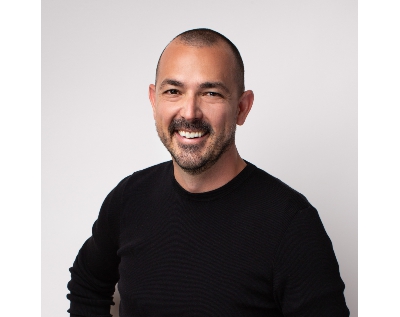
Scott Saunders is on a mission “to transform sad money” at Happy Money.
The company’s founder and CEO is helping millions of Americans, in particular millennials, break up with their credit cards and reduce their debt levels.
He puts it in blunt terms. “We want to break the heroin-like addiction to credit cards,” he said of his fintech company, whose apps and loan products help customers consolidate, reduce and eliminate high-interest credit card debit through partnerships with credit unions and other financial institutions.
Saunders’ pitch appears to be working: Happy Money brought in $36 million in revenue last year, and its current pace of sales equate to nearly $65 million in annual revenue.
Saunders has also gotten the attention of deep-pocketed financial partners.
The Costa Mesa-based firm last week closed on a $70 million Series D round of funding, ranking No. 2 among funding deals here this year. That figure nearly is equal to the combined capital raised in five previous rounds for the 10-year-old company, which got its start under the name Payoff. It changed its name in 2017.
The fundraising gives Happy Money a $495 million valuation, making it OC’s next headline-making upstart fintech firm, joining Irvine-based Acorns Advisors LLC, which recorded an $860 million valuation during its last funding round in January.
Acorns raised about $105 million in its Series E, the most venture capital funding of any OC firm so far this year. It moved to a new, nearly 90,000-square-foot headquarters at UCI Research Park around the start of the year, to accommodate a surge in hiring.
Happy Money will move into its own new headquarters—at about 72,000 square feet it is more than triple the size of its current location—at Tustin’s Flight office campus early next year (see story, page 58).
The new digs should allow the company to double its employee count from 280 to 600.
“The purpose of the capital raise was to fund the company’s growth,” Saunders told the Business Journal last week, noting the company’s forthcoming new home and planned hiring push.
Happy Money’s website currently lists nearly three dozen local open positions, including engineering spots and credit risk analysts, a host of corporate positions, and more unique jobs like “workplace experience coordinator.”
Credit Union Focus
Happy Money found its momentum when it realized that its mission—to turn borrowers into savers—aligned with credit unions, according to Saunders.
The new round of funding was led by CMFG Ventures, the venture capital arm of Madison, Wis.-based CUNA Mutual Group.
CUNA Mutual “has a product relationship with” more than 95% of the country’s credit unions.
Additional investments came from Vinny Smith’s Newport Beach-based Toba Capital, OC’s largest venture capital firm, as well as New York-based Anthemis Group, among others.
Along with the funding, Happy Money said it has formed a partnership with CUNA Mutual’s sales force team to help build industry relationships.
“We were drawn to Happy Money because of their innovative approach to providing financial tools and services focused on human happiness, as well as their shared ethos with credit unions to serve members and communities,” said Brian Kaas, vice president of corporate development at CUNA Mutual and president and managing director of CMFG Ventures, in a statement.
CMFG is “excited to help accelerate their ability to forge partnerships with and bring innovative lending and savings offerings to credit unions and other mission-aligned organizations,” he said.
Payoff & Joy
Happy Money’s current base of credit unions, which include Alliant, First Tech and Technology Credit Union, use the Happy Scale to make decisions on loans and pricing of loans to consumers.
The company has two main product lines: a loan product called Payoff that helps consumers consolidate debt and track their efforts via an app; and a separate mobile app called Joy that allows users to rank their purchases in terms of happiness and sadness, and create a budget for saving.
“But it’s best not to think of the company in terms of these silos,” said Saunders. “It’s one mission, one Happy Money.”
Using what they’ve learned about spending patterns and human behaviors, the company said it will launch an updated, integrated Happy Money app that brings together aspects from Payoff and Joy next year. Saunders declined to comment further on the new product.
Disrupting Credit
Happy Money’s key innovation is a contrarian view of credit, according to Saunders.
Most lending businesses profit when consumers fall into debt, but Happy Money is determined to break that cycle, and the system that it supports.
“The second piece of that innovation is to change credit scoring to support that mission,” Saunders added. “Dave Ramsey [a popular finance guru] calls the FICO score the ‘I love debt’ score because in order to gain credit, you have to take on debt. But Happy Money sees a much bigger opportunity around a credibility scoring.”
The company’s credit union partners are already using its Happy Scale “to assess consumer’s credibility, considering cash flow, income and human behavior trends,” he said.
“We think that people who spend less than they make are credible. But the FICO score doesn’t pick that up,” said Saunders.
“With our system, if you are highly motivated to pay off your debt, you’ll grade credibly.”
About 10% of the company’s 280 current employees are devoted to data science and analytics.
Among their researcher’s findings: about 23% of Americans and a third of millennials experience a range of symptoms often associated with PTSD from their finances, largely correlating with debt.
“Today, sad money exploits people’s psychology to get them to do what is in their short-term financial best interest. We want to leverage human psychology to turn sad money into happy money,” Saunders said.
Taking Flight
Happy Money, which currently takes up 20,064 square feet at Costa Mesa’s Pacific Arts Plaza office complex, will move out early next year and begin its lease at Tustin’s new Flight creative office campus, taking up half of a 145,417-square-foot building.
It’s the largest tenant announced to date at the new campus; the Business Journal first reported on the lease in July.
Chon Kantikovit from the local office of Cushman & Wakefield negotiated the lease on behalf of Happy Money.
Parke Miller, executive vice president at Lincoln Property Co., the developer of Flight, told the Business Journal in July that Happy Money is “the ideal partner to join our creative office campus and we look forward to working closely with the entire team.”
