They weren’t a dollar short, but they were a day late.
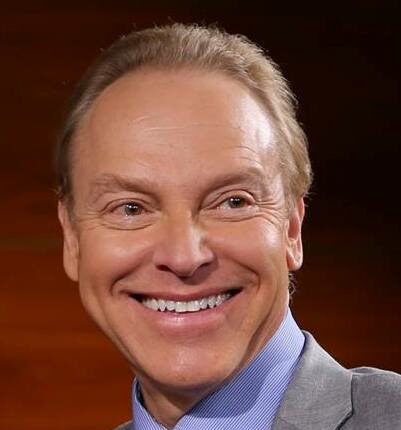
Jim Doti, winding down a celebrated 26-year run as president of Chapman University, launched a stealthy final-drive effort to buy bankrupt Freedom Communications with an eye on maintaining the independence and libertarian tradition of its flagship Orange County Register.
Doti’s frantically assembled group of 10 investors—among them wealthy civic leaders and persons familiar with the newspaper business, Freedom and real estate—tried to buy the company in late March after a Justice Department anti-trust challenge knocked out lead bidder Tribune Company, owner of the Los Angeles Times. The Doti group offered to match Tribune’s $56 million bid.
The timing was too tight for the creditors of Freedom—bankruptcy lender Silver Point Capital was in position to turn off the cash spigot at month’s end. Instead, on March 30, Freedom finalized the sale to newspaper chain Digital First Media for $50 million, $6 million less than Doti’s offer.
“We had Digital First beat,” Doti said.
So ends Freedom Communications’ run among the largest privately owned companies based in Orange County, the subject of this week’s special report. The media company is No. 91 on this year’s list of 118 private companies with more than $100 million in annual revenue, reflecting its final year of local ownership. (See related coverage, page 1; list starting on page 14).
The lawyer for Freedom, William Lobel of Costa Mesa bankruptcy specialist Lobel Weiland Golden Friedman, said Doti’s group came close. He said it made a financially superior offer that was “appreciated” by the creditors.
Timing was, indeed, everything in this case. Lobel said confirmation that all of the money was secured for Doti’s bid did not come until March 30, the same day the court approved a revised agreement with Digital First. The sale closed the next day.
A new deal would have taken days to complete; Doti said his investors needed “at least a week” for due diligence. But Jordy Spiegel, who runs the Dana Point private equity firm Spiegel Partners and worked with Doti on the offer, said Freedom “was on a very short fuse—they needed absolute certainty.” So, he surmised, the creditors went with Digital First as “the bird in hand.”
(Spiegel is familiar with the newspaper business: His hedge fund Mount Flag Media Investment took a 5% stake in Tribune last October.)
Lobel said nobody questioned the ability of Doti’s group to back its bid, but emphasized that nothing is certain until a deal closes: “What would we do if we called off the deal (with Digital First) and went with Doti, and then something happened and they didn’t have the money?”
Lobel’s view carried the day.
“I probably would not have made the same call (as the creditors),” said lawyer David Robinson of Enterprise Counsel Group in Irvine, who worked with Doti. “I would have brought the (Doti) deal before the bankruptcy court. But I can’t say their decision was improper—it does fall within the zone of business judgment.”
Curtain-Call Surprise
There was a surprise at the March 30 closing: Digital First’s purchase price was reduced by $2 million, to just under $50 million, because of Digital’s concern over “newly discovered facts.” The facts were not described in court, but persons familiar with the case said they were circulation-related.
Some involved in Doti’s effort questioned why this change didn’t “open the door” to considering their offer. But Lobel said Digital First raised the issue before Doti’s group had coalesced. Sources said Digital wanted an $8.6 million reduction, that the creditors countered with $2 million and that Digital accepted.
Doti said he decided to pursue Freedom after reading the March 21 news that Tribune was out of the bidding and that federal bankruptcy Judge Mark Wallace had OK’d Freedom’s sale for $52 million to Digital First, the only other bidder. (A third group, headed by Freedom executives and local developer Michael Harrah, had dropped out days earlier.)
Doti sprang into action with the intensity that helped him grow modest Chapman College into booming Chapman University. He raised the $56 million in less than a week, and was close to lining up another $20 million in working capital. Doti said he pledged a small share; he declined to name the other investors, but said the largest put up $10 million.
Local Pride
Doti said his group would have run Freedom to make a profit and could not have guaranteed job security to all of its employees. (Digital First cut 70 non-editorial jobs upon taking over).
But Lobel said he sensed the Doti group was motivated by civic pride and the prestige of owning the hometown paper: “It was not a business investment opportunity for their people as much as it was, in part, doing something for the community.”
Doti said he and a couple of the other investors would have served as directors of Freedom, but his participation would have been limited and would not have interfered with his teaching and other ongoing duties at Chapman.
Doti said his investors had no qualms about matching the Tribune offer even with the problems besetting the newspaper industry and Freedom’s particular woes—it has gone bankrupt twice in six years. He said they were confident Tribune had thoroughly vetted its longtime competitor Freedom and attached a reasonable price to it.
Doti said his group, like all other suitors, would not have assumed Freedom’s estimated $155 million in unfunded pension liabilities. (That burden falls on the Pension Benefit Guarantee Corp., which recouped $15 million from the sale.)
Subtracting the estimated value of Freedom’s real estate holdings, Doti said his group figured it would be paying a net $25 million for a viable news organization “in one of the largest markets in the country.” (Indeed, Digital First quickly flipped land, presses and other Register assets to developer Harrah for a reported $34 million, putting Digital’s net cost at closer to $16 million.)
Doti said his group would have moved quickly to stabilize Freedom’s finances and respond to changing conditions, for example migrating toward digital news if that’s what the market dictated. He compared challenges in the newspaper industry to those in higher education, which he said Chapman has addressed with such innovations as adult education provider Brandman University.
“It (Freedom) is a business, just like Chapman’s a business,” Doti said. “There’s always going to be a market for a great media product.”
Doti conceded that Digital First can get more synergies from Freedom but said his group had “local knowledge and other strengths.”
Digital First has added the Register and its sister Press-Enterprise in Riverside to its renamed Southern California News Group, whose nine other dailies include the Los Angeles Daily News, Long Beach Press-Telegram and Pasadena Star-News.
Spiegel said he has “heard good things” about Digital First, but that if Doti’s group had prevailed, “it would have been spectacular.”