

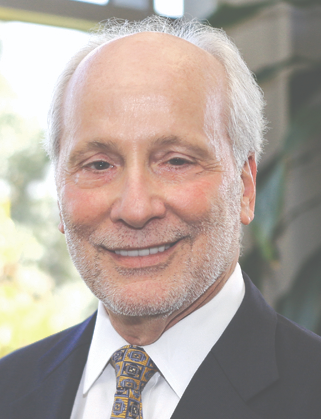
Brandman University’s business is providing higher education to working adults, partnering with over 2,700 companies like Irvine Co. and Blizzard Entertainment. Last week its mission enticed the country’s largest private employer.
Retail giant Walmart Inc. (NYSE: WMT) announced that it would subsidize college tuition for its 1.5 million U.S. associates to attend Brandman, as well as the University of Florida and Bellevue University in Bellevue, Neb.
Under the partnership, Walmart and Sam’s Club employees would pay $1 a day toward their associate or bachelor’s degree in business or supply chain management.
Brandman’s tuition ranges from $1,500 per course for an associate degree to $3,345 per course for a doctorate. Its competency-based program costs $6,400 per academic year.
Chancellor Gary Brahm said it took about five months to hatch out the plan from initial discussions to finally shaking hands with Walmart executives.
“This is a big deal to get through the scrutiny to be selected,” he said. “We spent a lot of time meeting with Walmart. They’re very focused on graduation rates, and learned that our students have very high graduation rates and we serve a similar student body [as their employee base].”
Walmart employs more than 93,000 associates in California and has 304 retail stores.
The retailer’s move is another example of companies vying to keep employees happy and on the payroll in a tight labor market.
Last month U.S. unemployment fell to 3.8%, its lowest level since 2000, according to the Department of Labor. Orange County saw its jobless rate drop to 2.6% in April, compared to 3.4% a year earlier.
“I expect other employers will be doing this kind of program,” Brahm said. “It really addresses the need for these students to have access to a quality education at basically no cost and accumulate no debt while they’re working.”
While firms offering education assistance isn’t new, more companies, such as McDonald’s, JetBlue Airways and Starbucks, are increasing tuition benefits. Chicago-based Options Clearing Corp. and Big Four accounting firm PriceWaterhouseCoopers LLP help employees pay off student debt to increase retention.
Back to School
Brahm said the deal was made possible because of the institution’s participation in Guild Education, an education-benefits platform that helps employers connect with the right schools for its staff. Guild suggested Brandman as a possible fit when Walmart approached the company for help.
The retailer announced the benefit at its annual shareholder meeting in Bentonville, Ark., where it chose the three nonprofit universities for its “focus and strong outcomes on serving working adult learners.”
Part-time, full-time and salaried employees can take advantage of the program after 90 days of employment.
Associates are also not obligated to continue working at Walmart after earning their degrees, and they won’t be required to pay their education costs upfront and seek reimbursement.
Walmart Chief Executive Greg Foran said investing in associates would be vital to Walmart’s future success.
“We know training and learning opportunities empower associates to deliver for customers while growing and advancing in their careers,” Foran said in a statement.
But making higher education accessible for staff can help a company’s bottom line.
Bloomfield, Conn.-based health insurer Cigna found that every dollar it spent on education reimbursement programs, it gained the money back while saving an additional $1.29 on talent management costs. It also saw turnover drop by 8%, according to the latest study by the Lumina Foundation, whose $1 billion endowment is solely devoted to promoting higher education, and consulting company Accenture.
Lumina will measure the impact and effectiveness of Walmart’s program.
Walmart, which reported record-setting revenue of $500.3 billion last fiscal year, hasn’t disclosed the estimated cost of its subsidy program but said it expects at least 68,000 employees to enroll in the first five years.
Brahm, Chapman University’s former chief financial officer, says he hasn’t broken out the spreadsheet yet, but if Brandman drew one-third of those Walmart students, that would boost Brandman’s annual enrollment of 23,000 to north of 28,000 in year one. The college, accredited and independent but still part of the Chapman system, has 27 campuses in California and Washington and a budget of about $100 million.
Brahm said associates will have the same level of flexibility offered to its nonsubsidized students from an eight-week online session to its self-paced competency-based education program.
However, classes will be customized in collaboration with Walmart. He added that there’s also one glaring difference.
“It’s basically fully funded,” Brahm said. “So if you want to get a degree, get a job at Walmart.”
