

As a child growing up in Detroit in the 1960s, Daryl Carter began to understand the differences that existed in the city’s various neighborhoods.
The son of two working-class parents who hailed from Mississippi, Carter and his family lived in an affordable housing project in the city. He was taught to not resent those that were able to afford the nicer homes in the suburbs, but to instead strive for it.
Now, as founder and chief executive of Irvine-based Avanath Capital Management LLC, one of the larger apartment owners based in Orange County, he tries to create those opportunities within the firm’s growing base of housing communities across the United States by investing not just the apartments themselves, but the neighborhoods they’re in.
“We are a big proponent of mixed-income housing because people of lower income need to see successful people, and successful people of color, to believe that for themselves,” said Carter, a former chairman of the National Multifamily Housing Council.
“Our slogan is ‘lifestyle within reach,’ which is really about the pursuit of the American dream.”
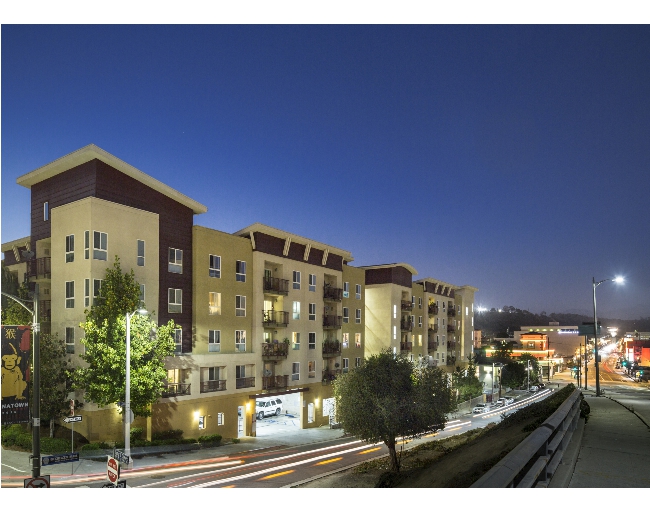
Avanath, which acquires and operates affordable, age-restricted and workforce housing on behalf of institutional investors, counts 83 properties with some 10,000 units in 43 cities across a dozen states.
Already one of the country’s largest owners of affordable housing rental properties, Avanath is preparing to double its $2.5 billion portfolio in the next three years.
Skin in the Game
In the midst of a global pandemic and the renewed fervor for the Black Lives Matter movement prompted by the killing of George Floyd, Carter finds that his company, and other apartment and housing corporations, “have skin in the game” to make a change.
In a letter to other apartment owners, Carter notes that African Americans comprise 13% of the U.S. population and that 56%, or 24.6 million people, are renters. African Americans comprise 19% of all renters in the U.S.
Soberingly, they also represent 23% of the COVID-19 deaths and 26% of police killings, according to Carter who notes that “the root causes of these situations are identical: lack of investment in African American communities, limited access to quality healthcare, poor quality schools, lack of housing opportunities in locations that offer greater economic upward mobility, poor access to healthy foods, and limited political empowerment.”
Making investments in these communities create economic upward mobility, which in turn benefits the economy as a whole, Carter argues.
“We need to do this not just for social equity, but also because this is undoubtedly good for our economy.”
Capri, Avanath
A lack of investment in disadvantaged communities creates an intellectual drain, in which more affluent or successful people move to cities with better opportunities.
Carter did this himself, leaving Detroit in 1981—after getting an MBA and a Master’s in Architecture from the Massachusetts Institute of Technology—to pursue job opportunities in Chicago, ultimately landing in Orange County when he was in his 20s.
He said he was initially skeptical of his new home in OC due to its lack of diversity. Less than 2% of the county’s population is African American.
He stayed anyway, ultimately finding it a good place to do business, raise a family and launch two companies of his own, co-founding Capri Capital Group and growing it into a diversified real estate investment firm with $8 billion in real estate equity and debt investments under management before it sold in 2005 to Centerline Capital Group.
After serving as executive managing director of Centerline, now called Hunt Mortgage Group, he launched Avanath with the goal of creating a firm that wasn’t just about the financial returns of housing properties, but also about the process of creating successful communities through partnerships with community nonprofits.
“He is changing the paradigm for how we look at affordable housing,” said Mike Hayde, chief executive of Irvine-based multifamily develop and investor Western National Group and longtime friend of Carter. “He’s not just about the financial returns of his projects, he wants to make sure his residents have a say, even letting residents pick out the paint color of the apartment project.”
Fighting Stereotypes
Though OC has served as a great home base for the firm, the company does not have any local projects, “which isn’t for lack of trying,” he said.
Prominent barriers to entry are higher development costs and a reluctance from residents regarding affordable housing, which Carter referred to as the “not in my backyard” train of thought.
“About 40% of our renters are Section 8 recipients, and there’s a definite stereotype against that which could not be farther from the truth,” Carter said.
Carter and others in the industry argue that more affordable housing will support Orange County’s business ecosystem, allowing for younger individuals and those of a more diverse socioeconomic background to set up roots here, thus avoiding the possibility of an intellectual drain problem of its own.
“Even within our own company, many of our younger employees choose to relocate from our OC office to one in Virginia or Chicago, because they can’t afford to buy a house here,” Carter said.
Programs, Solutions
One doesn’t have to look far outside of Orange County for Avanath projects, with several in San Diego and Los Angeles.
The 528-unit Northpointe project in Long Beach is an example for the type of community partnership that Avanath frequently invests in, pairing up with a local nonprofit provider of after-school programming for kids whose parents might not get home until later.
“If you have a family with two parents that work until 7 p.m. and the school bus pulls up at 3 p.m., you need to have programs in place to help these kids have productive things to do with their time,” Carter said.
“We paired with nonprofits that provide after-school programs where kids can get snacks, homework support and fun activities.
“You have to provide good things to get good outcomes.”
COVID-19
With 20 affordable housing projects that are age restricted, with an average age of 78, Avanath made new healthcare partnerships to help prevent the spread of coronavirus in its communities.
“We always try to promote wellness within these communities so they can stay independent as long as possible, so when COVID-19 hit in March, we reached out to a number of entities in the healthcare industry to provide community health programs,” Carter said.
In Washington, D.C., Avanath partnered with the Maryland Medical Center to set up examination rooms in each of the housing developments, with the center providing nurses and doctors to do regular checkups.
“We also added new programming, like healthy cooking classes, Zumba classes and a monthly farmers market to provide access to fresh produce,” Carter said.
To date, the company has counted just three cases of COVID-19 out of nearly 4,000 senior residents throughout its portfolio.
The company has fared well on the business side, too, reporting rent collection rates have been in the high-90s in recent months.
“We offered a 10% discount on payments to all renters during the month of May, which had little financial impact on us but made a big difference to residents,” Carter said.
Capital
This commitment to ESG—or the Environmental, Social and Governance sectors—makes Avanath’s projects more appealing to customers, Carter believes. It also appears to be attractive to investors with successful fundraising efforts during recent market uncertainty.
“When I started the company in 2008, right in the beginning of the recession, raising capital was a great challenge, but we’ve been successful through finding financial partners who knew and believed in our goal,” Carter said.
“We were able to close a $120 million first round, then a $200 million round a couple years later, then a $400 million round, and now we are in the middle of wrapping a $750 million fundraising round, our largest to date.
“There are a number of investors that are looking to invest in companies that value ESG, especially now, and we are pleased that our investors share our vision and values,” Carter said.
This access to institutional capital is “a game changer” for communities of color, Carter notes.
“I hope that the current discussions going on in the world will cause more large corporations to invest in these efforts.”
Growth
The company’s work is paying off internally, too, nearly doubling in size in the past three years. It plans to do that again in the next three years.
“Our portfolio value is worth $2.5 billion, and we plan to reach $5 billion in the next few years by expanding in new and existing markets,” Carter said.
The company employs 350, including about 70 in Orange County, where it is currently hiring.
“We aren’t just focused on creating opportunities for our residents and communities, we want do that for our employees, too,” said Carter. “Having such a diverse company makes us a very attractive employer, as well.”
Carter has engaged his staff in discussing ways “to be a powerful voice for change,” and has also been including other industry executives in how they can “address some of the ills plaguing communities of color,” he said in a recent letter to employees.
“Our industry controls $4 trillion in physical assets. This gives us leverage and clout to change the status quo and to create a new paradigm where all lives in America are valued and given equal access to the American Dream.”
“We all have to do something to create the America we dream of, and Daryl is leading us there in the housing industry,” Hayde said.
