
OrCam Read, a hand-held device that translates texts into voice for people with dyslexia as well as reading difficulties and fatigue, launched at the CSUN Assistive Technology Conference in Anaheim last week.
The company sees a huge market for the new device to help Americans who have trouble reading.
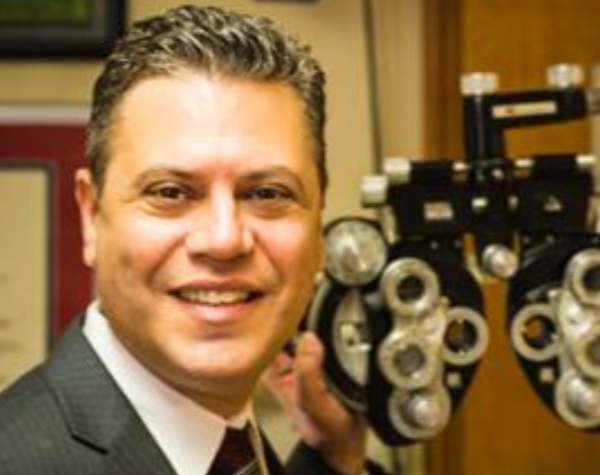
“It also comes into play with people who are mild to moderate low vision or even just individuals who have trouble using their eyes reading,” Dr. Bryan Wolynski, an optometrist and company consultant with parent company OrCam Technologies, told the Business Journal before the conference.
The new artificial intelligence-based, pen-sized digital device for people with reading difficulties can read whole pages of text to users from any surface—digital or print—at the push of a button. It does not require Wi-Fi or cellular connection to operate.
It can also be Bluetooth connected, or connected to standard auxiliary earphones. For example, a student using the product in school can connect their headphones to the device for personal reading support.
It weighs a bit less than 1.6 ounces.
Anaheim Orders
Wolynski predicted that OrCam Read “definitely” will be a success given the size of the potential market.
In Anaheim, OrCam was taking pre-orders for the device, which will cost about $2,000. The Anaheim conference run by California State University-Northridge focused on technology that helps people with disabilities. Participants shared information about technology devices, services and programs.
“In the U.S. alone, 43.5 million people have some form of dyslexia,” according to OrCam Technologies.
It quotes federal statistics saying that 21 million Americans have reported functional vision problems or eye conditions that compromise vision, while the elderly form another important market.
OrCam Read can be “game changing” for students with dyslexia, the company said.
The hand-held OrCam Read is said to be the only personal AI reader that captures full pages or screens of text, according to the company.
Insurance Coverage
The device is currently available in English with additional languages to follow. It can be recharged via a standard USB port.
In a number of states, Medicaid will cover assistive devices for people with multiple disabilities, the company said. In other regions in the country, the company works with advocacy organizations to help push policy forward to enable coverage of assistive devices such as OrCam Read.
The company also showed off its OrCam MyEye 2 at the Anaheim conference.
OrCam MyEye 2 is an AI wearable artificial vision device. This is designed for people who are fully blind or have severe vision impairment for which corrective lenses can no longer help.
OrCam MyEye 2 is a comprehensive device, which, like OrCam Read, can read from any surface, digital or print.
It can also recognize faces, identify products through the label or the bar code in many cases, identify colors, and money notes. OrCam Read users, on the other hand, need a certain level a vision to operate the device’s guidance lasers.
Lightweight and the size of a finger, OrCam MyEye connects magnetically to almost any pair of eyeglasses, according to the company.
OrCam was founded in 2010. Its flagship device, OrCam MyEye, was released in 2015, and the subsequent next generation OrCam MyEye 2 was released in 2018.