

Evolus Inc. has some good news and some bad news.
The positive: The medical aesthetic neurotoxin developer seeking to raise $75 million via an initial public offering has submitted clinical data for U.S. Food and Drug Administration review with a decision date in the spring. If approved, compound DWP-450 will be the “first known … neurotoxin alternative to Botox,” according to a Securities and Exchange Commission filing.
The not-so-good: The company is out of money. “As of September 30, 2017, we had no cash or cash equivalents and a stockholder’s deficit of $78.5 million,” Evolus said in the prospectus.
Evolus is a subsidiary of Irvine-based Alphaeon Corp., a former Orange County unicorn prospect that was at one time said to be valued at over $2 billion.
The much hyped-about “lifestyle company,” which focused on products and services not covered by health insurance, underwent a restructuring after it failed to go public.
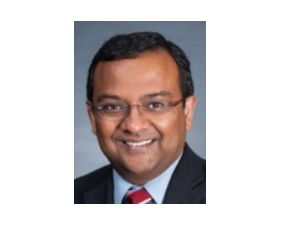
“You should think of Alphaeon now as a neurotoxin company,” Alphaeon Chief Executive Murthy Simhambhatla told the Business Journal last year.
Evolus said it’s applied to list the common stock on Nasdaq under the symbol EOLS. It didn’t provide specifics on the number of shares or price, and said proceeds will be used to provide “financial flexibility.”
Simhambhatla declined to comment via email, saying he can’t discuss “the company, market or competitor at this time given the regulations related to our process.”
Evolus licenses its compound from Daewoong Pharmaceutical Co. Ltd. in Seoul.
Big Market
Evolus isn’t alone in pursuing a Botox act-alike. While that market is dominated by Allergan PLC—the drugmaker reported nearly $2 billion in 2016 Botox revenue—it presents plenty of growth opportunities for competitors.
They include Paris-based Ipsen Biopharmaceuticals Inc., which makes Dysport, and German pharmaceutical company Merz Pharma GmbH & Co. KgaA, which owns Xeomin. Ipsen reported revenue of about $340 million for Dysport in 2016, and Merz generated about $1.2 billion for the fiscal year ended in September—neurotoxin Xeomin contributed about 63% of product revenue in the specialty neurology and aesthetics segments.
Demand for Botox and Botox-like products is projected to grow by more than 50% over the next 10 years, according to a report by Injector 5280, a team of licensed medical professionals in Denver focused solely on CoolSculpting, a nonsurgical fat reduction technology that freezes off unwanted fat, and aesthetic injectables.
Allergan acquired CoolSculpting when it bought Pleasanton-based Zeltiq Aesthetics Inc. in April for $2.4 billion.
Newport Beach-based Bonti is working to bring to market its version of Botox: EB-001. The neurotoxin is characterized by faster onset of action, about 24 hours compared to Botox’ three to five weeks, and shorter duration of effect—about four weeks as opposed to Botox’ three to six months. Chief Executive and co-founder Fauad Hasan has told the Business Journal that the product isn’t a direct competitor but a complementary drug to Botox.
In addition to aesthetics, Bonti is pursuing approval to use EB-001 to treat musculoskeletal pain.
Private Pay
Evolus’ lineage traces back to Newport Beach-based Strathspey Crown Holdings LLC, an investment firm focused in self-pay healthcare opportunities that established Alphaeon in 2013.
From the onset, Alphaeon’s focus on private-pay industries like plastic surgery and ophthalmology attracted physician investors, as well as prominent leaders in healthcare and business, to its board of directors. The company bought plenty and expensively across all industries, sources familiar with it told the Business Journal.
The model fell apart in 2016 when Alphaeon failed to get new capital via the IPO route. Co-founder and former chief executive Robert Grant was replaced by Simhambhatla, who was previously a senior partner at Strathspey Crown, and before that president of Abbott Medical Optics in Santa Ana—now rebranded Johnson & Johnson Vision.
Board members, including veteran investor Bill Link, co-founder and a managing director of healthcare investment firm Versant Ventures in Menlo Park, and former SEC chairman Christopher Cox left the board.
