

Golden State Foods Corp. drives the chuckwagon for McDonald’s Corp.
Quality Custom Distribution Inc. drives it for everyone else.
The first is a food products maker-distributor with $6.5 billion in revenue—much of it at the end of a double-arched golden rainbow—OC’s third-largest private company and led by chairman and Chief Executive Mark Wetterau.
You may have heard of it.
The second is lesser known: It’s a $1 billion unit of Golden State that distributes foodstuffs and other items for clients that include Starbucks Corp. in Seattle and Wendy’s Co. in Dublin, Ohio, and which last summer snatched up a new president in Ryan Hammer from Purchase, N.Y.-based PepsiCo Inc.’s vast bottling and food distribution work.
QCD opened an 180,000-square-foot distribution center in August in Orlando to supply 470 Wendy’s from Key West to Georgia—the latest in a national footprint of industrial complexes (see box).
It supplies 1,000 Starbucks stores in California—including 200 in OC—and 55% of the chain’s 11,000 U.S. locations, with everything from paper products to syrups and soy to mop handles and trash bags.
If Wetterau is John Wayne, Hammer is Ward Bond or at least Ricky Nelson—and the duo is poised to make everyone else look a bit like Walter Brennan.
Rio Bravo
OC restaurant chains, from fast food to fast-casual, to sit-down dining, are doldrummer boys. Costa Mesa-based El Pollo Loco’s share price fell 20% last year; Irvine-based Habit Restaurants 42%; and Huntington Beach-based BJ’s was flat.
But food delivery is up for trend-tapping chains: Wendy’s and Chick-fil-A serve breakfast while Starbucks pushes grab-and-go options and has delved into sandwich-and-drink lunch offers.
Golden State hits McDonald’s; the above three are QCD’s, with Chipotle, Noodles & Co., Einstein Bros. and others.
Another difference: Golden State makes and delivers for Mickey D’s; it crafts liquid products—envision a river of ranch—and processes meat for its Big Mac buyer.
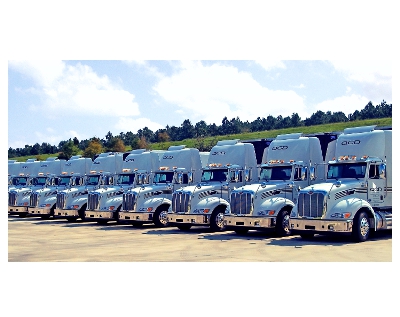
QCD is a distributor. Its 1,700 trucks make 17,000 deliveries a week to 5,500 restaurants.
“If we provide a sauce, it comes from their supplier,” Hammer said.
Hammer’s Time
Golden State began bringing dairy and donuts to 65 Starbucks stores in Eastern, Wash., in 2005. Wetterau launched QCD in 2006 and by 2007 had centers in Las Vegas, Spokane and San Antonio.
It’s growing the $1 billion in revenue about 6% to 8% a year and has 1,500 of Golden State’s 6,000 or so workers. Both are stabled in the Irvine business corridor.
Hammer, 39, replaced Ali Seyedi as president in July.
His 15 years at PepsiCo began with bottling in Aliso Viejo, stints in Las Vegas and Denver—the latter had $1.5 billion in retail sales—and ended as an exec for the food giant’s “urban market mega city strategy” at Frito-Lay headquarters in Plano, Texas.
He got an MBA on the way, and the last post in Plano was “two years [of] supply chain, marketing, innovation [and] retail partnerships across PepsiCo,” doing a thing strikingly similar to QCD: delivering food and drinks on a massive scale.
He’d “moved six times in 15 years,” and more promotions at Pepsi could only come by doing so again.
He was born at Hoag Hospital in Newport Beach and grew up in Laguna Hills. His wife, Ali, owns a supplier of retail products to gift shops. They have two daughters, ages 1 and 3.
Quality Custom Food
“Hiring someone from Pepsi shows the expectations” Wetterau and Golden State have for its QCD unit, said Jeff McNeal, president of food and hospitality consultant Fessel International Inc. in Arcadia. “You hire talent, and that’s what they’ve done.”
McNeal said Starbucks in particular wants big things from its meal plans.
“They’ve committed to increasing that,” he said.
Starbucks has offered $8 lunch combos—sandwich and drink—for instance, as part of the bid to boost food sales.
He said food sales two years ago were “not even 10%” of Starbucks revenue. They’re up to about 16% and headed to 25%.
“There’s only so many more people you can get through the door,” so it wants to sell more stuff to each one, he said.
“Logistics becomes a big factor, and you need a good partner for that.”
Final Touch
Hammer’s logistics work touches trucking and technology.
Golden State and QCD are long on alternative fuel and renewable energy—including solar panels on trucks to run lift-gates.
It’s sometimes a client thing.
“Starbucks is high-touch, labor-intensive, constantly innovating—not your typical quick-serve restaurant,” he said.
Even some of those, including Chick-fil-A, are getting with the software programs and other areas to improve supply chain and inventory, warehousing and transportation, and workforce management.
Such customers “are the target,” he said. “QCD is that kind of company.”
Its efforts include real-time data use—handheld devices wielded by managers can adjust trailer temperatures from the office—route optimizing and labor forecasting.
Sometimes it can even help drive change, talking with clients about how to implement ideas.
“We can bring new concepts to the business, [assist] in growth, and improve margins.”
