

Spending so much time in Orange County has made me kind of a wuss. In my lifetime, I’ve been an intrepid traveler—took my first international flight at 5 years old, backpacked through Europe for two months after college, thought India was a fantastic spot to celebrate New Year’s—so taking the train ride through residential Rome should’ve been a cake walk. But after two years in OC, my thoughts of what a city should look like have dramatically changed. And I missed the comforts of well-lit, clean streets on my latest adventure.
We, as OC residents, are all pretty used to a tidy town, quick re-sponses to tagging and
well-organized developments. But in my latest trek through Rome, Athens and Cairo, I realized that our masterplanned cities—especially Irvine—are very far from the norm. Obviously, we don’t have cities that have sprung up around buildings that were built in the 6th century A.D., so we’ve had the luxury of a grand design. But it was in the modern aspects of these cities where I saw the real differences.
In Rome, graffiti covers every surface—trains, buildings, garages, walls and bridges. And there is no attempt to clean it up, to the point that taggers have gone to crossing out previous names and writing their own next to them. Everything closes on the weekends (OK that’s not so different from restaurants near office parks around here) and office hours seem to be pretty negotiable.
Athens takes it to a new level with restaurants tucked in alleyways and no clear delineation of what is a sidewalk or parking spot or freeway. Street fighters and prostitutes are mere blocks from high-end shops and embassies.
Even the nicest hotels in these cities lack the comforts and modern amenities that are required in the hospitality industry here (beds that aren’t pushed together or created by some assortment of roll aways, cleaning service that comes on a daily basis and electricity that stays on in the room even when you aren’t there).
But if any place reminded me that I wasn’t in OC, it was Cairo. The Egyptian streets lacked lanes or street lights so crossing them was a daily brush with death. Trash cans were nonexistent so residents threw their waste into the Nile River or into the desert around the pyramids and then burned it on occasion.
And real estate is approached in the opposite fashion it is here (except for the giant self-promotional billboards with bad slogans and headshots). In OC, the empty condominiums that litter cities are fully finished shells, but they have no inside touches (take Central Park West in Irvine, for example). But in Cairo, the people don’t care how a house or building looks on the outside, so condo complexes have phantom second or third stories made up of steel bars and wires as families live in the finished bottom levels. Just like with developers here, when families have the money to add on, they build out that next level.
The poorest people live in historic houses next to national treasures, while most workers live outside the confines of Cairo. But in OC, if there were a turn-of-the-century home next to the place where the Holy Family lived when escaping King Herod, it would attract the well-heeled, not the down-trodden.
But the bad roads and hotels and graffiti were small annoyances compared to the wonders that exist in these cities—history and culture that dates back to centuries before OC was even a glimmer in a farmer’s eye.
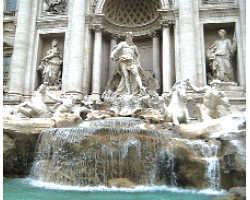
In Rome, you have fountains and sculptures designed by the masters and churches that hold the tombs of saints and popes. Athens highlights (or should I say spotlights) its history with a lightshow of ruins seen throughout the city and its people have a sense of civic pride that I’m hard pressed to find back home. And in Cairo, I stood at the base of one of the Seven Wonders of the World and marveled that the technology invented by the Egyptians 2,000 years ago is still the basis of things I use today.
I guess it is a trade off the Romans, Greeks and Egyptians make—to lack order but embody history.
—Julie Leupold
