

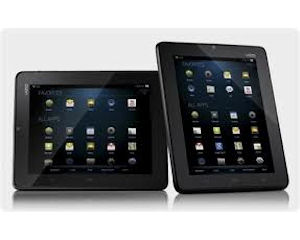
Irvine-based Vizio Inc. built its reputation on selling low-cost, flat TVs.
Now it’s using the same recipe to make a splash in the growing tablet market.
The 8-inch Vizio Tablet hit retail shelves across the country at about $300 amid moves by big-name competitors to slash prices on their models.
Vizio also finds itself in familiar territory as it tries to wrestle away market share from larger competitors. It managed to grow past Samsung Group, Sony Corp. and others with sales of flat TVs to take the lead on market share in North America.
Now it faces Apple Inc., Motorola Inc. and Research in Motion in the chase for tablet sales.
Vizio founder William Wang welcomes the challenge.

He envisions tablets being used by restaurants and other small businesses as adoption increases.
“We can bring the prices down,” he told the Business Journal last month.
Vizio’s tablet, which runs on Google Inc.’s Android system, is available for $299 at Sam’s Club, Wal-Mart, Costco, Amazon and other retailers. Features include a built-in HDMI port, a universal remote app that can control a home theater system, and another that links with the company’s TVs, Blu-ray players and other devices.
Look for Vizio to market the product through back-to-school advertising campaigns.
The crowded tablet market remains on a growth track, with global sales expected to top $49 billion by 2015, according to Newton, Mass.-based market tracker Strategy Analytics Inc.
Some 17 million tablets were sold in 2010, with Apple’s iPod dominating the market.
In other Vizio news, the company recently licensed some patents to Los Angeles-based E & S International Enterprises Inc., a manufacturer and seller of consumer products such as sporting goods, mobile phone batteries and appliances.
Financial terms of the agreement were undisclosed.
The deal concludes actions brought by Vizio against E & S, the company said.
The company has filed numerous patent lawsuits against other TV designers, manufacturers and sellers, according to Rob Brinkman, Vizio’s chief administrative officer.
Telogis Promotes Messman
Technology veteran and former investment banker Kyle Messman was recently promoted to chief financial officer for Aliso Viejo-based Telogis Inc.
Messman is the first finance chief of the company.
Telogis, which started in 2001, uses global positioning systems and software to help companies with large fleets of delivery trucks create better routes, track shipments and deliveries, and cut costs.
Its customers include the government, food and drink makers, oil and gas utilities and others.
It has offices in Europe and Latin America, as well as a development center in New Zealand.
Messman had served as vice president of corporate development the past few years and is credited with helping guide the company through three acquisitions.
Telogis now has annual revenue of more than $33 million. In 2010 the company was No. 14 on the Business Journal’s fast-growing companies list after growing sales 185% in the two years through June 2010.
In the new role, Messman will be responsible for managing accounting, finance, treasury and risk management.
Messman has served stints at El Segundo-based chipmaker International Rectifier, Cappello Capital Corp. in Santa Monica and Novell Technology Capital of Massachusetts.
Capital Idea
Tustin-based video game maker Freeze Tag Inc. is trying to catch the eyes of investors.
The company—which makes family-friendly games for PCs, smartphones and tablets— recently hired Colton-based public relations firm Investor Relations Network to help.
“Most people don’t have an opportunity to invest in the gaming market,” said Chief Executive Craig Holland. “We’re hoping to get the word out.”
Freeze Tag began selling shares on the Bulletin Board in June and has a market value of about $10 million.
It is in talks with potential investors, according to Holland.
“We’ve struggled with working capital,” he said.
The company has developed about a dozen games and is planning to roll out a number of new titles later this year, according to Holland.
Freeze Tag’s games cost a few dollars on iPhones and $3 to $5 for tablets.
The company employs about 12 people in Tustin and outsources work to engineers and art and design teams in Portugal, Croatia and other countries.
