

Orange County’s medical device industry is due for some adjustments as healthcare reform changes the way venture capitalists view the local base of startups.
That’s the view offered by Ernst & Young in the accounting and consulting firm’s annual State of the Industry report. The report took a global view of the industry, which has Orange County as a historic hotbed of innovative, venture-backed companies, with clusters in the cardiovascular and ophthalmic segments.
Healthcare reform appears to favor pragmatic product development over broader research and development, according to the report.
“Value-Based”
The shift comes under a general heading of “value-based healthcare”—a strategy that aims to hold cost increases down while maintaining or improving quality. It emphasizes wellness programs and managing healthcare services through information technology in order to eliminate unnecessary procedures that drive up costs.
“As such, investors need to be issue-driven rather than excited by the technology alone,” the report said. “The upshot is that medtech [venture capitalists] will have to develop a much deeper understanding of healthcare issues and challenges. They can no longer just be experts on medical devices.”
The changes come against a backdrop of lower venture capital investments in the life sciences in Southern California, according to Ernst & Young.
The segment drew $3 billion in investments throughout the region last year, down from $3.3 billion in 2011.
The ongoing changes in how venture capital firms invest in the medical device industry will “primarily relate to those VCs [who] do early stage investing in life science … including product companies in pharma and medical devices,” said Ralph Sabin, managing director of Pacific Venture Group, which has offices in Irvine and the San Fernando Valley.
“Those VCs do look for solutions to issues, but their [companies’] initial valuation increases have been due to technology and regulatory advances,” Sabin said in an e-mail.
Sabin noted that there also have been “major developments in the past few years” that have had negative implications for venture capital returns, including a concern cited in the Ernst & Young study: changes on approvals and other regulatory matters.
He said the U.S. regulatory environment for life sciences has become “very protracted, time consuming and therefore expensive. This has added many millions of dollars to the capital needs of the companies and also many years before a potential winner can be identified.”
Also, limited partners, who provide much of the money for venture firms, “are less willing to back life science VC funds due to lower returns and end-of-partnership life issues, and therefore [firms’] general partners have become reluctant to invest in life sciences,” Sabin said.
The various trends in the works point to a “perfect storm” for medical device makers, according to the Ernst & Young report.
Some investors weighed in with a similar view in the report.
“There are regulatory challenges with the FDA, there are reimbursement challenges, there is a lack of available venture capital, corporate buyers are mostly missing in action, and the capital markets have disappeared,” said Guy Nohra, cofounder and managing director of San Francisco-based venture capital firm Alta Partners, which has USGI Medical Inc. and VertiFlex Inc., a pair of San Clemente-based startup device makers, in its portfolio.
Effects
The effects are expected to be wide-ranging.
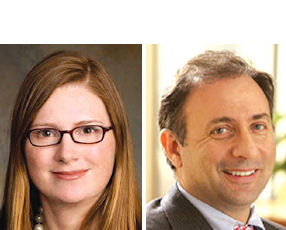
“Every medical device company, particularly those in Orange County, from the very early stage venture-capital-backed medtech company to the large companies, are going to be impacted, albeit at a different extent, by the perfect storm,” said Kim Letch, an Ernst & Young partner who works in the firm’s Irvine office. “Good resources are always hard to come by.”
The firm’s report pointed to changing perceptions here and abroad about the medical device industry and its role in healthcare overall.
“A sector built on developing innovative products that have saved, prolonged and improved millions of lives is now more often than not regarded as contributing to the spiraling costs of care,” the report said, adding that governments are “deliberately targeting the medical device industry as part of budgetary belt-tightening.”
Letch said that will challenge medical device companies to “think beyond the product” and that such companies “can’t be seen as delivering the same product in the same way that has historically worked.”
2.3% Tax
She mentioned the 2.3% federal tax on medical device makers’ income that’s intended to pay for healthcare reform as another regulatory-related challenge.
“That puts a lot of pressure, particularly on companies that are just commercializing or have limited revenues,” Letch said.
Efforts to repeal the device tax have gained traction in both houses of Congress and across party lines.
