

An Orange County-based alcohol distributor came up dry on election night in Washington state.
Young’s Market Co. in Tustin spent $1.2 million in support of a ballot initiative that would have opened liquor sales and distribution beyond state control.
The initiative also sought the elimination of state liquor taxes and would have required retailers to buy from distributors.
Washington is one of 18 states that control liquor sales, with the state serving as the sole hard liquor retailer for consumers and distributor for restaurants and bars.
Young’s hoped to see the market opened to allow it to do business as a middleman between distillers and retailers.
Liquor producers, such as Britain’s Diageo PLC and Belgium’s Anheuser-Busch InBev SA NV, hire Young’s to get their products into stores, restaurants and bars in states where distribution is open to private companies.
Upscale Opportunity
A change in Washington’s law would have meant the potential for hundreds of new clients for Young’s, which has about $2 billion in annual sales. Passage also would have provided more points of sale for new products, including upscale liquors.
“We would make higher margins,” Young’s Chief Executive Chris Underwood told the Business Journal before the election.
Underwood didn’t reply to requests for comment on this story.
Voters in Washington rejected the initiative by a margin of nearly two to one.
“We think it failed because people just didn’t like total deregulation and excessive reformation of liquor stores,” said John C. Guadnola, executive director of the Washington Beer & Wine Wholesalers Association, which contributed more than $2 million to defeat the measure.
Washington allows beer and wine sales and distribution by private companies and retailers.
The system maintained by voters allows liquor to be sold only by 315 state-owned stores staffed by union workers.
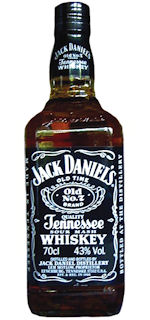
Young’s is a major player in liquor distribution. The company is credited with introducing Jose Cuervo tequila to the U.S. and is the primary distributor of Jack Daniel’s.
Young’s has about 500 workers in OC and more than 3,000 across the country. About 2,000 are based in California, where it’s one of two major players in the market.
Young’s runs warehouses and trucks and handles marketing for products. It has about 26,000 accounts in California, Oregon, Alaska, Hawaii, Arizona, Idaho, Utah, Wyoming and Montana.
In Washington, Young’s distributes beer and wine, which are sold at grocery and other stores as well as bars and restaurants.
Other states in the West that restrict liquor distribution include Oregon, Utah and Wyoming. Liquor sales also are controlled in Virginia, where Gov. Bob McDonnell has introduced a plan to privatize the industry through a bidding and auction process.
McDonnell told a local radio station after the election he is open to bringing the issue before voters, but said he prefers a legislative solution.
A so-called “control state” never has opened up distribution to the market.
Young’s and Odom Corp., a Bellevue, Wash.-based distributor, were the sole financial backers of the Washington Citizens for Liquor Reform, as the initiative to open liquor distribution was titled. Odom spent about $1.5 million, according to Washington’s Public Disclosure Commission.
Other Side
A group called Protect Our Communities—made up of representatives of the beer and wine industries, labor unions, healthcare providers, teachers and religious groups—spent more than $8.7 million to fight the initiative.
Washington voters also shot down a separate, related initiative that sought to privatize liquor sales and allow any business to become a distributor. Young’s didn’t get involved in the initiative.
Costco Wholesale Corp., which is based in the Seattle area, spent more than $4.8 million to get that referendum on the ballot.
Other big box retailers including Wal-Mart Stores Inc. and Safeway Inc. also spent money to back the initiative.
