

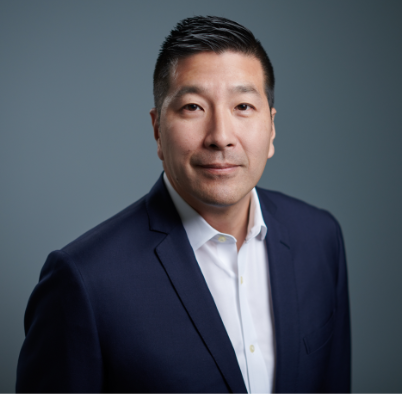
A Santa Ana-based clinical-stage biopharmaceutical company with ties to South Korea made its debut on Wall Street last month.
NKGen Biotech Inc., which focuses on “natural killer” cell therapies to treat cancers and neurodegenerative diseases like Alzheimer’s, went public through a special purpose acquisition company, also known as SPAC (Nasdaq: NKGN).
“We felt we were ready to be public,” Chief Executive NKGen Chief Executive Dr. Paul Song told the Business Journal. “We’ve remained under the radar for a long time.”
The company’s been on a roll in the past month. Besides raising more than $21 million as part of the reverse merger with the SPAC, it’s received Food and Drug Administration approval for a Phase 2 clinical trial on Alzheimer’s patients and it presented a poster at the Alzheimer’s Disease Annual Meeting in Boston.
“We’re bringing about a new paradigm shift in the treatment of Alzheimer’s,” Song said.
“We really feel this is a very exciting time for our company.
“We developed a novel therapy called killer cells.”
Wall Street Reaction
Thus far, Wall Street has been lukewarm on the company. At press time, the shares were about $2.81, giving NKGen a $62 million market cap. The SPAC it merged with went public at $10 a share. No analyst yet covers the company.
Its S-1 filed last month lists several risks facing the company, such as $50 million in losses in 2021 and 2022 and the effort needed to get FDA approval. Song said the company will need to raise more money in the coming months to survive until 2025.
Regulatory filings indicate the company could raise nearly $100 million from the exercizing of warrants that some security holders in the company own.
Perhaps, most importantly, it’s working in an area that is unproven.
Overall, there have been over 500 clinical trials involving “natural killer” cells, often known as NK.
Many of these trials took an approach using genetic modification and were disappointing, Song said.
By contrast, NKGen has taken a completely different approach, he said.
“It’s new,” Song said. “No one had thought before to use NK to treat Alzheimer’s.”
Killer Cells
“Natural killer” cells are part of the human innate immune response system that can selectively identify and destroy abnormal or diseased cells, the company said. Unlike cells of the human adaptive immune response system, such as T cells, NK cells do not require prior sensitization or co-stimulation for activity, which is why they are referred to as so-called “natural killers.”
This property allows NK cells to quickly mount an immune response within the human body, the company said. By contrast, it may take a week or more for T cells to expand to numbers that are meaningful enough to mount an effective immune response against a new antigen, NKGen said.
NKGen said it’s developed “innovative manufacturing process” for NK cells that address several factors that have limited its potential such as an ability to scale and off-the-shelf therapies. In Santa Ana, it operates out of a 25,000-square-foot facility “that we are really proud of,” at 3001 Daimler Ave.
To date, its initial clinical trials have treated approximately 64 oncology patients and 11 patients with Alzheimer’s. The latter went particularly well, he said.
“Our Phase 1 data shows it’s really working on Alzheimer’s,” he said.
“What we’re showing is the way we activate the cells; they get into the brain and reduce inflammation. We’re seeing real cognitive improvement, not just a slowing of Alzheimer’s.”
His timetable is enrolling about 30 patients nationally to test Alzheimer’s for Phase 2 trial.
If all goes well, the company might get an accelerated FDA approval by the beginning of 2025 because of the lack of effective drugs for Alzheimer’s, he said.
Founder
NKGen founder and Chairman Sangwoo Park has a long history in South Korean biopharmaceuticals. In 2002, he founded ATGen, which developed a proprietary stabilizing peptide, monoclonal antibodies, and recombinant proteins for research use.
In 2015, it began trading on the Kondaq, the Korean equivalent of Nasdaq.
In 2017, he established a subsidiary called NKMax America with headquarters in Irvine and a corporate investment of $35 million.
In 2021, NKMax America changed its name to NKGen Biotech. That year, it began working with the Parkinson’s Foundation on ways to accelerate treatment of that disease.
Last December, the company hired as CEO Song, who received his M.D. degree from George Washington University and completed his residency in radiation oncology at the University of Chicago where he served as chief resident.
He is currently on the advisory board of the Pritzker School of Molecular Engineering at the University of Chicago and a director at the Mercy Corps and Gideon’s Promise nonprofits.
The company picked Orange County because of its skilled workforce and the ability to scale more quickly than if it was in South Korea, said Song, who added he wants to collaborate more with local hospitals.
“We want to have a bigger footprint in Orange County,” he said. “It’s a great place to have a practice.”
