

Santa Ana-based Identive Group Inc.’s latest deal could carve out a niche for the company in a growing segment of the mobile phone market.
Identive announced last month it would supply 1 million near-field communication tags to a “leading mobile handset manufacturer.”
The news grabbed some headlines in technology and trade publications but was largely overlooked elsewhere.
The small tags, similar in size to a stamp, will be included in every box of NFC-enabled smart phones sold by the customer.
Near-field communications, commonly referred to as NFC, allows communication over very short distances, sometimes just a few centimeters. A user can touch a smart phone to an NFC tag and immediately get connected to a website, dial a number, or launch an application such as a map pop-up that shows nearby points of interest.
While NFC has been touted in technology circles, its adoption rate has been shaky.
Identive hopes to change that by including the tags “to help educate and generate market adoption,” according to Darby Dye, director of investor relations.
The six-month contract should give a modest boost in revenue in the coming quarters for Identive, which counts on NFC technology for a small percentage of its sales. Most of its $91 million in annual revenue come from sales of scanners, readers, cards and other security devices it makes for buildings, computers and government agencies.
Inroads
The company has made some inroads.
Its German unit, ACIG Technology, was picked earlier this year by Mountain View-based Google Inc. to be the exclusive supplier of NFC stickers for an Austin, Texas, rollout of the company’s Google Places.
Google provides stickers for local business owners there to help them promote their products and services while encouraging consumers to review the businesses.
The stickers are placed on smart posters at participating business, and consumers can access information through the Android phone.
Made in Singapore
The stickers are manufactured by Singapore-based Smartag Pte Ltd., another unit of Identive.
U.K.-based Juniper Research estimates NFC transactions will rise from $240 billion in 2011 to $670 billion by 2015. Digital goods are expected to account for 40% of the market by then.
Some 20 countries are expected to launch NFC services in the next 18 months, adding $50 billion in transactions by 2014, according to Juniper.
Mobile payments are one of the few applications commonly accessed through NFC tags.
More than 141 million mobile phone users will engage in some mobile payment in 2011, up 38% from a 2010, according to Stamford, Conn.-based market tracker Gartner Inc.
Identive didn’t release the name of the customer for the million-unit order. The London-based technology website The Register discounted Apple Inc., since the order wouldn’t supply nearly enough iPhones on the market.
The website did allude to the prior deal with Google.
The site also mentioned Finland-based Nokia Corp. as a possible customer since the phone maker has used NFC to reroute music streams.
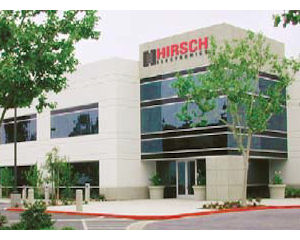
Identive, formerly Hirsch Electronics Corp., was a newcomer to the Business Journal’s 2010 list of the fastest-growing public companies after posting 104% revenue growth over three years. It went from $30 million in revenue for the 12 months through June 2008 to $62 million for the same period through June 2010. In the 12 months through June 2011, the company has grown revenue 47% from a year earlier.
Quarterly Loss
Identive reported a net loss in the recently ended second quarter of $1.6 million. That just missed Wall Street’s expectation and compared to a net loss of $700,000 a year earlier.
It saw sales of $25.6 million, up 21% from a year ago, which beat analysts’ estimates.
The company came to Orange County through an acquisition. Predecessor Hirsch was bought by SCM Microsystems Inc. in Germany, a maker of smart card readers, in early 2009 for about $14 million.
Identive was formed last year when SCM Microsystems combined with Switzerland’s BlueHill ID AG in a deal that ended with BlueHill holding 40% of SCM’s shares.
The company employs about 100 in its offices and a 20,000-square-foot factory in Santa Ana, according to Dye. It employs 250 to 300 worldwide, with the rest of its workers spread through Europe, China and Japan.
