

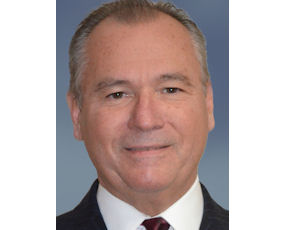
Michael Carter has big growth plans in the wake of his purchase of the Yorba Linda-based defense company he was hired to run nearly two years ago.
Carter brought a track record of growing electronics manufacturers before he took the top job at Sabtech, which specializes in communications systems and weaponry for warships, unmanned ground vehicles, aircraft and missile-launch systems.
The company has about $50 million in annual revenue, according to a Business Journal estimate.
Its new owner’s goal: $300 million a year, with much of the gain coming from the military drone market.
“I’ve done this before,” said Carter, who acquired all of the company’s stock from founder Rahim Sabadia on undisclosed terms last month.
Sabtech has been in business since 1985 and competes with a broad field of defense contractors of various sizes, including customers of its own in some cases.
The company saw flat sales this year due to cuts in military and other federal spending, but “profitability was good,” according to Carter, a former research engineer at the Naval Ocean Systems Center in San Diego.
He’s forecasting a sales spike next year from a recent slate of product releases.
“We project at least 20% growth in 2014, and that’s cautiously optimistic,” he said. “I think we might beat that.”
The bullish outlook stems from rising demand for a handful of products Sabtech has released in the last six months.
Its latest offering, geared for military drones, is a data input/output transceiver and general purpose processor. The equipment allows information gathered by drones—data on terrain, weather or distances, for example—to be collected, stored and transmitted in real-time to a ground station. Personnel can then analyze the information to determine what action to take.
The product, which took eight months to develop, could change military warfare on the ground.
Most data now collected from drones are stored internally until a drone returns.
“That’s the biggest area of growth for the company at this time,” said Carter, who set out to develop the product immediately after joining Sabtech.
Another early move by Carter: changing the name of the company, which dropped its old Sabtech Industries moniker. Now the company’s name is Sabtech, with a tagline of “Advanced Communications Systems.”
He then targeted the commercial market for expansion, tailoring some of the company’s defense products for factory automation, and other industrial controls for the oil and gas industry, manufacturing and public safety sectors.
Sabtech had made its living solely in the defense industry. The company began by selling data and communications systems that have been used in the Navy’s Aegis advanced weapon system for decades, as well on warships of some 30 U.S. allies.
It expanded to aircraft and ground-based systems, missile-launch systems and unmanned drones.
Vision Taking Shape
Carter’s vision, centered on developing chip sets that gather communication from hundreds of systems, is beginning to take shape. The company is close to landing a few significant deals with large manufacturers, machinists and power plants for its industrial controls and timing equipment.
Its networking technology, launched this summer, siphons data from various manufacturing processes and equipment to a control center where one engineer can monitor performance remotely instead of dozens of engineers in some cases.
“That’s a big innovation,” said Carter, who ran 100,000-square-foot factories with hundreds of pieces of equipment and an army of manufacturing engineers. “We’re having success in that market.”
Sabtech develops, engineers and distributes software and hardware primarily from its 22,000-square-foot headquarters in Yorba Linda, which houses the majority of its 50 employees. It has a small business development team in Switzerland and other offices near Washington, D.C., and in Virginia Beach, Va.
That could change in the coming years as Carter aims to grow the company through acquisitions and new product offerings.
“My focus is still in Orange County, but we may open other facilities,” he said.
