

Irvine-based chipmaker Broadcom Corp. has entered the outdoor satellite TV business.
The company, which has a history of gaining share quickly in new markets, debuted new technology that’s the basis of a bid earlier this month at the International Broad-casting Convention in Amsterdam, the pre-eminent forum for the media and entertainment industries.
The product is touted as a way to minimize satellite TV installation and associated costs through a single cable that can stream HD broadcasts and IP services to multiple connected devices.
The new mixed-signal chip replaces multiple analog satellite chips, aiming to meet growing demand for more set-top boxes in the home, according to Broadcom executives.
“Driving the next evolution in satellite TV, our satellite (outdoor unit) technology simplifies cabling architecture and dramatically reduces the cost and complexity to upgrade and install satellite TV while delivering multiple HD video streams and multi-room DVR services throughout the home,” said Dan Marotta, general manager of Broadcom’s communications group.
Broadcom is counting on its expertise in satellite set-top box technology for entry into the new market, according to the company.

It got its start in set-top boxes in 1993, when the young company was tapped by Scientific-Atlanta Inc. to supply chips for boxes used in an experimental interactive cable system in Orlando, Fla.
Today it designs chips for the largest makers of set-top boxes: Schaumburg, Ill.-based Motorola Inc., Technicolor SA in France, and U.K.-based Pace PLC.
Broadcom counts the set-top box segment as one of its fastest-growing.
The boxes are sold to pay TV companies, Internet service providers and others, which typically lease them to customers along with service (see related story, page 1).
Acoustical Addition
Santa Ana-based MSC Software Corp., which makes simulation software for product development for aerospace, military and industrial uses, has acquired a Belgium competitor.
MSC completed its acquisition of Free Field Technologies, a maker of acoustic simulation software, earlier this month.
Terms of the deal were undisclosed.
Passenger comfort and increasing noise regulations are driving the demand for acoustic simulation technology in the automotive and aerospace markets, according to Dominic Gallello, president and chief executive of MSC.
Free Field Technologies “is the best in the world at satisfying both of these needs,” he said.
The company makes software that analyzes noise and vibrations in cars, airplanes, trucks and other vehicles.
Free Field Technologies employs 39 people companywide with additional operations in France, Tokyo and Detroit. It will continue to run sales, support and research and development from these locations, according to John Janevic, vice president of strategic operations at MCS.
MCS is one of the county’s largest software makers with annual revenue of about $250 million, according to Business Journal estimates.
FlexEnergy’s Final Exam
Irvine-based clean technology startup FlexEnergy Inc. is concluding final in-house tests of its first commercial system at the Army’s Fort Benning in Georgia.
The aim is to generate renewable energy around the clock for the sprawling military campus.
The company, which developed a system that turns methane gas from landfills into electrical power, installed its Flex Powerstation there earlier this year. Once the internal tests conclude, Birmingham, Ala.-based Southern Research Institute will begin its own set of tests on the massive system to gauge environmental impacts, performance and costs over the course of a year.
Each powerstation can produce 250 kilowatts of power daily, enough to power about 250 homes, according to FlexEnergy.
About 130,000 soldiers and civilians live, work and train at Fort Benning. The energy that’s expected to be produced will help the Department of Defense meet energy dependence and sustainability goals, according to Vernon Duck, Fort Benning’s energy manager.
The Pentagon has set aside billions of dollars for renewable energy projects under mandates for its bases and other buildings.
If the testing at Fort Benning is successful, it will be a major milestone for FlexEnergy as it strives for viability in a sector that has its doubters.
The powerstation—a turbine and other equipment that breaks down methane gases and converts them to electricity with nearly no emissions—goes for about $800,000.
It stands some 17 feet high and weighs 12 tons.
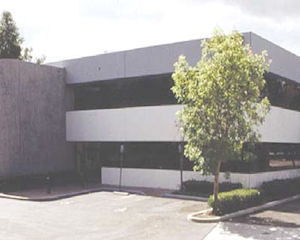
Late last month, Flex Energy relocated to a two-story, 35,000-square-foot building near the former El Toro Marine base that nearly quadrupled its headquarters. The building, at 9400 Toledo Way, includes offices and a distribution center for replacement parts for its systems.
