

Investors and analysts appear to have put Irvine-based chipmaker Broadcom Corp.’s lingering troubles with key customer Nokia Corp. aside as its business with Apple Inc. grows.
Broadcom’s quarterly earnings report last week beat Wall Street expectations and sent share prices up to a market value of about $20 billion. The gains partially offset a steady fall this year—Broadcom shares had dipped by about 31% prior to the rally.
The company benefited from better-than-expected margins, a key measure for assessing technology companies. It also got a boost from its ties to Cupertino-based Apple, which recently posted earnings that far exceeded Wall Street estimates as sales for its consumer products improved.
Broadcom had $6.8 billion in sales last year.
It makes communications, radio and touch-screen chips that go into Apple’s iPods, iPhones and iPads, among other products.
Broadcom keeps quiet on details of its business with Apple.
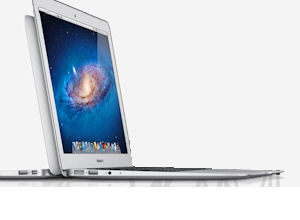
San Luis Obispo-based technology website iFixit.com recently reported that it had uncovered a Broadcom Wi-Fi transceiver and Bluetooth in Apple’s new MacBook Air, pointing to another line of sales for the chipmaker.
Apple reported strong MacBook sales in the June quarter, a trend that holds the potential to boost Broadcom’s revenue going forward.
Extra Fuel
JPMorgan Chase & Co. analyst Harlan Sur added fuel to the rally when he said Broadcom has positioned itself for more design wins for future iPhone and iPad models.
Sur forecasts that Broadcom shipments to Apple will eclipse $750 million in 2011, up more than 50% from 2010.
“Given this dominant position at Apple, we believe Broadcom will be one of the major beneficiaries as Apple continues to expand its footprint in smartphones, tablets and notebooks,” he said in a report.
Fellow JPMorgan analyst Mark Moskowitz upped his 2011 forecast for iPhones by nearly 4 million to 175 million units and his iPad forecast of 3.4 million to 30.8 million units.
That could add $50 million to $55 million in revenue for Broadcom in the current quarter, he said in a report.
The current outlook seems to quell concerns over Broadcom’s lower sales of chips for smartphones to Finland’s Nokia and South Korea-based Samsung Electronics Co. That trend had dogged Broadcom’s shares since its first-quarter earnings report in April.
Declining sales in the mobile division, driven by “some softness at a number of key customers,” appeared to be the only sore spot for Broadcom in last week’s quarterly earnings. It reported a 5% revenue drop in that segment to $811 million compared to a year ago.
The mobile and wireless segment accounted for about 45% of Broadcom’s $1.8 billion in revenue in the June quarter.
A good chunk of the unit’s revenue comes from Bluetooth, Wi-Fi and other chips used in computers, video game consoles and other devices.
The sales drop led some company watchers to call out Nokia for the slump.
In May Nokia warned investors that second-quarter sales were expected to be “substantially” below its prior forecast.
That led New York-based Standard & Poor’s to cut the company’s debt rating and project a 10% revenue drop for Nokia’s devices and services segment.
Tokyo-based investment bank Nomura Holdings Inc. predicted Nokia would lose its spot as the largest maker of cell phones to Samsung.
Broadcom Chief Executive Scott McGregor in June publicly announced his faith in Nokia at a New York conference. He said in a conference call last week that the company expects the mobile segment to rebound “sharply” in the current quarter.
Strong sales for the iPad and iPod were among the drivers leading Broadcom to up its sales guidance in the current quarter.
Expectations
The company said it expects revenue in the September quarter to be between $1.9 billion and $2 billion, which is on the high end of analysts’ expectations.
The $2 billion revenue projection actually beats Wall Street’s highest estimate of $1.93 billion.
Analysts are looking for revenue on the low end of $1.83 billion.
One analyst likened Broadcom’s quarterly earnings report and subsequent guidance to pulling a rabbit out of a hat.
“While noting some macroeconomic weakness in its set-top box and DTV businesses, Broadcom’s product cycles in connectivity combo chips and datacenter and enterprise networking chips, and its enviable position in the Apple iPhone and iPad all combined to drive 3Q11 guidance that was better than Street estimates, despite building macroeconomic and production cut inspired concerns,” said Craig Berger, an analyst at Arlington, Va.-based FBR Capital Markets Corp.
