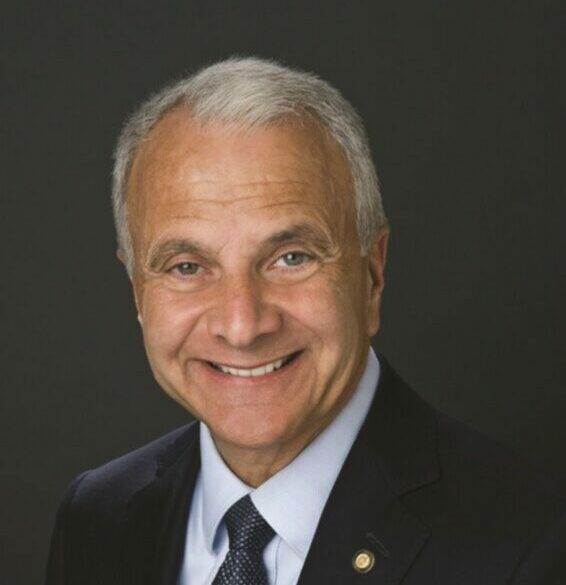
My new book, “Using Data Analytics to Drive Transformational Change,” opens with the statement, “Most strategic plans are a waste of time – a drain on precious assets.” That view is based on my belief that comprehensive strategic plans usually promise positive outcomes for everyone. As a result, these broad-based plans become vapid wish lists rather than action plans rooted in economic reality.
An alternative planning approach is described in my new book. It represents a paradigm shift in tackling transformational change for business enterprises as well as higher education. Rather than developing an all-encompassing strategic plan that will often be consigned to the dustbin of history, I present a planning model that successfully guided Chapman’s transformation during the five five-year planning periods that took place during my 25-year presidency.
During the first 1991-1996 planning period, I describe how we transformed Chapman from an open-admission small college to a selective university. At its core, the basic strategic thrust was to increase the incoming SAT scores of incoming freshmen. I used data analytics to show how accomplishing that would lead to higher graduate rates, namely, higher rates of students who start at Chapman and ultimately end up graduating from Chapman. Our focus on increasing SAT scores proved successful as we pushed them up faster than any other university in our U.S. News category. That, in turn, led to Chapman increasing its graduation rate from 37% in 1992 to 75% in 2016, my final year as president.
During the second five-year planning period from 1996-2001, I describe in Chapter 3 how the progress of competitive universities can be identified and measured in helping determine the optimal size for a university. This chapter presents various budgetary tools that can be used for financial oversight, as well as how our analysis of economies of scale informed our decision-making. The specific strategies relating to the start-up of the Dodge College of Film, the Fowler School of Law and physical therapy program are presented, as well as show how we pursued national accreditation for Chapman’s academic programs.
In Chapter 4, which covers the 2001-2006 period, I show how analytical tools can be used to optimally invest in buildings and land. Putting those tools to work is described in examples related to the construction of our Marion Knott Studios, the Leatherby Libraries and the Erin Anderson Underground Parking Structure.
The following chapter, which includes our strategic focus over the 2006-2011 period, explains how a unique budgetary system was developed to move Chapman’s faculty salaries into the 95th percentile for all professional ranks. It also presents specific strategies relating to how we increased the number of endowed faculty chairs and professorships.
In the final five-year period of my presidency from 2011-2016, I describe in Chapter 6 how the net income ratio in financial analysis can be used to assess the financial health of the institution as well as increase endowment growth and lead to optimal investment in buildings and land. Specific examples include increasing the number of natural science majors and funding our Keck Science for Science and Engineering, the Rinker Graduate Health Sciences Center the Musco Center for the Arts and the Hilbert Art Museum. The chapter explains how we spun out our off-campus academic operations and presents a unique strategy relating to succession planning.
The end of each chapter in my book includes a progress report for every five-year period in our planning process. These reports focus on the progress we made in our U.S. News ranking in our category at the time: “Best Regional Universities of the West.” For example, over the entire 25-year period from 1991-2016, Chapman’s academic reputation in that category of 116 colleges and universities as measured by a U.S. News survey of presidents, provosts and chief admissions officers increased from #90 in 1991 to #9 in 2016. Our student selectivity measure as determined by a weighted average of SAT scores, the percentage of freshmen graduating in the top 25% of their high school graduating class, and the acceptance rate moved up from a rank of #66 in 1991 to #3 in 2016. Our graduation rate ranking increased from a rank of #35 in 1991 to #6 in 2016. The overall U.S. News rank that combines these various measures increased from #61 to #5. What was particularly noteworthy was that the overall U.S. News rank increased steadily at the end of every one of our five-year planning periods.
Chapman’s total net assets increased from $104 million in 1997 to $854 million in 2016. The resulting increase of 721% compared to an increase of 192% for our competing schools (see Table 1).
As shown in Table 2, Chapman’s percentage increase in its investments in buildings and land increased by 1,102% versus an average of 343% for competing schools, placing Chapman again in the #1 position.
Perhaps the most important lesson from my book is for organizations to focus on one central goal over a particular period of time. Such a focus, I believe, will be much more successful than vainly pursuing a multiplicity of goals, as is typically the case in some impossible-to-achieve broad-based strategic plan.
As I wrote in the preface, “This book will illuminate how our university broke through the comfortable allure of the status quo. The resulting breakout from that ‘safe space’ transformed Chapman, creating a more vibrant learning community.”
Although transformational change is not easy, the Chapman model shows it can be done. By breaking through the stultifying institutional forces that resist change, the resulting transformation leads to a learning community more consistent with an institutional vision. Such an outcome is indeed very gratifying.