

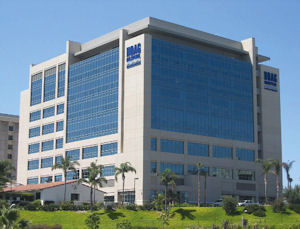
Hospitals in Orange County and across California could get a few more years to finish some pricey earthquake-related building projects if a bill before the governor becomes law.
The bill awaiting Gov. Arnold Schwarz-enegger’s signature would give the neediest hospitals another five years, or until early 2018, to make sure they meet state rules for being able to withstand a major earthquake.
The law was passed in the Senate late last month. Author Sen. Denise Ducheny is a Democrat representing Chula Vista and other parts of south San Diego County.
As it is now, the most vulnerable hospitals have until 2013 (or 2015 with a hardship exemption) to retrofit existing facilities. Other hospitals are given until 2030 to rebuild to new standards.
Hospitals facing the earlier deadline also have the option of forgoing retrofitting and rebuilding instead, a route that’s been taken by some OC hospitals.
The latest proposed extension was prompted by hospitals pushing for more time; they cited local planning obstacles and financial challenges.
Local Impact
An extension could benefit a few hospitals here.
The proposal “is a good thing,” said Markie Cowley, chief operating officer of Mission Hospital, which has operations in Mission Viejo and Laguna Beach.
Mission’s main hospital in Mission Viejo was built in 1991 and largely meets the state earthquake law. The retrofitting that was required already is done, according to Lars Galuppo, Mission’s director of construction.
A $153 million expansion of Mission’s campus in Mission Viejo that finished last year wasn’t done to meet the state law.
But Mission’s Laguna Beach campus, which was acquired in 2008 and previously was South Coast Medical Center, is another story.
It is classified by state officials as being one of the hospitals at the highest risk of earthquake damage. The hospital is near the Newport-Inglewood-Rose Canyon fault line, which begins south of Newport Bay and runs along the coast into San Diego County.
The Laguna Beach hospital, which is more than 50 years old, has seven buildings that are in various stages of compliance, according to Cowley.
Mission is working as if the 2013 deadline will remain, according to construction director Galuppo.
“Our (goal) is to meet all those obligations, and that includes Mission Hospital Laguna Beach,” he said.
Mission could spend $20 million to $150 million on earthquake-related work for Mission Laguna, Cowley said.
The high end of that range would apply if Mission has to build an entirely new “replacement hospital.”
Mission is looking at ways to pay for improvements, Cowley said. Those could include a combination of money from operations, borrowing and philanthropy, she said.
Mission Laguna’s former owner, Roseville-based Adventist Health, cited the cost of bringing it into compliance as one reason why it sold the hospital for $35.7 million in 2008 to St. Joseph Health System, Mission’s Orange-based parent.
Under Adventist Health, the hospital had sought state permission to operate until 2030 without retrofitting.
In neighboring Newport Beach, Hoag Memorial Hospital Presbyterian has four buildings that had been listed as being at the highest risk of collapse, according to the Statewide Office of Hospital Planning and Development.
Two of those buildings since have been reclassified to a lower level of risk, according to Hoag officials.
AHMC Anaheim Regional Medical Center is estimated to face $80 million to $140 million in retrofitting costs.
The projected expense was one reason why Fountain Valley-based Memorial Health Services sold the hospital in 2009 to Alhambra-based AHMC Healthcare, which didn’t respond to a request for comment.
Background
California lawmakers first put stricter earthquake restrictions on hospitals 16 years ago as a result of major damage caused by the 1994 Northridge earthquake. The law’s been amended a few times to extend deadlines.
A report from Rand Corp. of Santa Monica has projected the total cost to the state’s hospitals for meeting the earthquake law at $45 billion to $110 billion.
In the past few years, several local hospitals have completed expansions designed to bring them in compliance and to serve the area’s growing population and increasingly competitive healthcare market.
Those include Mission Laguna’s sister facilities, St. Joseph Hospital-Orange and St. Jude Medical Center in Fullerton.
St. Joseph-Orange opened a $213 million patient tower in 2007, while St. Jude opened its $125 million, five-story patient tower in 2009.
UCI Medical Center, an Orange teaching hospital that’s part of the University of California, Irvine, opened its $556 million New University Hospital in 2009. The building replaced UCI’s main tower, which was built in the 1960s and didn’t meet state standards.
More construction to partially address seismic issues continues here, particularly from Oakland-based Kaiser Permanente, which operates OC’s largest health maintenance organization and has hospitals in Irvine and Anaheim.
Kaiser continues work on a $500 million Anaheim hospital that will replace an existing one built in the 1970s. Kaiser’s new Anaheim hospital is set to be done in 2013.
Kaiser hasn’t taken a formal position on Ducheny’s bill but believes an extension could cut down the risk of some hospitals closing, said Kathleen McKenna, Kaiser’s executive director of public policy advocacy.
Winning delays in the state’s earthquake law has been a priority of several lobbying groups, including the Hospital Association of Southern California and the California Hospital Association.
The statewide association released a survey last year that showed more than 60% of hospital chief financial officers who responded said they couldn’t afford to get financing in the wake of costlier borrowing, tighter credit and added expenses from uninsured patients going to emergency rooms for healthcare.
Unions that represent hospital workers oppose any further extensions. The California Nurses Association and others argue hospitals have had more than enough time to meet state requirements.
