

The colorful, storied history of Valeant Pharmaceuticals International in Orange County is turning a page—and likely coming to a close.
Last week, the Aliso Viejo drug maker, which began life as Costa Mesa-based ICN Pharmaceuticals Inc. a half century ago, said it is being acquired by Canada’s Biovail Corp. in a deal valued at $3.2 billion.
Biovail plans to take on the Valeant name and run the combined company from the Toronto area and Barbados, both of which offer lower taxes.
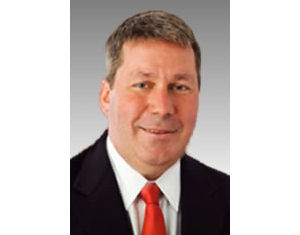
“This was a move that we initiated,” said Valeant Chief Executive J. Michael Pearson, who is staying on to run the combined company.
Shareholders of Biovail, a maker of antidepressant, pain and other drugs, are set to own 50.5% of the new company.
Owners of Valeant, which makes neurology, antiviral and generic drugs as well as medical cosmetics, will hold the remaining 49.5%.
The deal is set to close by year’s end.
The county loses a public company with the acquisition. With 2009 sales of $830 million, Valeant is the 15th largest public company based here, according to the Business Journal’s April list.
What, if any, of Valeant stays here is unclear.
Aliso Viejo could be considered for the new company’s U.S. headquarters. But a decision on that won’t be made until after the deal wraps up.
Valeant has “a lot of great people in OC,” Pearson said. “That being said, we’re not making any decisions. I’m not promising that it’s staying.”
The odds of the Aliso Viejo site staying open could be low.
Valeant has steadily cut back operations here in recent years. The company has about 125 local workers, down from some 500 when it moved from Costa Mesa to Aliso Viejo in 2006.
Overall, Valeant has 3,100 workers. Biovail has nearly 1,300. Up to a fifth of the combined company’s workforce, or 870 jobs, are set to be cut after the deal closes.
Last year, Valeant put all or part of its 110,000-square-foot Aliso Viejo headquarters up for sublease.
Valeant also exercised an option to end its 10-year Aliso Viejo lease early in 2011, taking a $3.8 million charge related to the move.
Pearson, who has won plaudits for reviving Valeant, never settled here. He rents a Newport Beach apartment while his wife and four sons remain in New Jersey.
Biovail’s U.S. headquarters is in New Jersey, where the company leases 110,000 square feet of space.
Pearson, a Canadian, is planning to be based in the tax haven of Barbados, according to Biovail.
He said he would continue to manage the new Valeant much as he does today, with extensive travel to the drug maker’s locations around the world.
“So I will not be sitting in Barbados and making people come to me,” Pearson said.
Biovail has a team of patent lawyers and finance people in Barbados.
The Caribbean outpost stems from Biovail founder Eugene Melnyk, a colorful Canadian who now lives in Barbados.
Biovail’s current chief executive, Bill Wells, will become non-executive chairman after the deal closes.
Pearson said he thought he was tapped to lead the combined company because Valeant’s strategy of niche drugs likely will be the basis of the new company.
It’s no “accident that the name is ours, the management team is ours,” Pearson said.
The deal creates a larger specialty drug maker with annual revenue of $1.8 billion.
Biovail is Canada’s largest publicly traded drug maker with yearly sales of about $850 million.
Analysts like the pair’s combined drug portfolio.
Both companies have a complementary focus on central nervous system drugs that should allow for growth as some patents expire, they say.
Pearson has gained favor with analysts and investors during his time at Valeant for actions such as cutting costs and targeted buys of smaller drug companies—Valeant has made 16 deals in the past two years.
Valeant’s shares are up some 60% this year with a market value of about $3.9 billion as of late last week. In 2009, the shares rose 40%.
Besides offering both companies more products, legal and tax reasons also play in the deal.
The new Valeant expects its tax rate to go from 36% now to 10% to 15%, Pearson said.
“The financial rationale seems compelling,” said Gregg Gilbert of Bank of America Merrill Lynch.
Negotiations
Valeant and Biovail had talked for about a year, but things “really only got serious right before the Christmas holidays,” Pearson said.
Negotiations took place in various spots, including Toronto, Barbados, Los Angeles and New York.
“We sort of traveled around, trying to make schedules go together,” he said. “We certainly didn’t (always) want to meet in the same place.”
There were no other suitors for Valeant, according to Pearson.
Biovail and Valeant have similar histories, rooted in big persona founders.
Earlier this year, Biovail founder Melnyk, who owns the National Hockey League’s Ottawa Senators, sold almost all of his shares in the company.
Melnyk, who founded Biovail more than 20 years ago, stepped down as its executive chairman in 2007 amid regulatory controversies.
The companies “came out of a similar past with interesting founders and obviously got into some issues,” Biovail chief Wells told Canada’s Globe and Mail newspaper.
In Valeant’s case, the interesting founder is Milan Panic, who started the company as ICN in 1959 and ran it for decades.
A native of the former Yugoslavia, Panic defected from the communist country during a bicycle race and went on to start ICN with $200 and a washing machine as a centrifuge.
As chief executive, Panic grew ICN into a midsize drug maker and was known for his autocratic rule, shareholder and board clashes and several sexual harassment lawsuits.
Panic lost a bitter proxy battle in 2001 with dissident investors who wanted to overhaul ICN’s board and business. He left the chief executive’s role in 2002.
Pearson said that Panic still is on Valeant’s payroll as a consultant.
In 2003, directors and executives renamed ICN as Valeant and set out to streamline and grow the company, with mixed success.
Former chief executive Tim Tyson eventually came under fire from Wall Street for a lack of growth and direction and left in 2008.
Pearson, a former executive at turnaround consultant McKinsey & Co., replaced Tyson.
