

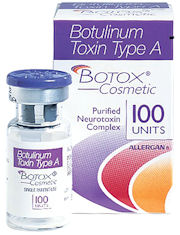
Irvine-based drug maker Allergan Inc. has stymied, for now, a rival’s attempt to widen application of a Botox competitor to cosmetic uses.
U.S. District Judge Andrew Guilford in Santa Ana issued an injunction against Germany-based Merz Pharma GmbH last week after a non-jury trial. Guilford said his written findings and conclusions would be issued later, including an order specifying the injunction’s term and length.
Allergan—which seeks to bar Merz from competing with Botox for at least a year—applauded the judge’s ruling.
“For more than 20 years, we have invested millions of dollars in the research, clinical development and marketing of Botox, and we are pleased that our intellectual property has been protected,” the drug maker said.
Annual Meeting
Merz had been scheduled to introduce its Xeomin drug for cosmetic use to compete with Botox Cosmetic at this week’s annual meeting of the American Association of Dermatology in San Diego.
Allergan filed its lawsuit in 2010, claiming some of its former sales representatives had joined Merz and improperly taken with them Allergan sales and customer data. The hires came as Merz prepared to sell Xeomin for medical use to treat muscle spasms, Allergan said.
Guilford ruled in January that the suit could go to trial. Defendants included Merz, its U.S. units and seven of its employees.
Guilford, in granting the injunction, cited “dramatic examples of misappropriation” of proprietary Allergan information. The judge said he was troubled when some Allergan employees signed contracts with Merz and then delayed giving notice of their intention to switch jobs.
“Encouraging Settlement”
By granting the injunction but delaying specific timing, the judge seemed to be “encouraging settlement,” Merz attorney Rick McKnight said.
Merz claimed during the trial the data in question weren’t trade secrets.
Guilford’s ruling was a “modest positive” for Allergan as it headed toward its annual research and development day on March 26, said Seamus Fernandez, an analyst with Leerink Swann LLC in Boston.
Impact Uncertain
“It is difficult to characterize the full impact that this may have on (Allergan’s) top and bottom line, because we do not yet know the specific details of the injunction and how long it may keep Merz from officially launching Xeomin in the U.S.,” Fernandez wrote in an investors’ note.
In addition to a year’s injunction, Allergan also demanded return of any proprietary data.
McKnight told the judge a year’s ban “puts the companies out of business,” Bloomberg reported.
Xeomin has captured about 8% of the botulinum toxin market, primarily through medical-use sales.
“Heavy Sampling”
Fernandez noted Allergan has stated that Xeomin’s market share growth was “driven by very heavy sampling of high-volume physician practices.”
The analyst said Botox Cosmetic’s label “demonstrates advantage over Xeomin,” because it claims the product is effective for up to four months.
Botox is the market leader with annual sales of about $1.6 billion in 2011. Allergan has said it expects full-year sales of Botox, for cosmetic and therapeutic forms, to rise to $1.75 billion to $1.8 billion this year.
Besides Xeomin, Botox also competes with Dysport, which is distributed by Scottsdale, Ariz.-based Medicis Pharmaceutical Corp.
